
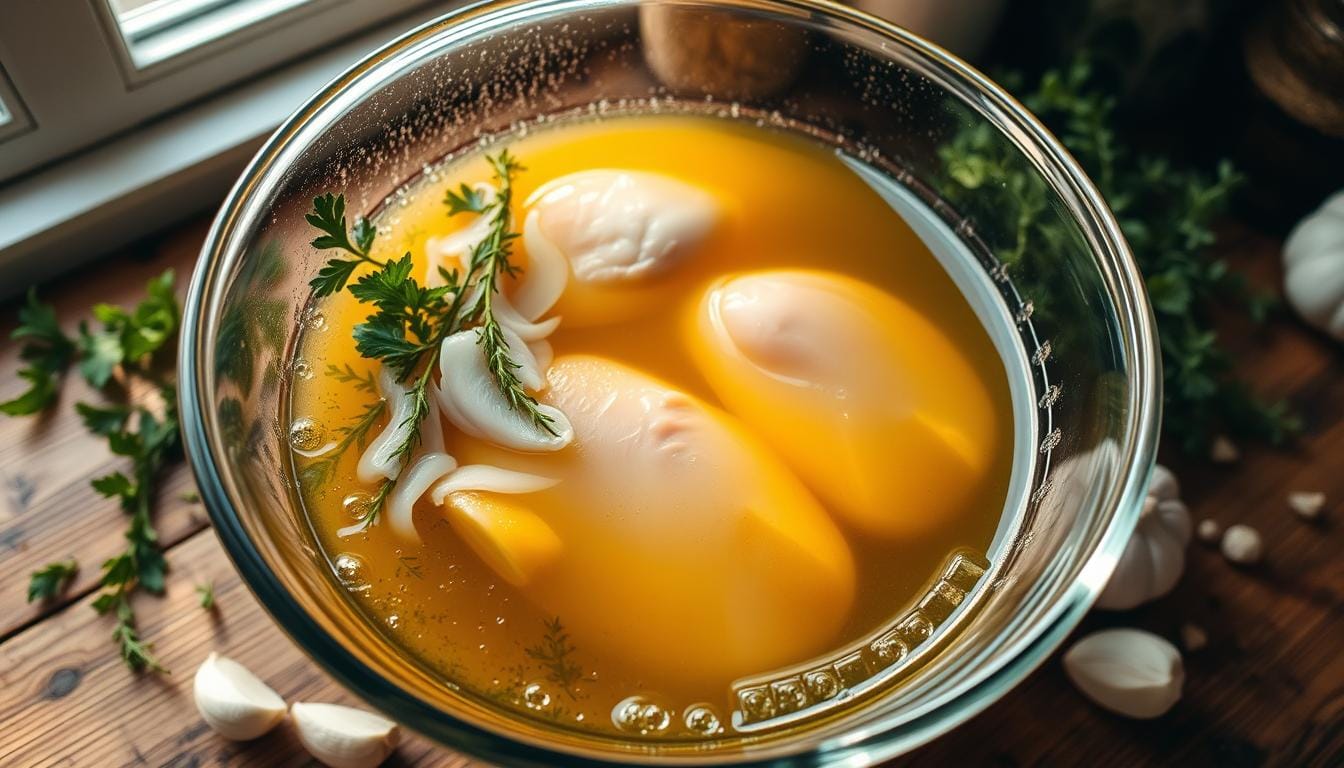
I’ve always struggled to make Chicken Brine Recipe. But then I found brining. It’s changed how I cook chicken, and I’m eager to share it with you.
Brining chicken might seem scary, but it’s a total game-changer. With a few simple ingredients and some time, you can make chicken that’s incredibly tender and juicy. The salt in the brine keeps the meat moist and adds a savory taste.
This easy brine recipe is perfect for any chicken dish. You can add garlic, herbs, citrus, or peppercorns to make it your own. Or, you can keep it simple and still get amazing results.
Ready to make your chicken even more delicious? Let’s explore this must-try recipe together.
Key Takeaways
- Brining chicken can result in juicier, more tender meat with enhanced flavor.
- The brine solution typically contains a 4-6% salt concentration, which helps retain moisture during cooking.
- Brining time can vary based on the cut of chicken, with boneless breasts requiring 30 minutes to 1 hour, and whole chickens needing 3-4 hours.
- Brined chicken can be frozen for up to 6 months, preserving its moisture and flavor.
- Aromatic ingredients like garlic, herbs, and citrus can be added to the brine to infuse the chicken with extra flavor.
What is Brining Chicken?
Brining chicken is a simple method that makes your chicken juicy and flavorful. You soak the chicken in a saltwater mix, often with herbs and spices. This method boosts the chicken’s taste and keeps it moist and tender.
How Brining Works
The brining process lets the chicken soak up the flavors from the solution. A common mix is 1 cup of salt for every 1 gallon of water. This mix makes the chicken absorb water, making it juicier.
But, be careful not to brine too long. Over-brining can make the meat soggy and too salty. It’s best to brine for no more than 48 hours. The general brining time is 1 hour per pound, depending on the meat and its thickness.
Sugar in the brine adds to the flavor and helps the meat crisp up. After brining, it’s key to dry the meat well. This helps the meat get crispy, as moisture can stop it from caramelizing.
Brining works best for chicken and turkey, making them taste better and feel tender. For a basic brine, use 1 tablespoon of salt for every 1 cup of liquid. You can make the brine ahead of time and keep it in the fridge. But, never use it again for raw chicken to avoid contamination.
“Brining the chicken is a game-changer. It’s the secret to perfectly juicy and flavorful poultry every time.”
Brine Ingredients and Ratios
Brining chicken is all about the right mix of ingredients and their ratios. A basic brine recipe includes cold water, kosher salt, and sometimes extra seasonings.
The standard brine mix is 4 cups of cold water and 5-6 tablespoons of kosher salt. You can tweak this ratio based on your taste or the chicken cut. For instance, chicken breasts might not need extra flavors like peppercorns or herbs.
| Ingredient | Quantity |
|---|---|
| Cold Water | 4 cups |
| Kosher Salt | 5-6 tablespoons |
| Optional Seasonings | Peppercorns, crushed garlic, herbs, bay leaves |
Choosing the right salt is key. Different salts have different flavors. Try using kosher or pink Himalayan salt for unique tastes in your chicken.
“The key to a successful brine lies in the perfect balance of salt, water, and time. By following the right ratios and techniques, you can transform even the most basic chicken into a juicy, flavorful masterpiece.”
Benefits of Brining Chicken
Brining chicken is a game-changer for tender, juicy, and flavorful meat. It offers several benefits that make it a must-try for both home cooks and professional chefs.
One key advantage is that it helps the meat stay moist during cooking. The salt in the brine breaks down muscle fibers. This lets the chicken absorb and hold more water. So, even if it’s overcooked, the chicken stays moist and succulent.
Brining also infuses the chicken with flavor all the way through. The brine acts as a seasoning, spreading spices, herbs, and aromatics evenly. This means every bite is full of flavor, not just the surface.
| Brining Benefit | Explanation |
|---|---|
| Improved Moisture Retention | Brining helps chicken retain moisture during cooking, leading to juicier and more flavorful meat. |
| Enhanced Flavor | Brining infuses the chicken with flavors from the seasoning, herbs, and spices in the brine, ensuring even distribution of taste. |
| Tender Texture | The salt in the brine helps break down the muscle fibers, resulting in a more tender and succulent texture. |
| Versatility | Brining can be applied to a variety of meats, including poultry, pork, and seafood, making it a valuable cooking technique. |
By using brining chicken, you can improve your cooking skills. You’ll consistently serve juicy, flavorful, and tender chicken. Whether grilling, baking, or roasting, brining ensures perfect chicken every time.
“Brining is one of the best ways to ensure your chicken stays juicy and tender, no matter how you cook it. It’s a game-changer in the kitchen.”
Preparing the Chicken Brine
Making a great chicken brine is easy. It’s all about mixing water and salt right. This mix makes a brine that adds flavor and keeps the chicken moist.
Brine Ingredients
To make the brine, you need just two things:
- Water – Use cold water for the best results.
- Kosher salt – Use 4 tablespoons of kosher salt for every 4 cups of water.
You can also add garlic granules or powder. Use about 1 tablespoon for every 4 cups of water. This adds more flavor to your chicken.
Brining Process
To start, mix the water and salt until the salt is dissolved. If brining for more than 45 minutes, add the garlic granules or powder.
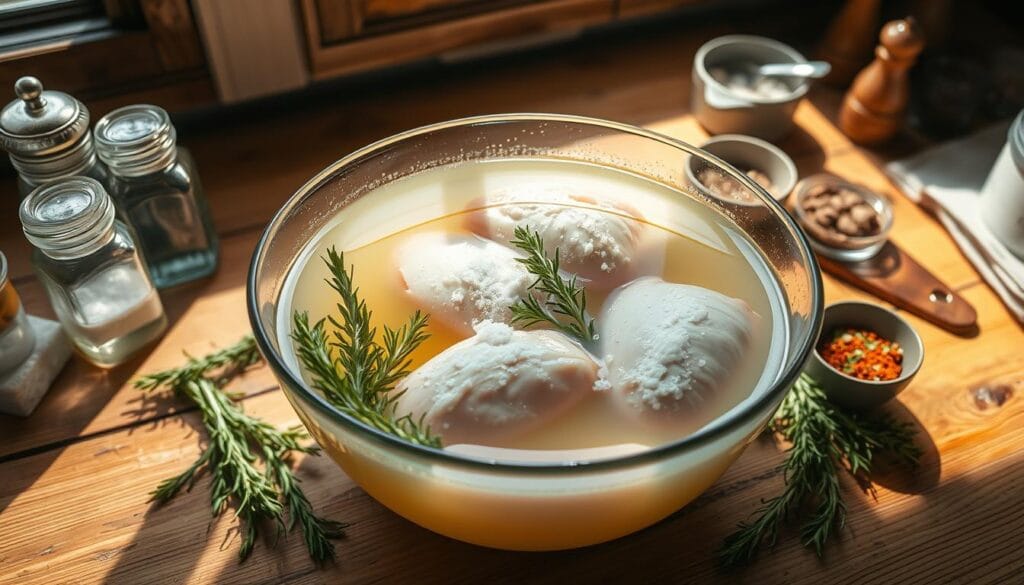
Put the chicken in a big, non-reactive container like a plastic or glass bowl. Pour the brine over it, making sure the chicken is covered. Cover the container and let it brine for 2-3 hours at room temperature or 4-6 hours in the fridge.
After the brining time, take the chicken out, rinse it under cold water, and dry it with paper towels. Now, you’re ready to season and cook your chicken to perfection!
Brining Time and Temperature
Brining your chicken is a simple yet effective way to ensure moist and flavorful results every time. However, the key to success lies in getting the brining time and temperature just right. Here’s what you need to know:
For whole chickens or bone-in chicken pieces, the recommended brining time is 2-3 hours at room temperature or 4-6 hours in the refrigerator. Anything longer and the chicken may become overly salty. On the other hand, boneless, skinless chicken breasts only need 30-60 minutes of brining time at room temperature or 1-2 hours when refrigerated.
It’s important not to over-brine the chicken, as the high salt content in this quick brine can lead to an oversalted bird if left in too long. The perfect brining time for chicken breasts falls between 30 minutes to 1 hour, ensuring a perfectly seasoned, juicy, and tender texture.
The brine recipe itself contains 5 tablespoons of kosher salt and approximately 16 ounces of water, along with fresh herbs, garlic, and ice. This ratio ensures the chicken absorbs just the right amount of seasoning without becoming too salty.
Remember, brining is a game-changer when it comes to chicken. It helps the meat retain moisture during cooking, making it harder to overcook. Just be mindful of the time and temperature guidelines to achieve the best results.
Cooking Brined Chicken
After brining your chicken, it’s time to cook it right. The goal is to avoid overcooking and make the skin crispy. Here’s how to get juicy, flavorful brined chicken every time.
Drying and Seasoning
First, pat the chicken dry with paper towels. This step makes the skin crispy. Since the chicken is already seasoned from the brine, you don’t need to add more salt.
Cooking Methods
You can cook brined chicken in many ways, like baking, grilling, or pan-frying. Just remember not to overcook it. The brine keeps the chicken moist. Use a meat thermometer to check if it’s at least 160°F (71°C).
- Baking: Preheat your oven to 400°F (204°C) and bake the chicken for 20-25 minutes, or until it reaches the desired internal temperature.
- Grilling: Preheat your grill to medium-high heat and cook the chicken for 6-8 minutes per side, or until it’s cooked through.
- Pan-frying: Heat a tablespoon of oil in a skillet over medium-high heat and cook the chicken for 4-6 minutes per side, or until it’s golden brown and cooked through.
Whichever method you pick, the brined chicken will be juicy, full of flavor, and a hit with everyone.

Dry Brining: An Alternative Method
Wet brining is a common way to add flavor and moisture to chicken. But, dry brining is another method worth trying. It involves sprinkling salt on the chicken and letting it sit in the fridge. This method is easy and convenient for home cooks.
Dry brining is simpler than wet brining. You just need to season the chicken with salt. This is great for bigger meats like turkeys, as wet brining can take longer.
Dry brining makes the chicken taste better and feel tender. The salt gets deep into the meat, making it flavorful. It also helps the skin get crispy and brown.
| Wet Brining | Dry Brining |
|---|---|
| Involves submerging the chicken in a saltwater solution | Involves simply seasoning the chicken with salt and letting it sit uncovered in the fridge |
| Typically takes 1 hour per pound of meat | Can take 24 to 48 hours for larger cuts like a turkey |
| Results in increased juiciness due to better moisture retention | Can lead to crispier skin on poultry by drawing out excess moisture |
| Offers enhanced flavor penetration by seasoning the meat from the inside out | Is less intense in flavor penetration compared to wet brining |
Dry brining is simpler and less messy than wet brining. It’s perfect for those who want to make dry brining chicken without fuss.
Troubleshooting and Tips
Brining chicken can be tricky, but with some tips, you can avoid common mistakes. To avoid an overly salty chicken, watch the brining time. Chicken breasts or thighs need 30 minutes to 1 hour. Whole chickens or large cuts might need 12 to 24 hours.
Make sure to pat the chicken dry after brining. This step is key for a crispy skin. Also, don’t add extra salt when cooking brined chicken. It’s already seasoned from the brine.
For common brining problems, check the salt-to-water ratio and brining temperature. The brine should be 4-6% salt by weight. Keep the brine and chicken at or below 40°F to stop bacteria growth. Clean and sanitize all brining equipment to prevent contamination.
FAQ
What is brining chicken?
How does brining work?
What are the typical ingredients and ratios for a chicken brine?
What are the benefits of brining chicken?
How do I prepare the chicken brine?
How long should I brine chicken?
How do I cook brined chicken?
What is dry brining, and how does it differ from wet brining?
Looking for easy & tasty recipes? 👀
Gluten-free meals, juicy ribs, cakes, salads & fresh juices 🍽️
👉 Visit now:
www.whatfordinner.com
www.curryingredients.com


The hint of this terpene shade – https://terpenewarehouse.com/products/do-si-dos-terpenes is honestly unclutter and true to life, not too heady but mollify clear in the most way. It blends smoothly and adds a much bettor flavor chart without oppressive the aggregate else. Equanimous a slight amount makes a balance, which says a lot with reference to the quality. The packaging was shielded, shipping was fast, and the sound happening felt reliable. Really solid spin-off and one I’d cheerfully uncalled-for again.
This was a in point of fact solid https://www.hipuffy.com/collections/hybrid-gummies . The munitions felt reputable, the gather was cagey flatten, and there weren’t any annoying clogging issues, which makes a huge difference. The flavor stayed decontaminated and enjoyable without starting to bit burnt too despatch, and the drag itself looked expertly made dyed in the wool revealed of the box. Everything up it felt consistent and unexcitedly to use. During anyone looking exchange for a straightforward tote with good flavor and dependable hardware, this identical unequivocally checks the boxes.
These indica gummy made a athletic blue ribbon impression. The consistency looked great, the aroma was clean, and the show felt perfect fairly away. They handled nicely and seemed carefully made, which gave the goods a more премиум note from the start. Having a passable experience with the variety’s THCA flower мейд this stable more reassuring, and the quality here felt lately as solid. Mellow all-inclusive, nicely presented, and positively the warm-hearted of goods that stands not at home in this category.