
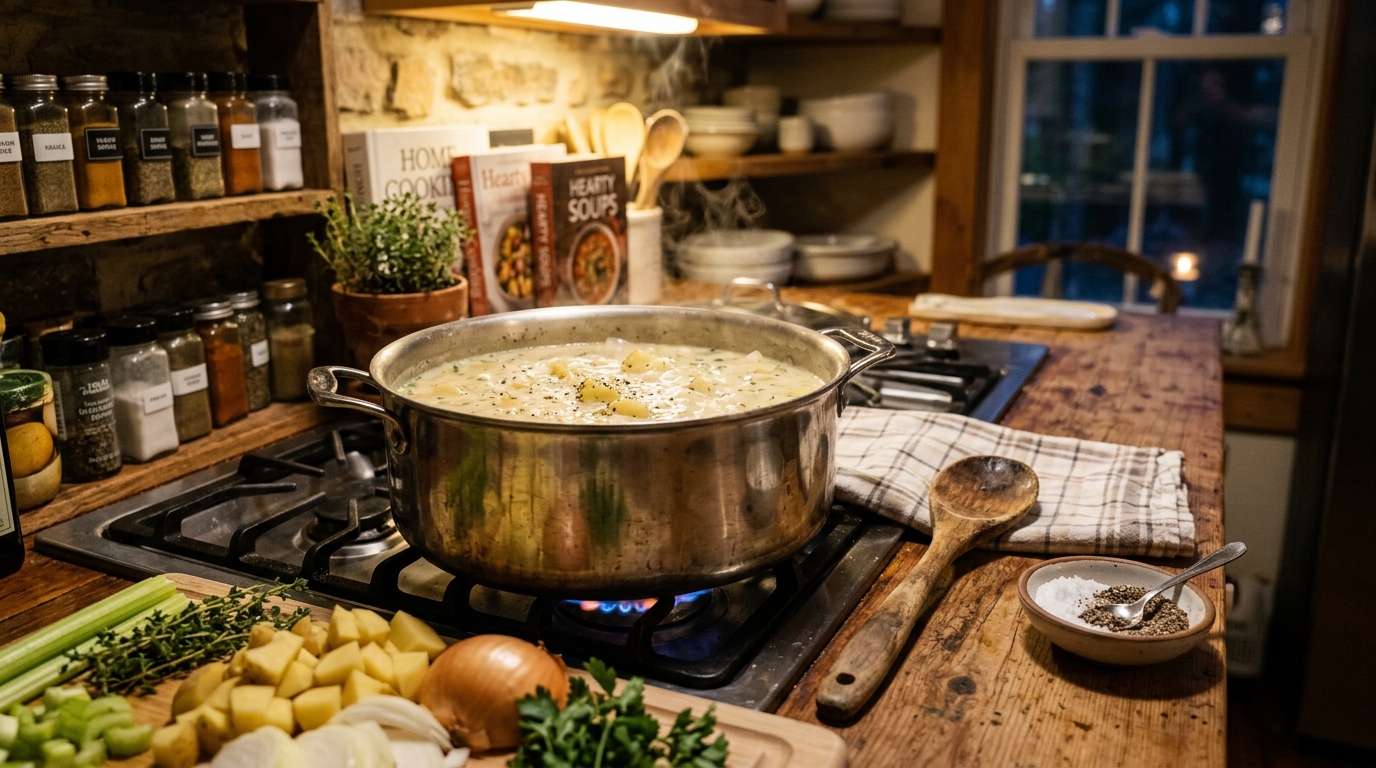
On a busy weeknight, I turn a potato soup recipe into dinner with a pot, a few pantry staples, and a little time. The reward is a rich, creamy bowl with tender potato chunks and familiar flavors, made on the stovetop in about an hour.
I’ll share practical ways to adjust the texture and choose toppings, so you can make each bowl fit your table. The ingredient list comes first, giving you a quick chance to check what you need before cooking.
Key Takeaways
- Everyday ingredients make a filling dinner for eight.
- A roux helps create a creamy base.
- Choose how many potato chunks to keep.
- Set out toppings for easy customization.
What Goes Into This Simple, Creamy Soup?
This recipe relies on a short list of familiar staples, with bacon and dairy adding richness. It makes 8 servings, about 3.5 quarts, and the ingredients work together to make a hearty soup with a creamy base and tender potato pieces.
What Makes a Simple Potato Soup Recipe Work?
A simple potato soup recipe needs only a few basic ingredients to build flavor and body. Bacon brings smoky, savory notes, while onion and garlic give the broth a flavorful start. Potatoes make the soup filling, and milk, heavy cream, and sour cream create its rich finish.
The thickening base is a roux, a mixture of cooked flour and fat that thickens a soup. Here, butter and bacon fat coat the flour before the liquids go in. This helps the broth become creamy without requiring a long list of special ingredients.
What Goes Into an Old Fashioned Potato Soup Recipe?
An old fashioned potato soup recipe starts with a few straightforward ingredients rather than complicated seasonings. I group the measured amounts below so the prep stays easy to scan. Set out the ingredients before you begin, especially the dairy, which goes into the pot together.
- Bacon and butter: 6 strips bacon and 3 tablespoons butter.
- Onion and garlic: 1 medium yellow onion and 3 large garlic cloves.
- Flour and potatoes: 1/3 cup all-purpose flour and 2 1/2 pounds gold potatoes.
- Broth, milk, and heavy cream: 4 cups chicken broth, 2 cups milk, and 2/3 cup heavy cream.
- Seasonings and sour cream: 1 1/2 teaspoons salt, 1 teaspoon ground pepper, 1/4 to 1/2 teaspoon ancho chili powder, and 2/3 cup sour cream.
- Optional toppings: shredded cheddar, chives, extra sour cream, and bacon.
The Bacon, Aromatics, and Creamy Finish
Bacon and butter add the fat that carries the onion and garlic flavor through the pot. Flour thickens the liquid, while chicken broth gives it a savory base. Milk and heavy cream make the soup richer, and sour cream adds a gentle tang near the end.
The seasonings keep the potato flavor in front, with ancho chili powder adding warmth rather than strong heat. The optional toppings let each person add more crunch, freshness, or dairy at the table. The potato choice has the greatest effect on the finished texture.
Which Potatoes Give the Best Texture?
Russets are my first choice when I want a naturally thicker bowl of potato soup. Their high starch content softens as they cook, giving the broth more body. Yukon Gold and red potatoes keep their shape better, so they suit cooks who want more defined potato chunks.
Each type affects the soup differently. Use this comparison to choose the balance of creamy broth and visible pieces you prefer.
| Potato type | Starch and shape | Effect on soup | Peeling guidance |
|---|---|---|---|
| Russet | High starch; softens readily | Thicker, fuller-bodied broth | Peel for a smoother result; skins are thick and tough |
| Yukon Gold | Less starch; holds shape better | Buttery flavor with distinct chunks | Thin, tender skin; peeling is a personal choice |
| Red | Waxy; holds shape firmly | Well-defined potato chunks | Can be left unpeeled if desired |
Why Russet Potatoes Thicken Soup
Russet potatoes release more starch as they soften, so they help create a thicker texture without relying only on flour. Their flesh breaks down more easily than waxy varieties. Peeling russets also gives the soup a smoother finish, since their skins are thick and tough.
That softness is useful when you want a creamy base, but it means the pieces may lose their edges during cooking or blending. Cut the potato pieces evenly so they cook at the same pace. Large pieces can remain firm inside even when the outside looks tender.
When Yukon Gold or Red Potatoes Work Better
Yukon Gold potatoes have less starch and a buttery flavor, and they hold their shape better than russets. Their thin skins are more tender, so leaving them on is a personal choice. Red potatoes are waxy and keep their shape firmly, making them a good fit when you want distinct potato chunks.
Whichever potato you choose, aim for evenly cut pieces rather than a mix of tiny and oversized chunks. Similar-sized pieces soften at about the same pace, which helps prevent some pieces from falling apart while others stay firm. With the potatoes chosen and cut, you can move to the stovetop method.
How to Make This Potato Soup Recipe
This potato soup recipe cooks in one large pot, starting with the bacon. I build flavor in the bacon fat, thicken the liquid with a roux, then cook the potatoes until tender before blending part of the soup.
Keep the soup stirred as it heats, especially after adding the milk and cream. The six stages below take the ingredients from crisp bacon to a creamy bowl with potato chunks.
Crisp the Bacon and Soften the Onion
Use a large, heavy pot so the bacon, potatoes, and liquid fit without crowding. Cook the bacon over medium heat until crisp. Transfer it to a plate, leaving the fat in the pot. Reserve the bacon for the finish, rather than blending it with the potatoes.
Add the butter and onion to the bacon fat. Cook the onion for 3 to 5 minutes, stirring now and then, until it softens. Add the garlic and cook for about 30 seconds. Keep it moving so the garlic releases its flavor without browning or turning bitter.
Stir in the Flour and Add the Liquids
Sprinkle the flour over the softened onion and garlic. Stir until the flour is evenly coated with fat and the mixture looks smooth. This cooked flour and fat forms the roux, which gives the soup body once the liquid is added.
Add the potatoes, chicken broth, milk, heavy cream, salt, pepper, and ancho chili powder. Stir well, scraping the bottom of the pot to loosen any flour mixture. Keep stirring as the soup warms so the dairy and roux distribute evenly.
Simmer Until the Potatoes Are Tender
Bring the potato mixture to a boil, then cook until the potatoes are fork-tender, about 10 minutes. To check, press a fork into a piece. It should slide in easily, without a firm center. If it resists, give the potatoes more time and check again.
Stir the soup as it heats, and do not leave a boiling pot unattended. Once the potatoes are tender, lower the heat and simmer the finished soup for 15 minutes. Gentle heat helps the flavors settle together without boiling the dairy hard.
What Makes a Simple Creamy Potato Soup Recipe Creamy?
A simple creamy potato soup recipe gets its texture from several small steps, not one heavy ingredient. The roux thickens the broth, dairy adds richness, and softened potatoes lend starch. Part of the soup is then pureed to make a creamy base around the pieces that remain.
Keep the soup at a gentle simmer after the dairy goes in, rather than letting it boil rapidly. A steady, moderate heat gives the potatoes time to soften and keeps the liquid smooth. Stir regularly, paying attention to the bottom and corners of the pot.
Finish With Sour Cream and Bacon
- Crisp and reserve the bacon. Cook it over medium heat, then set it aside while its fat stays in the pot.
- Soften the onion in the bacon fat and butter. Add the garlic and cook it briefly.
- Stir in the flour until smooth. Let it coat the onion and garlic to form the roux.
- Add the potatoes, chicken broth, milk, heavy cream, salt, pepper, and ancho chili powder. Stir as the soup heats.
- Bring the mixture to a boil and cook until the potatoes are fork-tender, about 10 minutes.
- Partially puree the soup, then stir in the sour cream and reserved bacon. Simmer for 15 minutes.
Add the sour cream after blending, then fold in the reserved bacon. Taste and adjust the seasonings before serving. The amount you puree controls how much smooth base surrounds the potato chunks, so choose a texture that still leaves some pieces intact.
The soup should be thick and creamy, but it does not need to be completely smooth. A partial blend keeps tender potato chunks in every spoonful. The next choice is how to control that smoothness without losing every piece.
How Do I Get a Creamy Texture Without Gluey Potatoes?
A bowl with visible potato chunks needs only a partial blend, while a completely smooth bowl needs the whole pot pureed. I prefer blending about half the soup, which thickens the base and leaves enough pieces to give each spoonful some texture.
Make Cream of Potato Soup With a Partial Blend
For a cream of potato soup recipe with a creamy base and distinct chunks, use an immersion blender directly in the pot. Blend about half the soup, moving the immersion blender around so it reaches different areas. Stop before all the potato pieces disappear.
You can also transfer about half the soup to a countertop blender, puree it, and return it to the pot. Let the soup settle briefly before moving it, and handle it carefully because hot liquid can splash. Vent the lid so steam can escape, and never fill a countertop blender more than halfway. Hot soup expands as it blends.
Keep the bacon out until after blending. If bacon goes into the blender, it can break down and affect the soup’s texture. Stir the reserved bacon back in once the smooth portion has returned to the pot.
Keep an Old Fashioned Creamy Potato Soup Recipe Chunky
An old fashioned creamy potato soup recipe can keep a rustic feel with clearly visible potato chunks. Blend just enough soup to thicken the broth, or skip blending when you want a thinner soup with distinct pieces. Avoid pressing every potato against the pot while stirring.
For a completely smooth result, puree the soup in small batches. A countertop blender should never be more than halfway full, and its lid must be vented for hot soup. Return each batch to the pot and stir them together. Blending in batches gives you more control and helps prevent hot soup from expanding past the lid.
Too much blending can work starchy potatoes into a gluey texture, so stop once the soup reaches the finish you like. The bacon should go back in afterward, along with any finishing ingredients. With texture set, you can adjust the dairy or broth to suit your preferences.
Which Dairy and Broth Swaps Work?
You can adjust the amount and type of dairy to make the broth lighter or richer. Whole milk, half-and-half, and heavy cream each bring a different level of richness, while unsweetened plant milk offers a dairy-free option.
Keep the dairy changes simple, and add the finishing liquid with the other liquids so it warms gently. The table shows how four choices change the soup’s richness.
Choose Milk, Half-and-Half, or Heavy Cream
Whole milk with heavy cream gives the soup a richer finish than whole milk alone. Half-and-half can replace heavy cream for a less rich result. If you want a lighter bowl, whole milk without heavy cream keeps the broth creamy while reducing its richness.
| Choice | Ingredients | Expected richness | When to add it |
|---|---|---|---|
| Whole milk with heavy cream | Whole milk and heavy cream | Richest of these dairy options | With the other liquids before simmering |
| Half-and-half in place of heavy cream | Whole milk and half-and-half | Rich, but less than heavy cream | With the other liquids before simmering |
| Whole milk without heavy cream | Whole milk only | Lighter, less rich broth | With the other liquids before simmering |
| Unsweetened oat or almond milk with plant-based butter | Unsweetened oat or almond milk and plant-based butter | Varies by milk; generally lighter | With the other liquids before simmering |
Make the Broth Vegetarian or the Soup Dairy-Free
Replace chicken broth with vegetable broth to make the soup vegetarian. For a dairy-free version, pair unsweetened oat or almond milk with plant-based butter. Choose an unsweetened milk so it does not add a sweet flavor to the savory broth.
A 1:1 gluten-free flour blend can replace all-purpose flour in the roux. Broth and salt brands vary in seasoning, so taste the soup before adding more salt. These swaps change the ingredients, but a gentle simmer and steady stirring still help keep the soup’s consistency smooth.
The pot can be adjusted to suit different diets and preferences without changing its basic character. Once the richness and seasoning feel right, set out a few toppings and serving options for the table.
What Should I Serve and Add on Top?
Put small bowls of toppings on the table so each person can customize a bowl. Crispy bacon, cheddar, sour cream, and fresh herbs add different textures and flavors without changing how the soup is cooked.

Loaded Potato Soup With Bacon and Cheddar
To serve loaded potato soup, offer bacon, shredded cheddar, and sour cream together. The salty bacon and cheese make the bowl more filling, while sour cream adds a cool, tangy finish. Chives, green onions, parsley, and jalapeños are easy additions for fresh flavor or a little heat.
These are ways to top this recipe, not separate cooking methods. The soup is already cooked before you add them, so everyone can choose a combination at the table.
Easy Baked Potato Soup Recipe Serving Ideas
For an easy baked potato soup recipe feel, serve the soup with toppings that bring to mind a loaded baked potato. You can offer cheddar, sour cream, chives, and bacon, then let everyone add only what they like. Green onions also add a crisp, fresh bite.
A piece of crusty bread gives you something to dip into the creamy broth. Croutons add crunch if you prefer a topping you can scatter over the bowl. Keep bread on the side until serving so it stays crisp instead of soaking up the soup.
What to Add for a Cheesy Potato Soup Recipe
A cheesy potato soup recipe can be served with shredded cheddar on top, or alongside something cheesy to dip. The cheese softens into the hot soup, adding a savory finish. Grilled cheese and cheese biscuits both make filling sides for a simple dinner.
For a lighter balance, pair a bowl with Caesar salad. A BLT also works when you want a sandwich beside the soup. These options let you decide whether dinner should center on a loaded bowl, bread for dipping, or a fresh side.
- Bacon with cheddar and sour cream for a loaded bowl.
- Chives or green onions with black pepper for a fresh, savory finish.
- Parsley with jalapeños for herbal flavor and a little heat.
- Crusty bread for dipping, or croutons for crunch.
- Grilled cheese or cheese biscuits for a cheesy side.
- Caesar salad or a BLT for a fresh or sandwich-style pairing.
Set out just a few choices if you want an easy dinner, or bring out the full range for a build-your-own meal. Once everyone has eaten, pack any remaining soup for another day.
How Do I Store and Reheat Leftovers?
Cool leftover soup and pack it into an airtight container, then refrigerate it for 3 to 4 days. For longer storage, freeze airtight portions for up to 3 months. Smaller portions are convenient to thaw and reheat for a quick meal.
Keep Refrigerated Portions Smooth
Potato soup thickens as it sits in the refrigerator because the potatoes continue to absorb liquid. Before reheating, stir in a splash of milk or chicken broth if the soup seems too thick. Add a little at a time until the broth loosens to the texture you want.
Warm the soup gently in a saucepan over medium-low heat, stirring often. You can also reheat a portion in the microwave, stirring it during heating so the temperature evens out. Avoid a hard boil, which can affect the dairy and leave the soup less smooth.
Freeze and Thaw With Care
Freeze the soup in airtight portions for up to 3 months. Thaw it overnight in the refrigerator before reheating. Freezing can slightly change the texture of the potatoes and milk, so the soup may look less smooth after thawing.
Stir the thawed soup well as it warms to help bring the broth back together. If it is thicker than you prefer, add a splash of milk or chicken broth. A slow cooker can keep soup warm for serving, but gentle reheating on the stove or in the microwave is the direct way to bring leftovers back to the table.
Keep refrigerated portions sealed between meals, and use them within 3 to 4 days. Freezer portions give you more time, though the potato pieces may soften or change slightly. If a reheated bowl is too thick, a little broth can help; other common problems have simple fixes, too.
How Can I Fix Common Potato Soup Problems?
A spoonful that reveals a lumpy or overly thick broth can usually be fixed with a few careful adjustments. Flour lumps often form when the flour mixture meets too much liquid at once. Gradually whisking broth into the flour mixture helps smooth it before the rest of the liquid goes in.
For a pot that is already lumpy, keep stirring over gentle heat and break up small clumps against the side of the pot. Strain the broth if large lumps remain, then return the potato pieces. Avoid a hard boil while fixing the texture.
Dairy should stay at a gentle simmer, not boil. Boiling milk can separate or scorch, which may leave an unpleasant flavor on the bottom of the pot. If the soup starts bubbling too vigorously, lower the heat and stir until it settles.
Gluey potatoes usually mean the soup was over-mashed or over-blended. Starchy potatoes need a light touch once they soften, so stop blending as soon as the broth looks creamy enough. If the soup is too thick, stir in a little extra broth until it loosens.
Seasoning can also shift from one pot to another. Broth varies in saltiness, so taste at the end and adjust the salt and pepper gradually. Add a small amount, stir, and taste again before adding more.
Make sure the potatoes are tender before blending, and keep the heat gentle after adding dairy. Those two checks prevent many texture problems. With a little attention to the roux, heat, and seasoning, you can make the next pot your own; start by choosing the texture you like best.
Conclusion
A simple pot of soup can turn familiar staples into a satisfying dinner. Creamy broth can still hold tender potato chunks, and a brief partial blend makes that balance easy to adjust.
Choose toppings that match your taste, from fresh herbs to a loaded combination of bacon and cheddar. Make the recipe for dinner, then tell me which topping combination became your favorite.


