
After a long Tuesday, I want a cozy dinner that does not ask me to fuss over every step. A chicken cacciatore recipe brings tender chicken and savory tomato sauce to the table without a complicated process. Braising means gently cooking browned chicken in a covered sauce until tender.
I like this meal because I can shape it around the evening, the ingredients in my kitchen, and the flavors my family enjoys. These seven ideas offer easy ways to adjust the sauce and chicken, whether I have minutes to tend a pan or prefer a longer, hands-off cook. The dish can suit a quick weeknight or a relaxed dinner with friends.
Key Takeaways
- Bone-in, skin-on thighs are a forgiving choice for a long braise.
- Red or white wine can shape the tomato sauce’s flavor.
- Stovetop, oven, and slow-cooker methods suit different schedules.
- Pasta, rice, polenta, or potatoes can catch the sauce.
- Refrigerate leftovers for up to 4 days or freeze them for up to 3 months.
Knowing how flexible the dish’s roots are makes it easier to choose a version that feels right for tonight.
What Makes Chicken Cacciatore a Classic Hunter-Style Dish?
“Cacciatore” translates from Italian as “hunter,” and the name points to a rustic style of cooking, not one fixed recipe. A typical base pairs chicken with onion, herbs, and tomatoes, while each cook can shape the rest.
The vegetables and flavorings vary by region and family. Northern-style versions may add celery, carrots, mushrooms, or bell peppers. Southern-style variations often bring a tangy bite from olives, capers, or anchovies.
Chicken cacciatore has a flexible base, not one fixed ingredient list. Vegetables and bold additions can shift with regional style and family taste.
Some cooks add red wine for a deeper taste; others choose white wine for a lighter note. These choices make a traditional chicken cacciatore recipe feel personal while keeping its hearty spirit.
When someone shares Grandma’s chicken cacciatore recipe, that usually means a home-style family version, not a single official formula. A traditional chicken cacciatore recipe made easy keeps the same rustic approach while letting the cook use the vegetables and herbs on hand.
The flexible tradition still benefits from suitable chicken pieces and a balanced tomato sauce. Choosing those well makes the next decisions, including the cut and flavor base, much easier.
Chicken Cacciatore Recipe: Ingredients and the Best Chicken Cuts
I start with dark-meat chicken thighs when I want a forgiving braise. Bone-in, skin-on thighs stay moist during a long cook and bring rich flavor to the sauce.
Other cuts can work, but they need a little care. This table shows what each choice offers and how I adjust the cooking.
Which Chicken Cuts Work Best?
| Cut | What it offers | Practical adjustment |
|---|---|---|
| Bone-in, skin-on thighs | Rich flavor and moist meat | Brown skin-side down; braise until tender |
| Boneless, skinless thighs | Easy to eat and still juicy | Check for doneness earlier |
| Chicken breast | Lean meat with a mild taste | Use smaller pieces and watch closely |
A chicken cacciatore recipe with chicken breast can be tasty, but breast meat can dry out if it cooks too long. For a first batch, I reach for bone-in thighs and let the gentle heat do its work.
What Goes Into the Tomato Sauce?
These ingredients make a representative batch for six people. I group them by use so I can set everything out before cooking.
- Chicken and oil: 6 chicken thighs; 2 tablespoons olive oil.
- Vegetables: 1 small yellow onion; 2 celery ribs; 1/2 red bell pepper; 1/2 green bell pepper; 8 ounces mushrooms.
- Garlic and herbs: 3 garlic cloves; 1 teaspoon oregano; 3 fresh thyme sprigs; 2 tablespoons chopped parsley; a pinch of red pepper flakes.
- Wine and tomatoes: 1 cup dry red wine; one 28-ounce can crushed tomatoes.
Dry white wine can replace red wine if I want a softer, lighter note. Fresh herbs also give way to dried herbs when needed, though I use less dried herb because its flavor is more concentrated.
With the chicken cut and ingredients chosen, I can brown the chicken and build the sauce in the same pan.

How to Make Chicken Cacciatore on the Stovetop
Pat the chicken dry before seasoning it with salt and pepper. Dry skin browns better, giving the pan a flavorful base for the sauce.
I use a heavy pan with a lid and keep the heat steady. The goal of my best chicken cacciatore recipe is tender chicken and a sauce that simmers gently, not a hard boil.
Brown the Chicken and Soften the Vegetables
- Season the chicken with salt and pepper. Heat the oil in the pan, then brown the chicken skin-side down first. Turn it and brown the other side, about 8 minutes total.
- Set the browned chicken aside on a plate. Leave the browned bits and a thin layer of fat in the pan for flavor.
- Add the onion, celery, bell peppers, and mushrooms. Cook for 5 to 6 minutes, stirring now and then, until the vegetables soften.
- Stir in the garlic and herbs. Cook briefly, just until the garlic smells fragrant.
- Pour in the wine and scrape up the browned bits. Reduce the wine by about half, then add the tomatoes and simmer the sauce for 5 to 10 minutes.
Build the Sauce and Finish the Braise
Return the chicken to the pan and turn each piece so the sauce coats it. Cover the pan and let everything braise until tender, keeping the heat low enough for a gentle simmer.
Check that the chicken reaches an internal temperature of 165°F before serving. A thermometer helps me check the thickest part without touching the bone. The sauce should bubble softly around the chicken, not boil hard and splash the stove.
When the stovetop needs too much attention, the oven or slow cooker can handle the same cozy meal with less tending.
Can You Make Chicken Cacciatore in the Oven or Slow Cooker?
Choose the stovetop when you can keep an eye on the pan, the oven for steady heat, or a slow cooker for a hands-off day. All three methods start with browned chicken and a sauce built around it.
The oven option gives an easy chicken cacciatore recipe a covered braise followed by an uncovered finish. The slow cooker also starts with browned chicken, then moves the remaining ingredients into the cooker.
Oven-Braised Chicken Cacciatore
After browning the chicken and assembling the sauce, cover the oven-safe pot and bake it at 350°F for 50 minutes. Uncover the pot and bake for 20 more minutes so the sauce can reduce a little.
Slow-Cooker Chicken Cacciatore
Brown the chicken first for a deeper flavor. Transfer it and the remaining ingredients to the slow cooker, cover with the lid, and cook on LOW for 8 hours or HIGH for 4 hours.
| Method | Setup | Cooking time |
|---|---|---|
| Covered stovetop braising | Assemble sauce in pan; cover | About 30 minutes |
| Oven braising | Cover at 350°F, then uncover | 50 minutes covered; 20 minutes uncovered |
| Slow cooking | Brown chicken; transfer to cooker | LOW for 8 hours or HIGH for 4 hours |
Cooking time can shift with the chicken cut and the size of the pieces, so I check for tenderness and safe doneness. Keep the lid on during the covered cook to hold in heat and moisture.
Once the method fits the evening, a few flavor changes can make the same dinner feel fresh.

7 Easy Chicken Cacciatore Dinner Ideas
Swap red wine for white wine to give the tomato sauce a lighter taste. Small changes to wine, herbs, or vegetables can shift the meal without turning it into a different dish.
I treat these as flavor directions, not separate tested recipes. For a different quick chicken dinner, I also like these grilled chicken and broccoli bowls.
- Red-wine classic: Keep the earthy taste with mushrooms and bell pepper.
- White wine, rosemary, and sage: Trade the red wine for white, then add these fragrant herbs.
- Extra mushrooms: Add more mushrooms for a deeper, woodsy flavor and extra vegetables.
- Spicy tomato: Add red pepper flakes for a warm kick that stands up to the rich sauce.
For a briny taste or a heartier plate, try one of these other directions. Each one changes the balance, so season the sauce to match.
- Southern-style: Add olives and capers for a salty, tangy finish.
- Chicken and Italian sausage: Brown sausage with the chicken for a richer, savory meal.
- Chicken breast: Cut the breast into smaller pieces and watch it closely to help prevent dry meat.
The extra-mushroom idea is especially handy when mushrooms need using up. For a fresh take on chicken and rice, a grilled chicken bowl with broccoli is another weeknight option.
After picking a flavor direction, I choose a simple side that can catch every bit of sauce.
What to Serve With Chicken Cacciatore
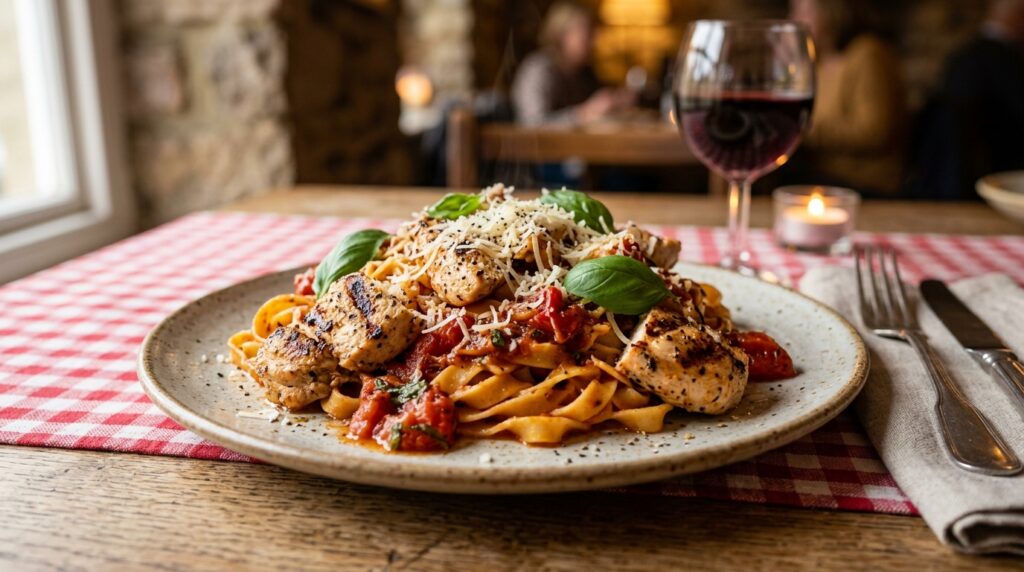
Spoon the tomato sauce over pasta or rice for a filling plate. Both work well, and polenta or potatoes also catch the sauce in a satisfying way.
I choose pasta when I want a classic pairing, especially a shape that holds sauce. Rice keeps the plate simple and mild, while soft polenta makes a creamy base. Potatoes bring a hearty feel and suit a cold evening.
Crusty bread is useful for swiping up sauce left on the plate. A fresh salad adds a crisp contrast to the rich braise, especially with a sharp, bright dressing.
For a balanced dinner, I usually pair one starch with either bread or salad rather than piling on every side. The best choice depends on what the sauce needs: a soft base, a crisp bite, or one last piece of bread.
Once dinner is served, cool any extra chicken and sauce before packing it away.
How to Store and Reheat Chicken Cacciatore
Cool leftover chicken and sauce before packing them into airtight containers. Refrigerate leftovers for up to 4 days, or freeze them for up to 3 months.
I divide a large batch into smaller containers so it cools and reheats more evenly. Labeling each container with the date also makes it easier to use older portions first.
Refrigerating and Freezing Leftovers
Store cooled food in the refrigerator or freezer, rather than leaving it out while the kitchen gets cleaned. Thaw frozen leftovers in the refrigerator overnight before reheating them.
Freezing can make vegetables softer, but the chicken and tomato sauce still make a useful meal. Keep portions sealed well to help protect their flavor and texture.
Fixing Thin Sauce and Reheating Safely
If the sauce seems too thin, stir in a little tomato paste and cook it uncovered until it thickens. Uncovered heat lets excess liquid escape without needing to add more salt or pepper.
Reheat leftovers until they are hot throughout, stirring the sauce so heat spreads through the chicken pieces. Check the center of the food, not just the surface of the sauce.
Refrigerate leftovers for up to 4 days or freeze them for up to 3 months. Thaw frozen portions in the refrigerator overnight, then reheat until hot throughout.
With a reliable way to save extra portions, I can pick a version and make the next batch when it suits my week.
Conclusion
Make this dinner in the way that suits your evening. Bone-in thighs offer a forgiving choice, and the stovetop, oven, or slow cooker can fit different schedules.
Choose one flavor direction, gather its ingredients, and get the pan ready. I like starting with a red-wine version, then making the next batch my own.


