
A chilly evening can make dinner feel like one more task, so I have seven ways to turn broccoli and cheddar into a cozy meal. Each broccoli cheddar soup idea offers a different texture and level of richness, from a simple stovetop bowl to a slow-cooked supper.
Choose a classic one-pot bowl when time is short; it takes about 30 minutes. Add carrots and potatoes for a chunkier meal, or blend the vegetables for a lighter finish. For a richer bowl, use more milk or cream. Cooked chicken makes it heartier, while a Crockpot method lets you shift the timing. A choice of toppings gives each serving its own character.
I’ll share a dependable recipe and clear options, so you can pick what suits tonight’s dinner. Start with the ingredients that shape the flavor and texture most.
Key Takeaways
- Use freshly grated cheddar for a smoother texture.
- Choose sharp cheddar for more flavor or mild cheddar for easy melting.
- Keep the broccoli chunky, partly blended, or fully smooth.
- Add carrots, potatoes, or cooked chicken to make the bowl heartier.
- Add broccoli and dairy late in the Crockpot cooking time.
- Pick one recipe variation, then prep the ingredients before cooking.
Which Ingredients Build the Best Base?
Ingredient choices shape both the flavor and final texture of the soup, especially the broccoli, broth, and cheddar. A fresh, balanced base starts with firm florets and cheese you grate yourself.
Pre-shredded cheese can make soup gritty because its anti-caking agents can interfere with a smooth melt. A roux is a cooked mixture of fat and flour that thickens soup when liquid is whisked into it.
Freshly grated cheddar melts more smoothly than pre-shredded cheese, which can leave the soup gritty.
Choose broccoli heads with deep green, tight florets. Avoid heads with yellowing crowns or dried-out stems, since they may taste less fresh.
Sharp cheddar brings a pronounced, aged flavor, while mild cheddar melts more readily. I like a blend when I want both a clear cheese flavor and an even melt.
| Ingredient choice | What it contributes | Practical consideration |
|---|---|---|
| Broccoli | Fresh, green vegetable flavor | Pick tight, deep green florets |
| Sharp cheddar | Pronounced, aged flavor | Grate it fresh for a smooth melt |
| Mild cheddar | Gentle flavor and easy melting | Blend with sharp cheddar if desired |
| Broth | Savory depth and cooking liquid | Taste before adding the final salt |
Broth saltiness varies by brand and type, so taste the base before adding the final amount of salt. Chicken broth gives a savory note; vegetable broth keeps the base meat-free.
For a gluten-free soup, cornstarch, arrowroot, or rice flour can replace wheat flour as a thickener. Coconut milk and plant-based milks can add creaminess in a dairy-free version. I also use these dairy-free soup ideas when adapting a soup for different needs.
The table helps compare what each ingredient does, while this shopping checklist keeps the store trip focused:
- Choose broccoli heads with green crowns and tight florets.
- Buy cheddar in a block and grate it at home.
- Pick chicken or vegetable broth, then check its salt level.
- Choose unsalted butter so you can control the soup’s salt.
These choices make a flexible base, and the classic recipe shows how they work together in one pot.
How to Make Broccoli Cheddar Soup
A one-pot broccoli cheddar soup takes about 30 minutes and serves six. The stovetop method builds flavor in the same pot, then melts cheddar cheese into the finished base.
Keep the heat gentle when adding cheese to help it melt smoothly. I prepare the vegetables and grate the cheddar before the pot goes on the stove.
Gather the Ingredients
Set out the six grouped ingredients before cooking. Chopping the broccoli into bite-size pieces helps it soften at a steady pace.
- Butter and onion: 5 tablespoons unsalted butter and 1/2 chopped onion.
- Flour: 1/3 cup all-purpose flour.
- Chicken stock and celery: 2 cups chicken stock and 1 finely diced celery stalk.
- Broccoli: 2 1/2 cups chopped broccoli.
- Whole milk and cheddar: 2 cups whole milk and 2 cups shredded cheddar.
- Salt and pepper: season both to taste.
Grate the cheddar from a block if possible. Fresh shreds usually melt more evenly than packaged, pre-shredded cheese.
Build and Simmer the Soup Base
Melt the butter in a large pot over medium heat. Add the onion and cook until it softens, stirring now and then so it does not brown.
Stir in the flour and cook it briefly. This step cooks away the raw flour taste and starts the roux that thickens the soup.
Whisk in the chicken stock a little at a time. Keep whisking as the liquid goes in, which helps prevent flour lumps from forming.
Add the diced celery and chopped broccoli. Bring the base to a gentle simmer, then reduce heat as needed to keep it from boiling hard.
Simmer until the vegetables are tender when pierced with a fork. Check a broccoli piece near the center of the pot, since larger pieces may need more time.
Add the whole milk and stir until the soup is hot. Avoid a hard boil after adding milk, which can make the texture less smooth.
Melt in the Cheddar and Serve
Take the pot off the heat before adding cheddar. A cooler pot gives the cheese a better chance to melt without turning grainy.
Stir in the shredded cheddar a small handful at a time. Let each addition melt before adding the next handful.
Season with salt and pepper to taste. Broth can vary in salt, so taste a spoonful before deciding whether the soup needs more.
Serve the soup while warm, with extra cheddar on top if you like. The broccoli should stay tender, and the broth should coat the spoon without feeling pasty.
This recipe is a useful starting point, but potato adds a heartier feel for anyone who wants more vegetables in the bowl.
Add Carrots and Potatoes for a Heartier Bowl
A large potato can make broccoli soup feel more substantial without changing its basic character. Potato adds body, while carrot brings gentle sweetness and a warm orange color.
Cut the vegetables into small, even pieces so each spoonful holds a mix of flavors. A broccoli cheddar soup with carrots and potatoes can still taste balanced when broccoli remains the main vegetable.
For one potato-based variation, use 1 large potato cut into 1/4-inch cubes, about 1 1/2 cups. Pair it with 12 ounces broccoli, 3 1/2 cups vegetable broth, and 2/3 cup grated aged cheddar.
Simmer the potato in the broth until it begins to soften, then add broccoli and cook until tender. The aged cheddar has a stronger flavor, so it can season the mild vegetables without needing a large amount.
Grated carrot offers another route. Add 1 cup grated carrot to the soup for a little sweetness and color, or combine it with potato if you want a more filling bowl.
When using both, add the carrot while the potato cooks so it softens without disappearing. Keep the broccoli pieces small enough to fit easily on a spoon, but not so tiny that they lose their bite.
Useful choices include:
- Use potato cubes when you want more body.
- Add grated carrot for sweetness and color.
- Cut broccoli into smaller pieces for more even spoonfuls.
These vegetables change the soup’s texture more than its method. Next, you can choose whether milk and cream should play a light or rich role.
Choose a Lighter or Restaurant-Style Bowl
Do you want a lighter, vegetable-led bowl or a richer, dairy-forward one? Blended broccoli can give a broth-forward soup a creamy body without relying on much cream.
Restaurant-style recipes commonly use more milk or cream than broth, along with multiple cups of grated cheese. That richer balance makes the soup feel more like a cheese soup than a simple vegetable broth.
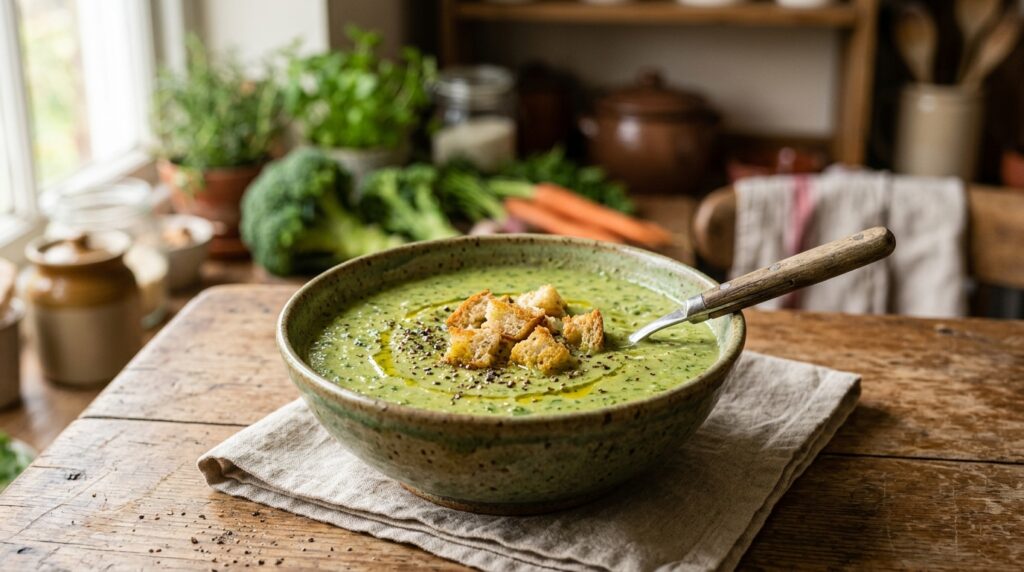
For a lighter version, simmer the vegetables until tender, then blend some or all of them. The vegetables add body, so the soup can feel creamy with less dairy.
A good blender helps create a smooth texture, but leave a few florets whole if you want some bite. Blend in batches if needed, and take care with hot liquid.
Restaurant-style bowls usually lean on whole milk, heavy cream, and plenty of grated cheddar. They taste rich and smooth, though the cheese and dairy can cover some of the broccoli’s flavor.
Searches for Panera-style broccoli cheddar soup or a Panera broccoli cheddar soup recipe often point to this richer style. My version can take inspiration from that balance, but it is not an exact copy of Panera’s soup or ingredients.
Chicken broth makes a savory base, while vegetable broth is a suitable choice for a vegetarian bowl. For more meat-free meal ideas, browse these gluten-free soup ideas and adapt a pairing to your needs.
Choose the broth and dairy level that suit your meal. Cooked chicken is another simple way to make the soup more filling.
Add Chicken for a Heartier Meal
Leftover cooked chicken can turn a pot of broccoli soup into dinner with little extra work. Stir in bite-size pieces after the broccoli is tender, then warm them through.
Add cooked chicken near the end so it heats without becoming tough. The soup’s broccoli and cheese still lead, while chicken makes each bowl more substantial.
Use chicken that is already cooked and cut it into small, even pieces. Add it once the vegetables have softened, then stir gently until the chicken is hot.
Chicken broth reinforces the soup’s savory flavor. A lighter broth keeps the broccoli and cheddar more prominent, so choose based on what you want to taste first.
Black pepper adds a warm bite, while garlic gives the base a deeper savory note. Start with a little of each, taste the soup, and add more only if needed.
Chicken remains optional, so the base recipe still works for a meat-free bowl. You can also serve the soup with a small side salad or a slice of bread.
For a quick weeknight meal, use leftover chicken from another dinner. Add it in small pieces, since large chunks can make a creamy soup awkward to eat.
The stovetop makes the timing easy to watch, while a Crockpot can handle more of the cooking with a different schedule.
Make It in a Crockpot Without Overcooking the Broccoli
The Crockpot works best when broccoli and dairy go in late. That timing protects the texture, keeping the florets tender instead of soft and broken apart.
Check tenderness rather than relying on a fixed minute count, since slow-cooker timing varies by appliance and vegetable size. Use the pot for the onion, broth, and sturdier vegetables first.
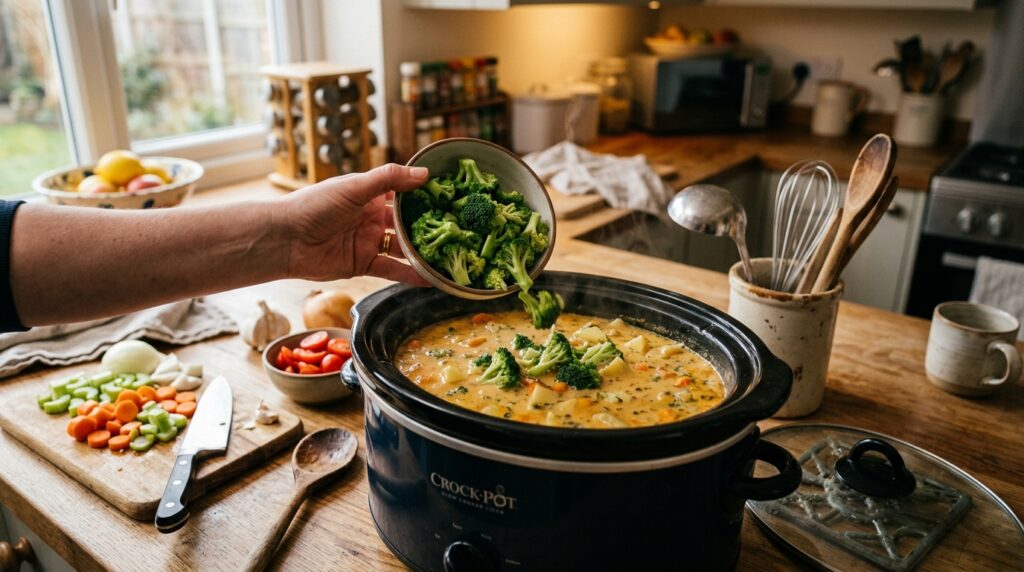
A roux made on the stove can thicken the soup base before it goes into the Crockpot. If you prefer, cook the onion and broth with sturdy vegetables first, then finish the texture near serving time.
Follow this order:
- Soften the onion in a pan, or add it raw to the Crockpot.
- Cook the broth base with sturdy vegetables until they begin to soften.
- Add broccoli near the end and check it until tender.
- Switch off the heat, then finish with dairy and cheddar.
Add milk or cream toward the end of cooking rather than leaving it in the pot for the full cycle. Stir in cheddar after switching off the heat, letting it melt gently.
Vegetable pieces cook at different rates. Smaller pieces soften faster, so check the broccoli sooner when the florets are small or the Crockpot runs hot.
Refrigerate leftovers in an airtight container for up to three days. Freezing is not recommended because thawed soup can become thin and gritty.
Make-ahead prep can save time: chop the vegetables, grate the cheese, and refrigerate them separately. Add the broccoli and dairy only when the slow-cooked base is nearly ready.
Once the soup is cooked, a finishing touch can bring a brighter flavor or a little crunch to each bowl.
What Can I Add to Customize and Serve the Soup?
A bright citrus olive oil drizzle can cut through creamy soup and make each spoonful feel fresher. Small finishing touches can change the flavor without changing the whole pot.
Choose one or two additions at a time, then taste before adding more. A strong oil or salty topping can quickly take over the broccoli and cheddar.
How to Jazz Up Broccoli Cheddar Soup
To decide how to jazz up broccoli cheddar soup, add mustard for tang, harissa whisked into olive oil for warmth, or chile oil for a sharper heat. A citrus olive oil drizzle gives the bowl a fresh, bright finish.
Add oils a little at a time, especially if they carry a lot of heat. A few drops can spread across the surface and flavor each bite.
Spices and Finishing Flavors
Smoked paprika adds a gentle smoky note, and black pepper brings a familiar bite. A small amount of mustard adds sharpness that balances rich cheese.
Stir mustard into the pot in small amounts, or add a little to each bowl. This gives you more control when people at the table prefer different levels of tang.
| Addition | Flavor or texture | When to add it |
|---|---|---|
| Mustard croutons | Tangy crunch | Scatter over each serving |
| Harissa oil | Warm spice and fruitiness | Drizzle over the bowl |
| Chile oil | Direct heat and a slick finish | Add a few drops before serving |
| Citrus olive oil | Bright, fresh flavor | Drizzle just before eating |
| Feta | Salty, crumbly contrast | Scatter on top at the table |
Bread, Salads, and Meal Pairings
Mustard croutons add a crisp bite, while toasted walnut bread or olive bread brings a savory note. A sourdough bread bowl makes the meal feel generous and gives the soup a place to soak in.
For a simple side, pair the soup with a quesadilla, grilled cheese, egg salad, or a crisp salad. A plain salad with a light dressing keeps the meal from feeling too heavy.
Gluten-free bread can work well alongside a bowl, too. Keep the slices toasted so they hold their shape when dipped.
The best finishing idea depends on whether the soup’s texture is right, so check the consistency before adding toppings.
Why Does the Soup Turn Grainy, Thin, or Dull?
Broccoli cheddar soup does not have to be blended to feel creamy. Blending is optional, and the right texture depends on whether you want clear vegetable pieces or a smooth bowl.
Stop cooking when the broccoli is tender, since overcooking can dull its bright green color. A gentle simmer also helps protect the cheese and milk from harsh heat.
Broccoli stays brighter when you stop cooking as soon as it turns tender.

Choose a Chunky or Blended Texture
Leave the florets whole for distinct bites and a more rustic feel. This works well when the pieces are small enough to fit comfortably on a spoon.
For a middle ground, blend part of the pot and leave the rest chunky. The blended vegetables thicken the base, while whole florets keep their shape and bite.
Puree the full pot for a smoother finish. A countertop blender or immersion blender can do the job, but take care when blending hot liquid.
Each method changes the soup’s consistency. A fully blended bowl may feel thicker than a chunky one, even when both contain the same amount of liquid.
Adjust the Soup After Cooking
Soup thickens somewhat as it cools. If a serving becomes too thick, stir in a little warm broth or milk until it loosens.
A thin soup may have too much liquid or an underdeveloped roux. Simmer the base briefly before adding cheese, so some liquid can cook off and the flour has time to thicken it.
Grainy cheese can come from adding cheddar over high heat or using cheese that does not melt smoothly. Take the pot off the heat before adding cheese, and stir in small amounts.
Make small changes instead of trying to fix the whole pot at once. Add a splash of liquid, a short simmer, or a little seasoning, then taste again.
If the soup tastes dull, check its salt before adding more cheese. Broth strength varies, and a small pinch of salt can make the broccoli and cheddar flavors clearer.
For gluten-free thickening, cornstarch, arrowroot, or rice flour can replace wheat flour in many soups. These texture tips for dairy-free soup also explain ways to avoid lumpy or separated results.
A clear recipe and a small taste test can help you choose what to cook next, based on the texture you enjoy most.
Conclusion
I recommend starting with the classic bowl or the variation that best fits tonight’s meal. Carrots can add sweetness, chicken can make dinner more filling, and a slow cooker can suit a busy day.
A bold topping is an easy way to change the flavor without making another pot. Choose one option, gather the ingredients, and start prep with your preferred texture in mind.
Decide whether you want a chunky or smooth bowl, then get the ingredients ready and begin.


