On a chilly evening, a creamy potato soup recipe can turn a quiet night into a warm, comforting dinner. I like how a pot of soup makes familiar ingredients feel special without demanding a long evening at the stove. A roux is a cooked mixture of fat and flour used to thicken a soup.
Your bowl can be chunky or smooth, vegetarian or smoky, or piled high with toppings. These five recipes use common ingredients and straightforward stovetop steps, with options for different tastes and available time.
Key Takeaways
- Choose a bacon, vegetarian, loaded, creamy, or smoky style.
- Russets add body, while Yukon Golds keep some shape.
- Blend part of the soup for a creamy, chunky texture.
- Set out toppings so each person can finish a bowl their way.
- Pick the recipe that suits tonight, then gather its ingredients.
Which Creamy Potato Soup Recipe Fits Your Night?
The best fit depends on whether you want classic bacon, vegetables and cheddar, loaded toppings, a simple cream base, or restrained smoky spice. Each version starts with potatoes and broth, then shifts in flavor and texture.
Choose the bowl that matches your appetite: classic bacon, vegetables and cheddar, loaded toppings, a simple cream base, or smoky spice.
I’ve made these styles for different moods and pantry shelves. The carrot-celery batch makes plenty, so choose a pot that can hold it with room to simmer.
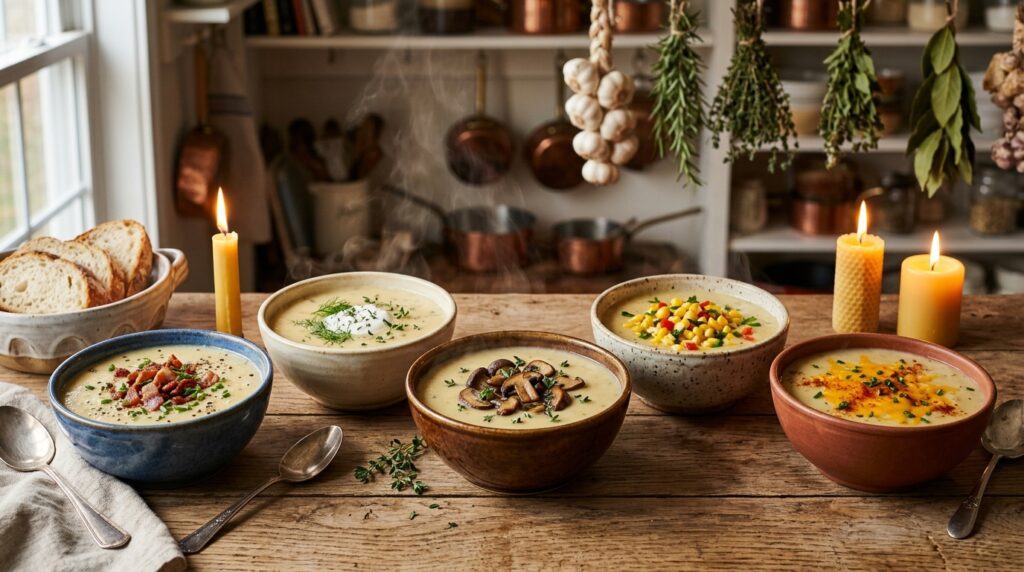
One-Pot Bacon and Yukon Gold
This classic potato soup gets its savory base from six strips of bacon cooked right in the pot. Use 2.5 pounds of potatoes, 4 cups chicken broth, 2 cups milk, 2/3 cup heavy cream, and 2/3 cup sour cream.
The listed total time is 30 minutes, and the recipe makes eight servings, or about 3.5 quarts. Bacon brings a salty, smoky edge, while the dairy gives the broth a soft, rich feel.
Yukon Gold potatoes suit this style because they turn creamy but keep some pieces intact. Save crisp bacon pieces for serving, rather than blending them into the soup.
Carrot-Celery Cheddar With Vegetable Broth
For a vegetarian potato soup, use vegetable broth instead of chicken broth. Combine six potatoes, two carrots, three celery stalks, eight cups low-sodium broth, one cup heavy cream, one cup milk, and 1 1/2 cups cheddar.
This version takes about 30 minutes and serves six. The diced vegetable base adds sweetness and savory depth, while cheddar gives the creamy soup a familiar, sharp flavor.
Use vegetable broth to keep this variation vegetarian. The listed amounts make a generous batch, so pick a large pot before you start cooking.
A Loaded Potato Soup Recipe With White Cheddar
For a loaded potato soup recipe that echoes a baked potato, start with three pounds of russet potatoes and 12 ounces of bacon. Add four cups low-sodium chicken broth, two cups half-and-half, and four ounces sharp white cheddar.
This version takes about an hour, giving the flavors time to come together. Bacon and white cheddar make the soup savory and rich, while the potato base stays hearty.
Finish each serving with baked-potato-style extras, such as sour cream or chives. Keeping toppings out of the pot lets each person choose how loaded to make dinner.
What Goes Into an Old-Fashioned Potato Soup Recipe With Heavy Cream?
An old fashioned potato soup recipe with heavy cream can stay simple: potatoes, milk, heavy cream, and a flour thickener. Add onion, salt, and pepper if you want a little more depth.
This is a straightforward creamy potato soup recipe for cooks who want a familiar, mild flavor. A flour thickener gives the broth more body, while cream adds richness without changing the soup’s plain, comforting character.
Keep the seasoning modest at first, especially if your broth already contains salt. You can taste and adjust near the end, once the potatoes and dairy have joined the pot.
Smoky Pepper Jack With a Hint of Tarragon
For a little heat, use pepper jack and a restrained pinch of smoked paprika. A small amount of ancho chili powder works too, with tarragon as an optional herb.
This smoky potato soup should have warmth, not a sharp burn. Start with a small amount of spice, then taste before adding more.
Pepper jack adds both cheese flavor and gentle heat. Tarragon brings an herbal note, so use it only if you enjoy its distinct taste.
These recipes suit different pantry needs, from bacon and cheddar to vegetable broth and cream. Next, choose the potatoes and broth that best support your preferred bowl.
Which Potatoes and Broth Make a Good Soup Base?
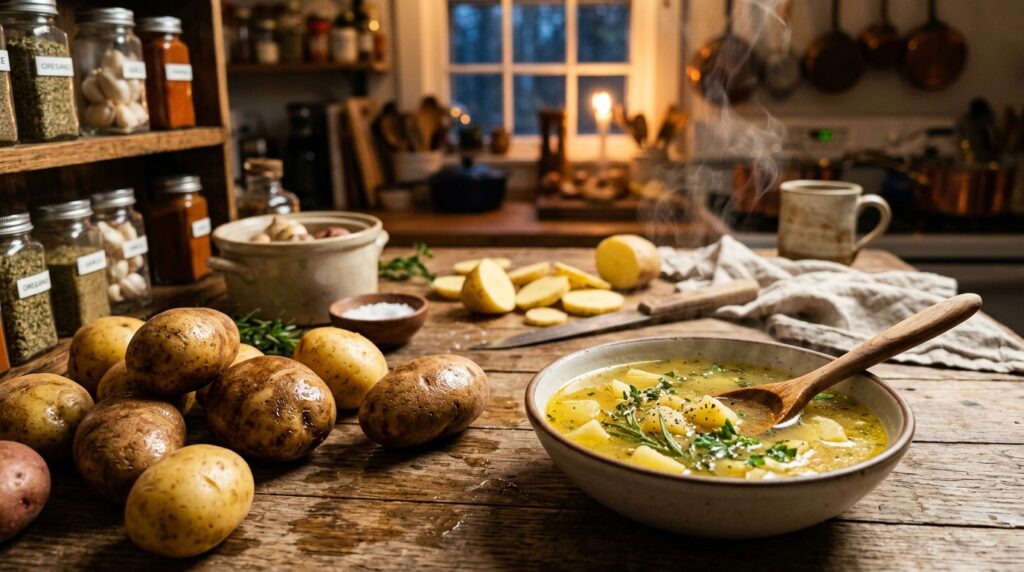
Russets thicken naturally, while Yukon Golds offer a creamy balance of body and intact pieces. Choose russets for a thicker base, or Yukon Golds when you want some potato pieces to hold their shape.
Red potatoes have less starch and tend to stay firm. Chicken broth gives the soup a savory base, while vegetable broth can replace it for a vegetarian pot.
| Potato type | Starch and body | Shape after cooking | Best fit |
|---|---|---|---|
| Russet | High starch thickens soup | Softens and breaks down | Thick, blended potato soup |
| Yukon Gold | Medium starch gives creamy body | Keeps some pieces intact | Creamy soup with texture |
| Red potato | Lower starch adds less body | Holds its shape well | Chunky soup with firm pieces |
A simple creamy potato soup recipe can start with potatoes, broth, and dairy. Onion and garlic build flavor, while salt helps bring it forward.
A 4 ingredient potato soup still needs a clear count: some cooks count oil, salt, or toppings, while others leave them out. The shortest version can rely on potato, broth, and milk or cream, but it will taste plain without seasoning.
Choose a potato and broth that fit your preferred texture and flavor. The next choices, thickening and blending, help set the final consistency.
How Can I Make the Soup Creamy Without Losing Texture?
A roux and partial blending create a creamy base without forcing the whole pot to become smooth. Cook flour with fat, then add broth gradually and blend only as much as you like.
Lower the heat before adding cheese, and stir gently. Gentle heat helps keep cheese from separating into oily streaks.
Build Body With a Roux and Add Dairy Gently
Cook flour with butter or another fat to make a roux. Stir until the mixture looks smooth, then add broth a little at a time so it blends evenly.
Let the soup simmer until the potatoes are tender, then stir in milk or cream. Lower the heat before adding cheese, and avoid boiling the soup after it goes in.
Choose How Much to Blend
Puree about half the soup to keep potato pieces in a creamy base. Blend the whole pot for a smoother result, or use a masher for a more rustic finish.
| Method | How to use it | Resulting texture | Handling note |
|---|---|---|---|
| Immersion blender | Blend directly in the pot | Partly smooth or fully smooth | Keep the blender head below the surface |
| Countertop blender | Blend hot soup in batches | Very smooth and even | Leave room for steam to escape |
| Potato masher | Mash some cooked potatoes by hand | Chunky with a thicker broth | Work in the pot while the soup is warm |
A gluten-free potato soup can use potato starch and mashed potatoes for body instead of flour. Check the broth label if gluten is a concern.
- Soften the onion and other vegetables in fat.
- Add the potatoes and seasonings.
- Stir in broth and simmer until the potatoes are fork-tender.
- Blend some or all of the soup.
- Finish with dairy and cheese over low heat.
Keep bacon out of the blender if you want crisp pieces in each serving. Once the texture feels right, toppings can add contrast without changing the whole pot.
What Toppings Turn Each Bowl Into a Loaded Dinner?
The first spoonful is your chance to tailor a bowl to each person’s taste. Use toppings for contrast, richness, or heat without changing the whole pot.
A baked potato soup recipe easy to customize can offer toppings at the table. A cheesy potato soup recipe can feel rich without stirring extra cheese into every serving.

- Bacon, shredded cheddar, and sour cream for a classic loaded bowl.
- Chives or green onions with extra cheese for a fresh, sharp finish.
- Parsley or thyme with cracked pepper for an herbal note.
- Pepper jack with red pepper flakes for more heat.
- Chipotle with a small amount of sour cream for smoky spice.
Parmesan can stand in for cheddar when you want a sharper, salty cheese. Add parsley or thyme sparingly so the herbs do not hide the potato flavor.
Chipotle sauce or chopped chipotles in adobo can deepen the smoky taste. Add a little at first, since chipotle can quickly take over a mild soup.
Choose a topping that suits the bowl rather than piling on every option. Careful cooking matters just as much, since a few common choices can hurt flavor or texture.
What Mistakes Make Potato Soup Bland or Gluey?
Potato pieces that cook at different rates can leave some firm while others collapse. Cut the potatoes into similar pieces, about 3/4 inch or smaller, for more even cooking.
Broth brands vary in salt, so season gradually and taste as the soup cooks. Too much salt early can make the finished broth taste harsh.
Blending only part of the soup keeps potato pieces while adding body. Keep bacon aside until blending ends, then stir it back in for crisp bites.
A fully smooth soup is a valid choice. If you use a countertop blender, work in batches and leave space for steam to escape.
Boiling cheese or dairy can cause separation and a grainy texture. Keep the heat low when they go into the pot, then serve once the soup is hot.
Even cuts, gradual seasoning, and gentle heat help protect the soup’s flavor. The same care makes leftovers easier to store and warm without losing their creamy feel.
Can I Make Potato Soup Ahead and Reheat It?
Yes, potato soup can be made ahead and stored if you cool it before packing it airtight. Refrigerate it for up to five days or freeze it for up to three months.
Cool leftover soup before sealing it, then refrigerate it for up to five days or freeze it for up to three months.
Move frozen soup to the refrigerator overnight to thaw. A covered airtight container helps keep the soup protected while it chills.
Reheat the soup gently on the stovetop or in the microwave. Add a splash of water or chicken stock if it has thickened in the fridge.
Slow reheating is especially helpful for a dairy-rich version. Stir as it warms, and avoid bringing it to a boil.
For make-ahead prep, choose the portion size and recipe style that fit your next meal. Then the final choice is simple: pick tonight’s bowl and get the vegetables ready.
Conclusion
Choose the bowl that fits tonight’s appetite, whether you want a classic, vegetarian, or loaded meal. Potato choice and partial blending shape the texture, while toppings let you personalize a familiar base.
I’d start with the ingredients already in your kitchen. Prep the potatoes and vegetables before heating the pot, then let a cozy dinner take shape on the stove.


