
The smell of cinnamon and baking apples can make a fall kitchen feel like the heart of the home. When I bake, I want a dessert that tastes special without taking over the whole day.
An easy apple cake recipe can be buttery and simple, warmly spiced, or made for sharing with a crowd. I’ll help you compare seven styles and choose one that fits your time, tools, and favorite texture. Creaming means beating softened butter and sugar until pale and fluffy, which adds air to the mixture.
Key Takeaways
- Choose a cake style to suit your schedule and the people at your table.
- Firm apples hold their shape better than soft or mealy ones.
- Oil-based cakes often make a tender crumb, while butter adds a rich flavor.
- Mix only until the flour disappears to help keep the cake tender.
- Use a center test, not just the clock, to check that the cake is baked.
- Cool the cake before wrapping it for storage.
Which Apple Cake Recipe Should I Bake This Fall?
The best place to start depends on whether you want buttery simplicity, warm spice, or the fastest assembly. Match the cake style to your time and occasion, since easy apple cake recipes with few ingredients may still need peeling or cooling.
Pick a style that fits the day: simple and buttery, warmly spiced, or quick to assemble.
Here are seven options I’d consider. Some are familiar recipe styles or adaptations, not fully tested standalone formulas, so follow a tested recipe for exact amounts and baking times.
- French apple cake has diced apples and a soft, buttery crumb. It is traditionally not heavily spiced, making it a good fit for a simple dessert.
- Spiced apple sheet cake uses oil, applesauce, warm spices, and chopped apples. Its rectangular shape suits potlucks and other gatherings.
- A one-bowl fresh apple walnut cake keeps cleanup low. Cinnamon and chopped pecans or walnuts can add warmth and crunch.
- Old-fashioned cinnamon apple cake brings a familiar flavor and can be stirred with a wooden spoon. It suits a relaxed family dessert.
- An oil-based moist apple cake is a good choice if you prefer a tender crumb. The best apple cake recipe ever is a matter of taste, not a title anyone can claim for everyone.
- Apple upside-down cake shows fruit on top when turned out. Choose it when presentation matters as much as flavor.
- Apple dump cake is a shortcut dessert made by layering fruit filling, dry cake mix, and butter. It works when speed and easy assembly matter most.
A French apple cake recipe is a lovely pick when you want a soft crumb without strong spice. Granny Smith apples bring a tart note, while walnuts add crunch to a one-bowl cake.
Peeling and chopping can add prep work, and some cakes need time to cool before serving. Choose the style that fits your day, then decide which apples to buy.
Which Apples Work Best in an Apple Cake?
A tart Granny Smith paired with a sweeter Fuji gives a cake both zip and mellow fruit flavor. Firm apples are the most reliable choice because they hold their shape in the oven.
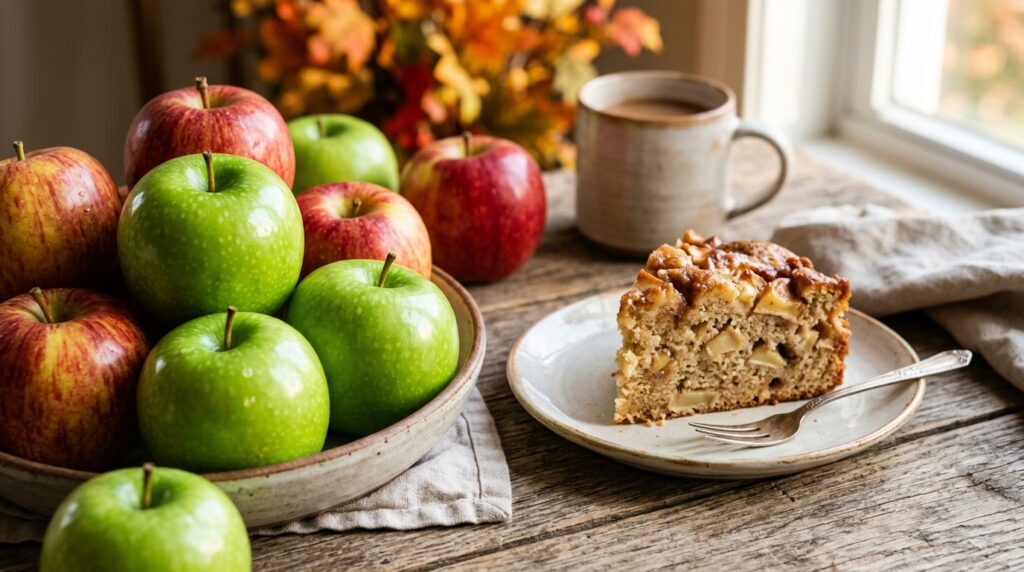
Choose firm apples for distinct pieces
Pink Lady, Fuji, and Jazz are sweet-tart choices that hold their shape in cake. Honeycrisp and Braeburn work well, too. Soft or mealy apples can turn mushy, so save them for another use.
I peel apples for a smoother texture, especially in a cake with a soft crumb. You can leave the skin on if you prefer a more rustic result. Cut the fruit into roughly 1/2-inch chunks for even pieces.
Mix sweet and tart varieties for a balanced flavor
Combining a sweet apple with a tart one adds depth without making the fruit taste flat. Granny Smith is a useful tart choice, while Fuji brings more sweetness. Gala and Fuji can both work.
Is Gala or Fuji better? Either can work; choose firm fruit and let your preferred sweetness guide you. Gala tends to suit a sweeter result, while a tart apple can balance it.
| Variety | Flavor profile | How it works in cake |
|---|---|---|
| Granny Smith | Tart | Adds a sharp note; pairs well with sweet apples |
| Fuji | Sweet and mild | Holds its shape in cake |
| Pink Lady | Sweet-tart | Stays distinct in baked chunks |
| Honeycrisp | Sweet-tart | Works well in fresh apple cake |
Wash, peel, core, and cut the fruit before mixing. If you also make drinks at home, my guide to preparing apples for fresh juice covers similar prep work. The apples you choose pair with fats and other ingredients to shape the crumb.
How Do Oil and Butter Affect Apple Cake Texture?
A French apple cake has a soft, buttery crumb, while an oil-based cake often has a moist, tender texture. The fat you choose changes both the crumb and the flavor.
French apple cake uses unsalted butter softened to room temperature and caster sugar. A small amount of salt enhances the flavor without making the cake taste salty.
The spiced sheet cake uses vegetable oil, unsweetened applesauce, granulated sugar, and brown sugar. Applesauce adds moisture, while warm spices, eggs, vanilla, and orange juice help build its flavor.
| Cake style | Fat base | Texture or flavor contribution |
|---|---|---|
| French apple cake | Softened unsalted butter | Buttery crumb; traditionally not heavily spiced |
| Spiced sheet cake | Vegetable oil and applesauce | Moist crumb with warm spices |
| One-bowl fresh apple cake | Oil-based batter | Can be stirred by hand; chopped apples add fruit |
Brown sugar adds flavor to the sheet cake, while white sugar keeps the sweet mix from feeling too heavy. These sugars work together rather than making the cake taste alike.
For the French cake, room-temperature eggs blend into the batter more smoothly. Cold eggs can make a creamed mixture less even, so let them warm before mixing.
Once the fat and other ingredients are chosen, the mixing order brings the wet ingredients and dry ingredients together without toughening the cake.
How Do You Mix Apple Cake Batter Without Overworking It?
Set out two bowls and a spatula before you start, unless your recipe uses one bowl. Stop mixing as soon as no dry flour is visible.
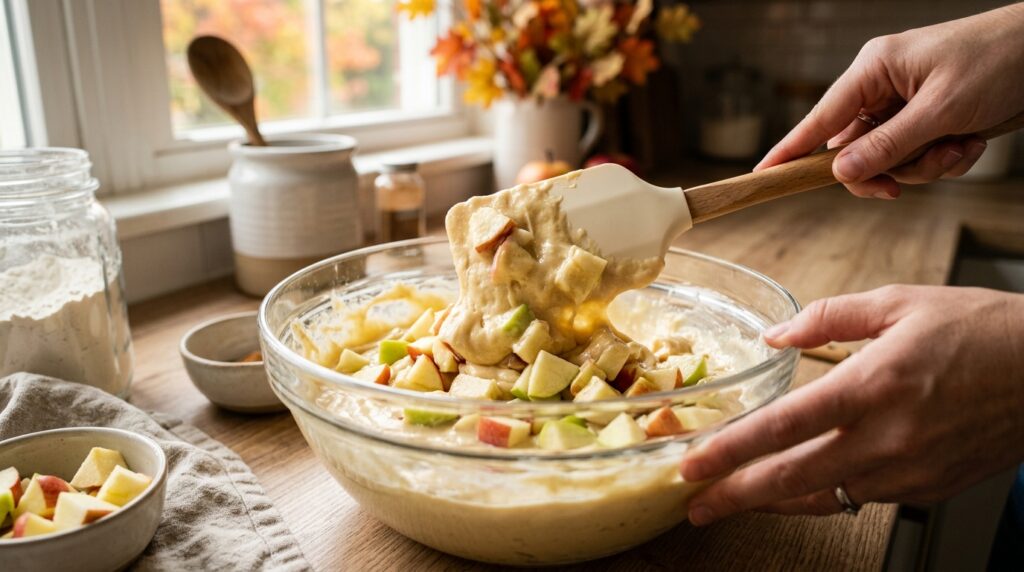
One-bowl and separate-bowl methods differ by recipe, so follow the method you chose. The old fashioned fresh apple cake recipe can be stirred with a wooden spoon, while French apple cake uses a mixer to cream the butter and sugar.
Whisk the dry ingredients separately
Whisk flour with the recipe’s leaveners, salt, and spices in a bowl. This spreads them through the dry ingredients before they meet the wet ingredients.
Combine the wet ingredients and fold in the apples
Then follow these four stages. Each keeps the batter even without extra stirring.
- Whisk the dry ingredients in a separate bowl, if your recipe calls for that method.
- Combine the wet ingredients, or cream butter and sugar when the recipe requires it.
- Add the dry ingredients and mix just until the flour disappears.
- Fold in the apple chunks with a spatula.
A simple apple cake recipe may use one bowl, but that does not mean every style should be mixed the same way. For an old-fashioned cake, a wooden spoon can stir chopped apples, sugar, oil, eggs, and vanilla before you add flour and other dry ingredients.
French apple cake batter is thick, especially after you add the apples. That is normal, not a sign that you need more liquid. The fruit releases moisture as the cake bakes.
Too much stirring can develop the flour and make the crumb tough. A few small streaks of flour are better than beating the batter smooth; stop when no dry flour remains.
With the batter ready, choose a pan that suits the recipe and plan to check the center for doneness.
What Pan and Baking Time Should I Use?
Pan shape and batter depth affect baking time, so use the pan listed for your cake style. A clean toothpick or skewer from the center is a better doneness check than the clock alone.
French apple cake uses a 23-centimeter, or 9-inch, round pan lined on the base with parchment paper. Bake it at 350°F, or 180°C, for about 35 minutes.
A cool oven can extend the French cake’s baking time to about 45 minutes. Check the center before you take it out, since oven temperature and batter can shift the timing.
The spiced sheet cake uses a greased 9-by-13-inch pan and bakes at 350°F for 45-50 minutes. If the top browns quickly, loosely cover it with foil around the 30-minute mark.
A one-bowl fresh apple cake can use a greased 13-by-9-inch pan or a 10-inch springform pan. Bake it at 350°F for 50-60 minutes, then test the center.
For any version, a toothpick or skewer should come out clean when inserted in the middle. A few moist crumbs may cling, but wet batter means the cake needs more time.
Let the cake cool briefly in its pan before moving it to a wire rack. That pause helps it set, while the rack lets air move around the bottom.
With the oven and pan sorted, you can make many apple cake batters with little or no equipment.
Can I Make Apple Cake Without a Mixer?
A mixer is not required for every apple cake. An oil-based batter can be stirred by hand, while the French cake uses a mixer for creaming.
Stir a one-bowl cake by hand
The old-fashioned fresh apple cake can be mixed with a wooden spoon. A large bowl helps contain the chopped apples as you stir them with sugar, oil, eggs, and vanilla.
Once the flour and other dry ingredients go in, stir only until they disappear. A wooden spoon gives you control, and you can scrape the bowl as you mix.
- Use a large bowl to make room for chopped apples.
- Stir the oil-based batter by hand when the recipe allows.
- Fold in fruit without beating the mixture smooth.
Use a mixer only when the method calls for creaming
French apple cake calls for softened butter and sugar to be creamed together. A handheld beater or stand mixer makes that step easier and helps add air.
Room-temperature eggs blend into the creamed mixture more smoothly. If yours are cold, place them in warm, not hot, water for 5 minutes.
After five minutes, dry the eggs and use them as directed. This small step helps them mix in evenly without waiting for them to warm on the counter.
Choose tools based on the method, not on the idea that every cake needs a mixer. Next, consider a few focused swaps for dietary needs or pantry gaps.
How Can I Adapt Apple Cake for Different Diets?
If you have apples and flour but need a small adjustment, start with a swap tested for that cake style. A good-quality 1:1 gluten-free flour blend can replace regular flour in French apple cake at the same quantity.
The texture may differ slightly from a cake made with wheat flour. Gluten-free blends vary, so choose one made for a direct 1:1 swap rather than mixing single flours at random.
For more on flour blends and texture, see this guide to gluten-free baking. It can help explain why some blends give baked goods a softer or more crumbly feel.
Firm, ripe pears can replace apples in French apple cake. Choose fruit that gives slightly when pressed but still holds its shape when cut.
For the spiced sheet cake, a neutral-flavored oil such as canola or avocado oil can replace vegetable oil. These options let the spices and fruit stay in focus.
Replacing all the oil in that cake with melted butter is not a good swap. The result can taste dry, so keep to the recipe’s oil base.
Not every change works in every apple cake recipe, and one swap may affect the crumb. Once you settle on the version you can make, choose a topping that suits it.
What Should I Serve on Apple Cake?
A warm slice of French apple cake with cool vanilla ice cream makes a lovely dessert. Serve the cake warm or at room temperature, with a topping that fits its flavor.
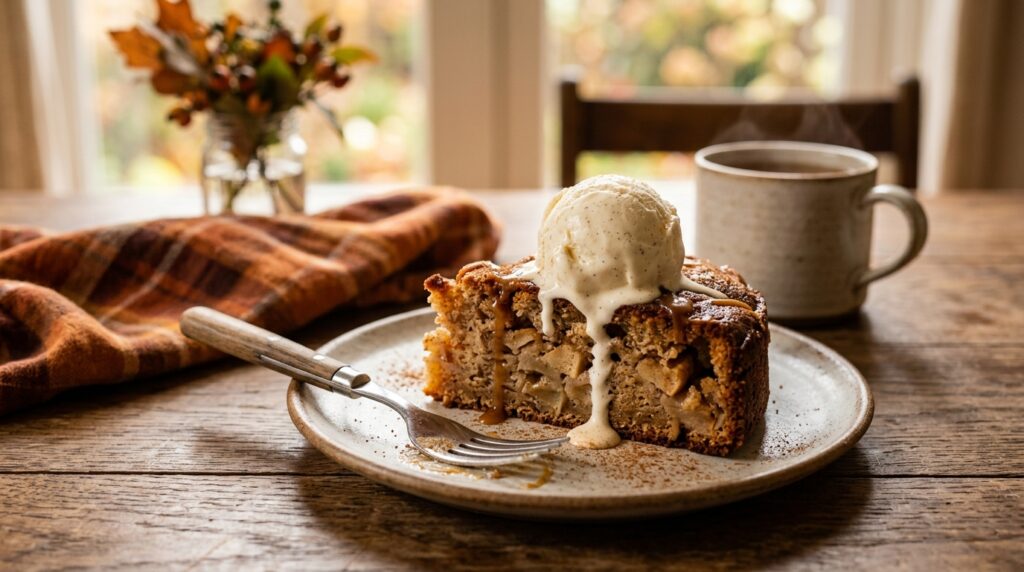
Whipped cream also pairs well with the buttery crumb. If you want a lighter finish, serve a plain slice at room temperature instead.
| Topping | Flavor effect | Best timing or pairing |
|---|---|---|
| Vanilla ice cream | Cool, creamy sweetness | Serve with a warm French apple cake slice |
| Whipped cream | Light, soft cream flavor | Pair with warm or room-temperature cake |
| Powdered sugar | Light dusting of sweetness | Add shortly before serving |
| Brown sugar glaze | Rich caramel-like sweetness | Pair with spiced sheet cake |
Powdered sugar gives a simple finish, but it can melt into the cake after a few hours. Dust it on shortly before serving so it stays visible.
Spiced sheet cake is also good plain, or with powdered sugar or brown sugar glaze. Salted caramel sauce and apple butter are optional choices when you want a richer or fruitier finish.
For a warm slice, serve the cake soon after its brief cooling period. A room-temperature slice works well when you want to bake ahead or set out dessert for guests.
Leftovers and make-ahead plans depend on the cake style, so cool the cake and store it the right way.
How Long Does Apple Cake Keep?
Apple cake storage time depends on the style and where you keep it. Cool the cake before wrapping or freezing it, and store it covered or airtight.
French apple cake leftovers keep for 5 days in an airtight container in the refrigerator. It also freezes well for up to 2 months.
Spiced sheet cake keeps covered at room temperature for 2 days or in the refrigerator for up to 5 days. Freeze it for up to 3 months.
Old-fashioned fresh apple cake keeps at room temperature for up to 1 day. Refrigerate it for 2-3 days if you need longer.
Let the cake cool before wrapping it so trapped warmth does not build up inside the cover. For the freezer, wrap cooled portions well and thaw them before serving.
Powdered sugar can melt into the surface after a few hours, so add it close to serving time. Storage sorted, a few simple checks can prevent baking mistakes before the cake reaches the table.
What Mistakes Should I Avoid When Baking Apple Cake?
Overmixing or judging doneness by the top alone can spoil an otherwise easy bake. Check the center, use firm apples, and stop stirring once the flour is mixed in.
Test the middle, not just the top. A browned surface does not prove the cake is baked through.
Keep these four checks in mind as you bake:
- Choose firm apples rather than soft or mealy fruit.
- Stop mixing when no dry flour remains.
- Test the center instead of relying only on the timer.
- Loosely tent a sheet cake with foil if its top browns quickly.
Don’t use soft or mealy apples
Soft fruit can lose its shape and make the cake mushy. Firm apples give you better-defined chunks after baking.
Stop mixing when the flour is incorporated
Extra stirring after the flour disappears can make the crumb tough. A few gentle folds are enough to spread the apple chunks through the batter.
Check the center before taking the cake out
A dark or set top does not always mean the middle is done. Insert a toothpick or skewer into the center, then give the cake more time if wet batter clings to it.
For apple dump cake, the key mistake is stirring dry cake mix into the fruit. Layer it over the filling instead; fruit moisture and butter coverage affect the final texture.
Spread butter across the dry mix so fewer dry patches remain. Small adjustments, especially checking the center, can rescue a forgiving home bake. Pick a style and set out what you need.
Conclusion
I’d choose the cake that fits your mood and schedule: a simple buttery dessert for a quiet day or a sheet cake for sharing. Firm apples help keep the fruit pieces distinct and add a fresh fall flavor.
Pick a recipe, gather the ingredients, and make the first step easy. Choose your apples before you preheat the oven.


