
Dinner is coming, and you want a bubbling baked spaghetti recipe without the work of assembling lasagna. I know that feeling: a warm, cheesy meal can make an ordinary weeknight feel special. I’m sharing five options, from a familiar beef dinner to creamy layers and other flavor twists.
The classic version gives you a flexible starting point, and you can choose another direction when your table calls for it. Some options need more time than others, so check each method before you plan dinner. The basic recipe is a good place to begin, with simple ingredients and clear steps.
Key Takeaways
- Cook pasta a little less than the package time before baking.
- Coat the noodles with sauce to help keep them tender.
- Freshly grated cheese is optional; a bagged blend saves time.
- Choose beef, chicken, or a creamy cheese layer to suit your meal.
- Plan ahead: the sauce or assembled dish can keep for up to 2 days.
Easy Baked Spaghetti Recipe for a Weeknight
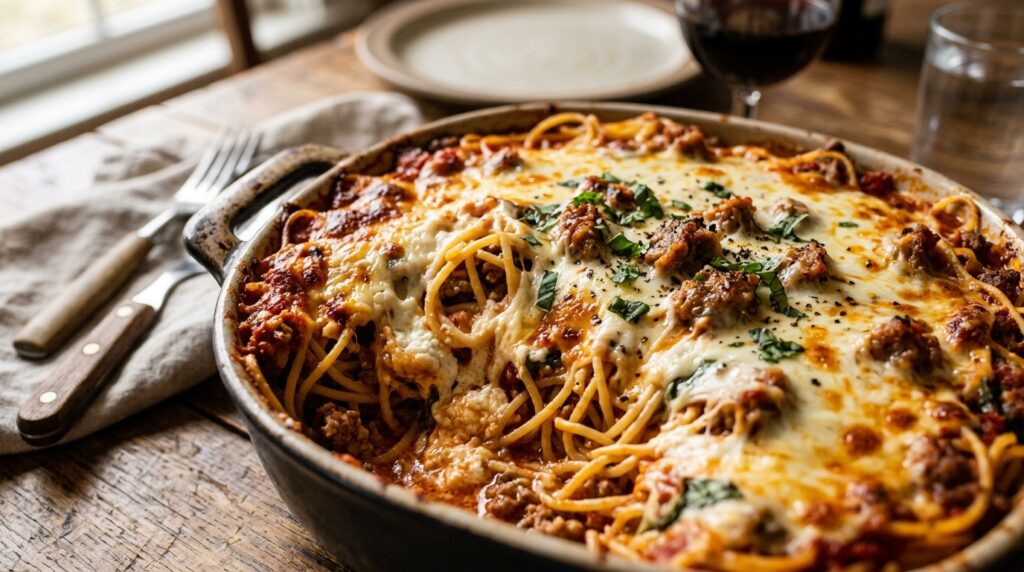
This version pairs spaghetti with beef marinara and a three-cheese topping for a familiar weeknight meal. It uses everyday ingredients and bakes in 20 minutes after assembly.
Cook the pasta just short of tender, since it continues cooking in the oven. Fully cooked pasta can turn too soft during baking.
Drain the pasta while it still has a little firmness. It keeps cooking in the oven.
- Boil 1 pound spaghetti in salted water for 2 minutes less than the package directions. Al dente means pasta cooked until tender but still slightly firm in the center.
- Brown 1 pound lean ground beef and 1/2 medium chopped onion in a little olive oil over medium-high heat, about 10 minutes. Season with salt and pepper.
- Add 4 minced garlic cloves, 1/2 teaspoon dried oregano or Italian seasoning, and optional 1/2 teaspoon crushed red pepper flakes. Cook for about 1 minute.
- Pour in 4 cups, or 32 ounces, marinara sauce. Warm it for a few minutes, then taste and adjust the salt and pepper.
- Drain the spaghetti and toss it with the sauce mixture. Transfer everything to a baking dish and spread it evenly.
- Top with 1 cup each shredded mozzarella, cheddar, and grated Parmesan. Bake uncovered at 375°F for 20 minutes. Broil briefly for more browning, if you like, then rest 5-10 minutes.
Freshly grated cheese is optional. A bagged mozzarella-cheddar blend is a handy shortcut, with Parmesan added separately for its savory flavor.
This easy baked spaghetti recipe is a sturdy base, and baked spaghetti recipes with ground beef can take several flavor turns. The other options change the cheese, sauce, or protein without changing the cozy spirit of dinner.
Four More Cheesy Baked Spaghetti Variations
Choose a variation by its cheese texture and protein: a creamy layer, beef sauce, or chicken can each suit a different table. The best baked spaghetti recipe for you depends on the kind of bite you want.
Use ricotta for a lasagna-like layer, or keep the familiar beef marinara and change its cheese blend. These four directions offer distinct choices without making one style the rule.
| Variation | Sauce or protein | Cheese approach | Distinctive detail |
|---|---|---|---|
| Ricotta-layered lasagna-style spaghetti | 32-ounce marinara jar, 1/2 cup water | 15-ounce ricotta, 2 eggs, parsley, Parmesan | Simmer sauce 15 minutes; layer sauce over pasta; bake uncovered about 30 minutes |
| Cream-cheese spaghetti | Marinara sauce | Cream cheese for a soft, rich layer | Richer texture than a simple cheese topping |
| Chicken marinara spaghetti | Ground chicken or chicken pieces | Mozzarella and Parmesan | Chicken replaces beef in the meat sauce |
| Southern-inspired beef-and-cheddar | Ground beef and marinara | Italian cheese blend, sharp cheddar, Parmesan | Garlic paste and a little brown sugar add flavor |
For the ricotta version, mix the ricotta with 2 eggs, parsley, and some Parmesan. Layer the pasta and sauce, making sure sauce covers the top noodles.
A Southern baked spaghetti recipe is a personal flavor direction, not one fixed formula. Cheddar, beef, garlic paste, and a small amount of brown sugar give it a savory-sweet note.
Ground chicken can replace ground beef in a meat sauce. For another cozy pasta idea, I also like this slow-cooker Pepper Jack noodle bake, made with egg noodles and broth.
Pick the creamy layer, the classic sauce, or another protein first. Then keep the pasta tender by paying attention to its time in the oven.
How to Keep Baked Spaghetti Tender
Oven time keeps cooking the pasta, so drain it while it is still slightly firm. Too little sauce can dry the noodles, while overcooked pasta can turn soft.
Cook the pasta just shy of al dente
For baked spaghetti, boil the spaghetti for about 2 minutes less than its package directions. The hot oven will finish the job as the sauce heats and the cheese melts.
Check a noodle before draining instead of relying only on the timer. It should bend easily but still feel a little firm in the middle.
If you cook the pasta until fully soft first, baking can push it past the right texture. That small timing change helps the finished dish hold its shape on the plate.
Coat the noodles and layers evenly with sauce
Toss the noodles well so sauce reaches the strands throughout the baking dish. A thick layer of sauce only on top cannot protect dry pasta buried underneath.
For a layered version, spread sauce across each layer and cover the top pasta with sauce. This matters in a ricotta version, where noodles sit between creamy filling and sauce.
The standard casserole method uses cooked pasta. You can bake unboiled pasta only with a recipe built for it, with enough liquid and a longer, adjusted baking time.
Too little marinara is a common reason for dry baked spaghetti. Fully cooked noodles are a common reason for a soft result, so watch both the sauce coverage and the boil time.
Once the pasta and sauce are balanced, cheese and add-ins can shape the flavor without leaving the noodles short on moisture.
Cheese and Add-Ins That Change the Flavor
A browned mozzarella top gives a stretchy bite, while a creamy cheese layer makes the inside softer. Choose the cheese for the texture you want, then keep enough sauce around the pasta.
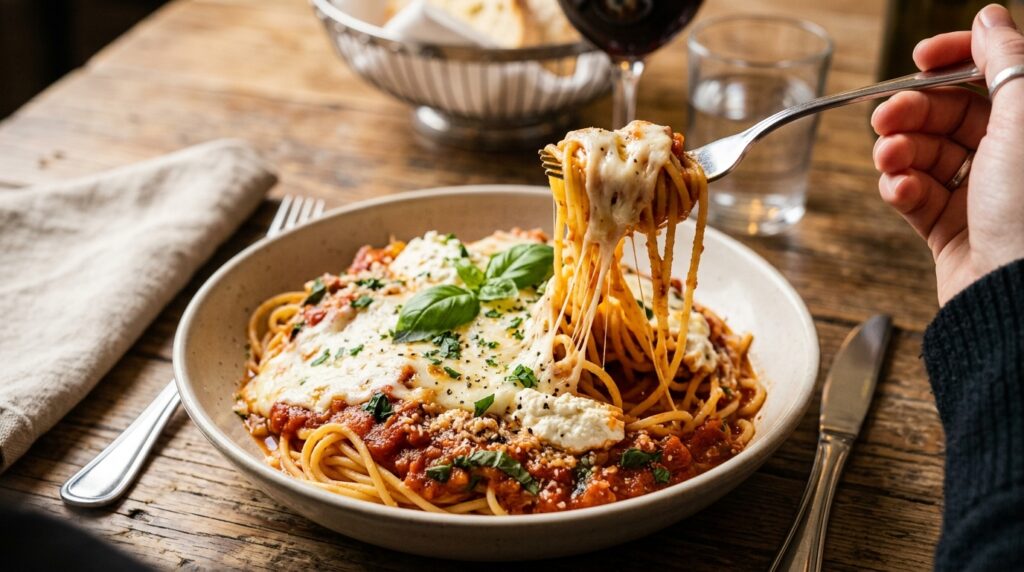
Choose a creamy layer or a melty topping
| Cheese | Texture or role | Where it works |
|---|---|---|
| Mozzarella | Melty, stretchy topping | Across the top before baking |
| Ricotta | Soft, creamy layer | Between pasta and sauce |
| Parmesan | Savory grated finish | In a filling or over the top |
Baked spaghetti with cream cheese is another option for a richer, softer layer. Cream cheese is not automatically a one-for-one substitute for ricotta, since it has a different texture and taste.
Recipes with ricotta cheese suit anyone who wants a lasagna-like center. Mozzarella adds melt, while Parmesan brings a sharp, savory note.
Add protein, vegetables, and seasoning thoughtfully
Cook extra ingredients before mixing them in, so they do not release excess water in the oven. I like seasoning the sauce first, then tasting it before adding the pasta.
- Cooked ground meat
- Cooked chicken, such as in this creamy chicken pasta with Parmesan
- Sautéed onion and garlic
- Italian seasoning
- Red pepper flakes
Watery vegetables can thin the sauce and leave the noodles damp. Sauté them first, then cook off extra moisture before adding them to the baking dish.
These small choices can make the dish feel like your own. If you want dinner ready before a busy evening, plan when to prepare the sauce or assemble the whole casserole.
Make-Ahead, Leftover, and Freezer Tips
Make the meat sauce before a busy evening, or assemble the full dish the day before. Either choice can save time, but each has its own storage and baking steps.
Keep the sauce or assembled casserole covered in the refrigerator for up to 2 days. Use an airtight container for sauce and foil for the assembled dish.
Assemble the casserole ahead
Cook the meat sauce in advance, cool it, and store it in an airtight container for up to 2 days. When you are ready, mix it with the pasta and assemble the dish.
You can also cover the fully assembled casserole with foil and refrigerate it for up to 2 days. Bake it covered for 15 minutes, then uncover it and bake for 30 minutes.
That extra covered time helps the chilled center heat through. Keep the foil in place for the first part of baking, then remove it so the cheese can brown.
Store, freeze, and reheat portions
Cool a baked casserole completely before freezing it in its baking dish. Wrap it tightly in foil to protect it, and freeze it for up to 2 months.
Bake the frozen dish covered for 1 hour, then uncover it and bake for 15 minutes. Check that the center is hot before serving.
Store leftovers in an airtight container in the refrigerator for up to 4 days. Reheat them in a 350°F oven for 15-20 minutes, or use a microwave.
Oven reheating can dry the pasta, so add a small splash of water or broth before warming it. Use only enough to moisten the noodles, not flood the sauce.
Once you know when to prep and reheat the meal, the next planning question is how many servings your pan can provide.
How Many People Does a 9x13 Pan Feed?
A 9×13-inch baking dish of the classic recipe serves 6-8 people, depending on portion size. That range gives you a useful starting point for planning dinner.
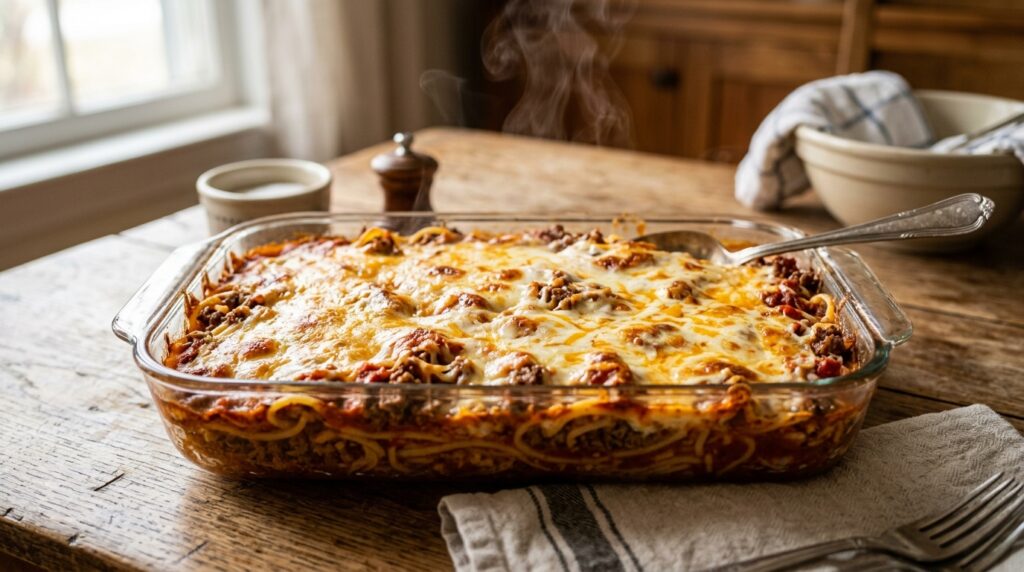
Appetite and side dishes affect how far the spaghetti stretches. Smaller portions can go further when salad or bread is also on the table.
For a main dish, plan generous portions rather than treating the serving count as exact. Guests may come back for another scoop, especially when the cheese is still warm.
The amount of ground beef and sauce in the recipe makes a filling meal, but it does not set a perfect portion for every person. I use the 6-8 estimate as a guide, then think about who is eating.
A lighter meal with a few sides may make modest servings feel complete. If spaghetti is the main event, allow a hearty scoop for each person.
With the pan’s serving range in mind, a simple salad, bread, or regional pairing can round out the meal.
What to Serve With Baked Spaghetti
A crisp salad balances a rich, cheesy main dish with a cool, fresh bite. Simple sides keep the meal easy while adding contrast to the sauce and pasta.
Garlic bread and salad are easy pairings, while catfish offers a regional Southern option. Choose what fits your table and the time you have.
A crisp salad cuts through the rich cheese, while warm garlic bread is ready for extra sauce.
- Caesar or wedge salad for crunch and a cool contrast
- Garlic bread for dipping into any sauce left on the plate
- Fried or blackened catfish as a regional pairing associated with Black Southern cuisine
Spaghetti served with catfish is one regional pairing, not a requirement. Fried catfish brings a crisp coating, while blackened fish adds a bold spice crust.
For a fresh finish, sprinkle chopped parsley over the spaghetti as an optional garnish. It adds color, but it is not a side dish.
Pick one or two pairings rather than turning dinner into another project. Then choose the version that suits your evening and gather what you already have.
Conclusion
A bubbling cheese topping over saucy spaghetti turns simple ingredients into a comforting dinner. Slightly undercooked pasta and enough sauce help the casserole bake up tender.
You can stay with beef, switch to chicken, or add a creamy cheese layer. Pick the direction that fits your mood and the ingredients in your kitchen.
Start with the classic method if you want a familiar meal, or try a twist when dinner needs something different. Choose one version and make it for your next cozy night in.


