
After a long day, I want dinner to feel filling without turning the kitchen into a project. Chicken gnocchi soup gives me a cozy bowl with little fuss.
These five recipes use different cooking methods and creamy bases, so I can match one to my time and tools. Choose a quick stovetop pot, a slow cooker, or an Instant Pot. Each version brings its own flavor, from a familiar Olive Garden-style bowl to a bacon-topped soup.
I’ll help you pick a recipe and keep its chicken tender and dumplings soft. The creamy broth and gnocchi give each bowl its comforting feel.
Key Takeaways
- Pick a recipe based on your time and cooking tools.
- Gently simmer chicken to help keep it tender.
- Add gnocchi near the end to protect its texture.
- Choose a creamy base that suits your taste.
- Store leftovers in an airtight container.
How Does Chicken Gnocchi Soup Get Its Creamy Texture?
Dairy or a thickener works with the starch in the gnocchi to make the broth creamy. The key is balancing that starch with liquid, so the soup feels smooth instead of gluey.
Gnocchi are small Italian dumplings commonly made with potato, flour, and eggs. The potato and starch give the broth more body as the dumplings cook. A roux can thicken the liquid, or dairy and starch can do the job together.
Dairy or a thickener works with gnocchi starch to make the broth creamy, but balance keeps it smooth.
What Is Gnocchi Made Of?
Most gnocchi recipes use potato, flour, and eggs. The potato brings a soft, tender texture, while flour helps the dumplings hold their shape. Their mild flavor pairs well with chicken, greens, and a savory broth.
Store-bought gnocchi is a practical choice for a weeknight meal. I look for it in the pasta aisle or in the refrigerated case with fresh pasta. Either kind works in gnocchi soup, but package directions help guide the cooking time.
How Do You Pronounce Gnocchi?
Say gnocchi as “nyoh-kee.” The first sound is soft, and the final “ch” sounds like a hard “k.” You may also see the phrase chicken gnocchi soup pronunciation used in searches, but the word itself stays the same.
A creamy chicken gnocchi soup can taste rich or light, depending on its broth and dairy. The chicken and gnocchi you choose help set the flavor and texture you want in the bowl.
Which Ingredients Should Go in the Pot?
Start with raw chicken for a hands-on pot, or use cooked chicken when you need to save time. Both work, but they change how much prep the soup needs.
Raw boneless, skinless chicken breasts cook in the broth, while cooked chicken goes in later. Rotisserie chicken adds ready-to-use meat and a roasted flavor. Pre-shredded cooked chicken saves effort, though it can feel chewier than freshly cooked, diced chicken.
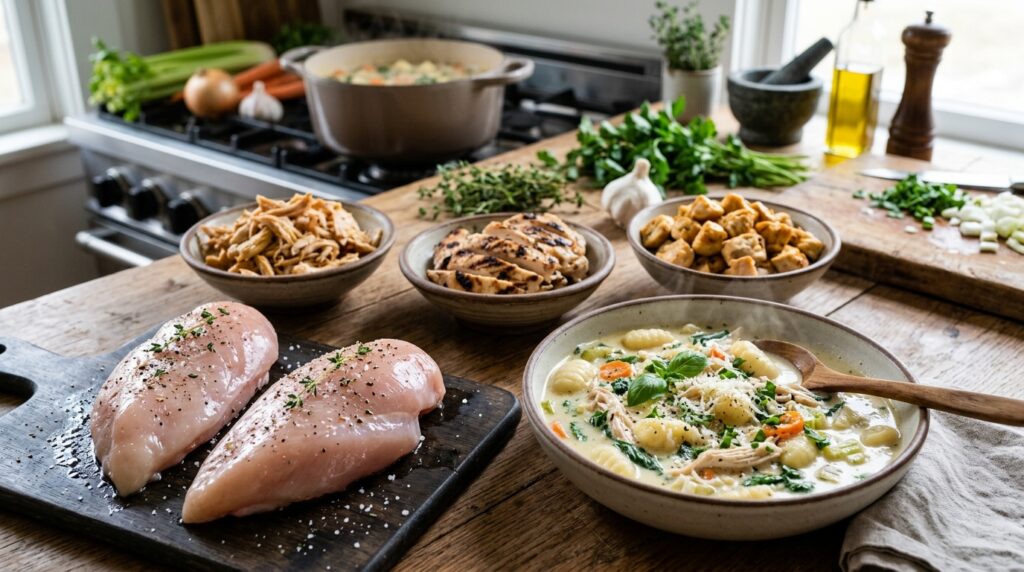
| Chicken choice | Prep before adding | What it changes |
|---|---|---|
| Raw boneless, skinless chicken breasts | Add whole or diced | Cooks in the broth |
| Cooked diced chicken | Dice before adding | Needs less cooking |
| Rotisserie chicken | Remove meat and shred | Adds roasted flavor |
| Pre-shredded cooked chicken | Add as packaged | Can be chewier |
Onion, carrots, celery, and garlic make a flexible vegetable base. I soften them before adding chicken broth, which gives the soup a savory start without locking it into one flavor style.
Spinach adds a fresh green note near the end of cooking. With a chicken choice and vegetable base in mind, you can match one of the five recipes to tonight’s needs.
Which of These Five Recipes Fits Tonight?
Choose the cooking method first, then match the ingredients to your evening. A stovetop pot is quick, while a slow cooker gives you a longer, hands-off cook.
The five recipes differ most in timing, thickener, and how you add the chicken. Each keeps the familiar combination of broth, vegetables, gnocchi, and greens.
- Olive Garden-style stovetop: This 30-minute recipe makes 4 servings. Use 3-4 cooked, diced boneless, skinless chicken breasts, 4 cups low-sodium chicken broth, 16 ounces potato gnocchi, and 2 cups half-and-half. Add vegetables, garlic, and spinach for a familiar restaurant-style flavor.
- Roux-based stovetop: This version takes 30 minutes and makes 5 servings. Start with butter and flour, then add broth and half-and-half. Cook vegetables and raw chicken breasts in the creamy base, then finish with gnocchi and spinach.
- Slow cooker: Combine chicken, mirepoix, broth, garlic, and seasonings in the slow cooker. The recipe uses two 12-ounce cans of evaporated milk, cornstarch, two 1-pound packages of gnocchi, and 6 slices of bacon. Cook on low for 6-8 hours or high for 4-5 hours, then add gnocchi and thickener for another 45 minutes to 1 hour. Stir in spinach near the end.
- Instant Pot: Cook chicken, vegetables, broth, and seasonings for 20 minutes at high pressure. Then simmer with a cornstarch mixture, evaporated milk, gnocchi, bacon, and spinach for about 20 minutes.
- Quick cooked-chicken variation: Use store-bought cooked or rotisserie chicken with vegetables, broth, gnocchi, and greens. It follows the same easy soup framework without waiting for raw chicken to cook.
Once you’ve picked a version, small timing choices help keep its chicken tender and gnocchi cooked just right.
How Do I Cook the Chicken and Gnocchi Without Overcooking Them?
A hard boil is more likely to toughen chicken than a gentle simmer. Keep the heat steady, and let the soup bubble softly instead of boiling hard.
Gnocchi often needs about 5 minutes, but the package timing should guide you. Too much time in the pot can make the dumplings mushy. The steps below fit a stovetop soup, with notes for other methods.
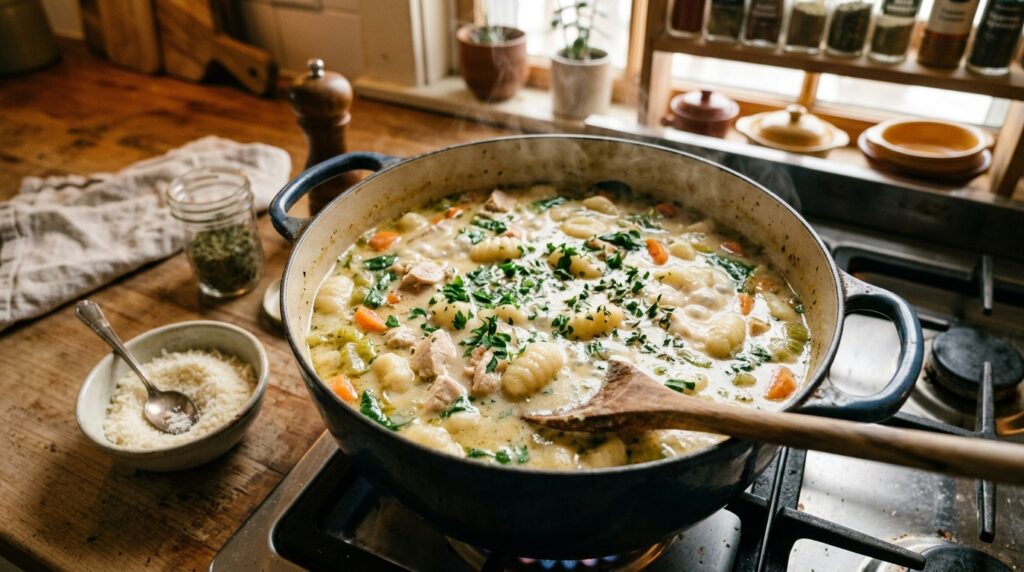
Stovetop Timing for Tender Chicken and Gnocchi
- Soften the onion, carrots, and celery over medium heat. Stir in garlic and thyme when the vegetables begin to soften.
- For the roux method, stir flour into melted butter and cook for 2 minutes. Add broth and half-and-half gradually, stirring to keep the base smooth.
- Simmer raw chicken breasts at a gentle boil for 10-15 minutes, based on thickness. Rest them for 5 minutes, then dice them.
- Add gnocchi and simmer according to the package. Stir in spinach near the end and cook until wilted, about 1 minute.
Slow Cooker and Instant Pot Finishing Steps
The chicken gnocchi soup recipe in the crockpot needs its dairy, gnocchi, and spinach held back until the finishing stage. That helps the gnocchi keep its shape and the greens stay fresh.
An easy chicken gnocchi soup recipe can work in one pot, with fewer dishes to wash. For the Instant Pot, cook the chicken and broth mixture under pressure first, then simmer the remaining ingredients as directed.
Control the heat and timing before choosing a creamy base that fits your taste and dietary needs.
Can I Use Heavy Cream, Milk, or a Dairy-Free Option?
Several dairy bases work, but they create different levels of richness. Half-and-half gives a middle ground, while heavy cream makes a fuller, richer broth.
Flour or cornstarch can thicken the liquid, even when the dairy base is lighter. The right mix depends on the texture you want, from a smooth, spoon-coating broth to a lighter soup.
Half-and-Half and Heavy Cream
Half-and-half combines equal parts milk and cream. It gives chicken gnocchi soup a creamy feel without the richness of heavy cream. Half of that blend is milk, which keeps its texture lighter than a cream-only base.
For chicken gnocchi soup with heavy cream, use it when you want a richer bowl. Flour can thicken the broth as a roux, while cornstarch can thicken it after mixing with liquid. Add either thickener in stages to help avoid lumps.
Evaporated Milk and Dairy-Free Choices
Evaporated milk brings creaminess without the same feel as heavy cream. It works well with cornstarch when you want a thick broth. The dairy base can shape both the flavor and the final texture.
For a dairy-free bowl, try unsweetened almond milk or canned coconut milk with extra cornstarch. The result will not be as creamy as a dairy version. I use dairy-free soup ideas and tips when I want more plant-based options.
Once the base suits your taste, careful storage can help protect the soup’s texture after cooking.
How Do I Store and Reheat Leftovers?
If the soup thickens overnight, the gnocchi has likely absorbed some broth. A little extra liquid can bring back a soupier texture without changing the whole pot.
Keep leftovers in an airtight container for up to 3 days in the refrigerator or 3 months in the freezer. Dairy-based soup may change consistency after freezing and reheating.
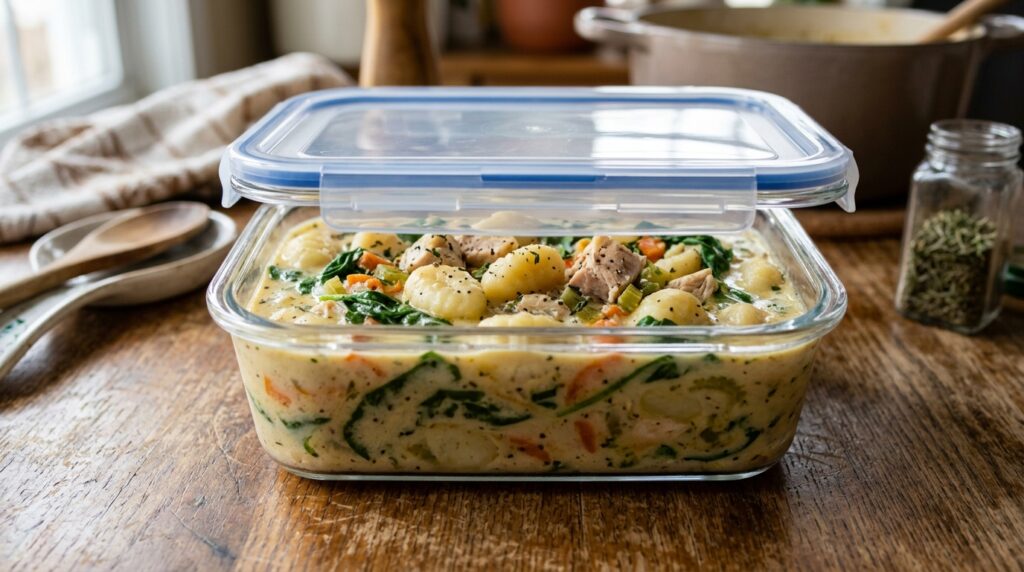
| Method | Container or action | Time | Texture note |
|---|---|---|---|
| Refrigeration | Airtight container | Up to 3 days | Gnocchi may absorb broth |
| Freezing | Airtight freezer container | Up to 3 months | Dairy may change consistency |
| Reheating | Warm gently and stir | Until heated through | Add liquid if too thick |
Refrigerate Leftovers
Move extra soup into an airtight container and refrigerate it. As it sits, gnocchi draws in liquid from the broth, so leftovers may look thicker the next day.
When you reheat a serving, stir gently as it warms. A splash of evaporated milk or another liquid can loosen the broth and help it return to an even consistency.
Freeze and Reheat Carefully
Freeze the soup in an airtight container for up to 3 months. Dairy-based soup may separate or change texture after freezing, so stir it gently while reheating.
Check the flavor after warming, then adjust salt and pepper if needed. Once your leftovers are set, a few simple sides can turn a bowl into dinner.
What Should I Serve With It, and How Many Calories Does It Have?
I like a warm bowl with bread and something fresh, such as a green salad. The serving size matters, since chicken gnocchi soup calories depend on the recipe and the portion.
The 30-minute version is estimated at 523 calories per serving, while the roux-based version is estimated at 507. These are recipe-specific estimates, not fixed numbers for every bowl.
Chicken gnocchi soup calories change with the recipe and serving size, so treat each figure as an estimate.
- Breadsticks
- Crusty bread
- Biscuits
- A green salad
Grated Parmesan makes an easy optional topping. A few twists of salt and pepper can also bring the soup’s flavor into balance.
Pick the version that fits your dinner plans, then set out the sides you enjoy most.
Conclusion
A comforting bowl can fit your schedule and your preferred creamy base. I choose the recipe that feels manageable that day, then adjust salt, pepper, and other seasonings to taste.
For dinner, start with one version and gather its ingredients before you begin. That small step makes it easier to get a warm bowl on the table without turning the evening into a cooking project.


