
After a busy day, the thought of a warm dinner waiting at home can feel like a small comfort. Slow cooker beef stew makes that easier, especially when winter evenings turn cold and the day runs long.
I build these recipes around familiar ingredients, then change a few flavors or vegetables to suit the night. Each idea keeps the work simple, so you can make a cozy meal without spending your evening at the stove.
Key Takeaways
- Use chuck roast for beef that becomes tender during a long cook.
- Choose potatoes and vegetables that can hold their shape.
- Brown the beef when time allows, or add it raw.
- Check tenderness instead of relying only on the clock.
- Change the flavor with a few simple ingredients.
These recipes give you a useful starting point for a weeknight dinner or a colder day. First, choose beef and vegetables that can handle a slow cooker.
Which Beef and Vegetables Work Best?
Start with well-marbled chuck roast and vegetables cut to withstand a long cook. Large, hearty pieces are less likely to fall apart or turn mushy.
Choose well-marbled chuck roast and cut the vegetables into hearty pieces. Larger chunks are more likely to hold their shape.
Choose beef that turns tender with slow cooking
Chuck has fat and connective tissue that soften as the meat cooks slowly. That change helps create tender beef and a rich taste without a costly cut.
Rump roast and bottom round also work, though they may be leaner. I cut the roast into pieces about 1.6 inches across, so the meat is less likely to break apart.
Pre-cut stew meat can save prep time, but the pieces may be uneven or small. Check the package and trim tiny pieces, rather than assuming every chunk will hold together.
Round steak also softens with long, moist cooking. I use it in this four-ingredient slow cooker Swiss steak when I want a tomato-based meal.
Pick vegetables that hold their shape
Yukon Gold and red potatoes usually stay firmer than russet potatoes. Russets can break down during a long cook, which thickens the broth but may leave fewer distinct potato pieces.
Cut carrots and other vegetables into similarly sized, hearty pieces. Even cuts help them cook at a similar pace, while larger chunks are less likely to disappear in the pot.
These choices give the meal a dependable base. Next, set the ingredient amounts and season the beef broth to bring it together.
What Goes Into a Reliable Stew Base?
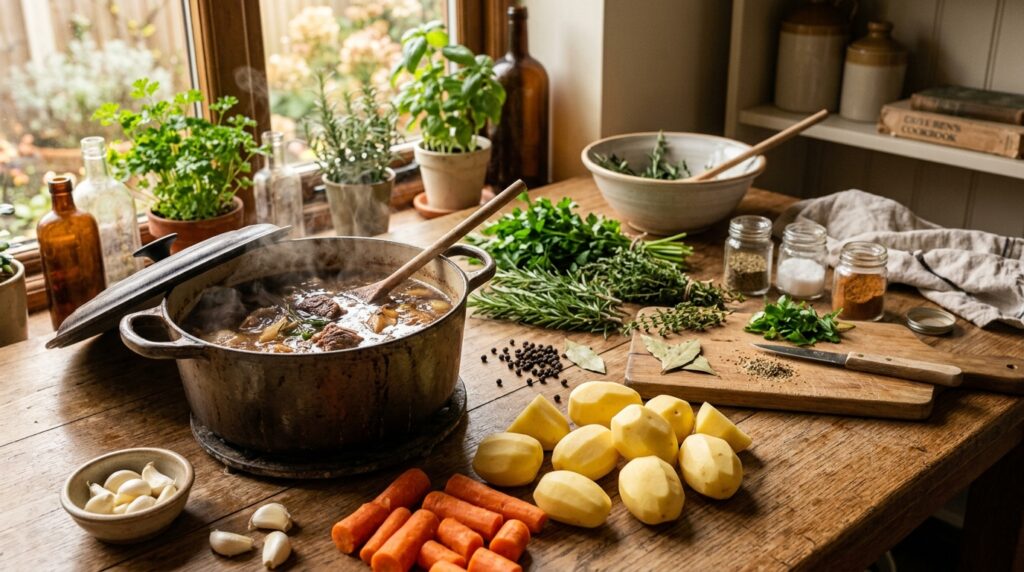
A reliable stew base balances beef, vegetables, and enough seasoned liquid. For six servings, use 2.5 pounds of stew beef and four cups of beef broth.
A slurry is a smooth mixture of starch and cold water used to thicken a sauce. It comes in near the end, only if the broth needs more body.
| Ingredient group | Ingredients and amounts | What it contributes | Flexible choice |
|---|---|---|---|
| Beef and coating | 2.5 pounds stew beef; 1/4 cup flour | Beef gives body; flour helps thicken | Skip flour, thicken later with slurry |
| Vegetables | 2 cups diced onion; 5 medium carrots; 1 pound baby Yukon Gold potatoes | Sweetness, color, and hearty texture | Use red potatoes instead |
| Broth and aromatics | 4 cups beef broth; 1 cup red wine; 3 tablespoons tomato paste; 4 garlic cloves | Savory liquid, depth, and aroma | Replace wine with broth and a little red wine vinegar |
| Herbs and finishing additions | 2 bay leaves; 1 cup frozen peas; Worcestershire sauce, salt, and black pepper | Seasoning and a fresh finish | Adjust salt and pepper to taste |
The beef brings a rich, savory taste, while potatoes and carrots make the bowl filling. Onion and garlic build a fragrant base, and tomato paste adds depth without making the broth taste like tomato soup.
Season the beef broth with Worcestershire sauce, salt, and black pepper. Red wine adds a deeper note, but it is optional; replace it with beef broth and a little red wine vinegar.
Bay leaves add a gentle herbal taste as the stew cooks. Frozen peas go in near the end, so they keep more color and texture than they would after hours in the pot.
With the amounts set, preparation is simple: season and coat the beef, build flavor, then let the slow cooker do its work.
How to Make Slow Cooker Beef Stew
Most of the hands-on work is preparation and optional browning. You can put raw beef in the slow cooker when time is short.
Prep the beef and build flavor
- Cut the beef into large pieces, then season it with salt and black pepper.
- Coat the beef lightly in flour, shaking off any extra.
- Brown it in batches with a little oil, or skip this step when short on time.
- Soften the onion and garlic in the skillet, then loosen browned bits with a splash of broth or wine.
- Add the beef, vegetables, liquid, tomato paste, and bay leaves to the slow cooker.
- Stir in peas near the end. If the broth needs thickening, add a slurry and cook until smooth.
Assemble the slow cooker and finish the stew
Sear the beef for about 45 seconds per side. That quick step adds color and flavor without cooking the meat through.
Work in batches so the skillet stays hot. A crowded skillet traps steam, so the meat turns gray instead of forming a browned surface.
When you soften the onion and garlic, scrape up the browned bits with liquid. Those bits carry concentrated flavor into the broth, so do not leave them behind.
The steps for a traditional beef stew recipe slow cooker are flexible: raw beef can go straight into the pot. Browning adds flavor, but it is not needed for safe cooking.
Keep the peas for the finish, and use a slurry only if you want a thicker sauce. The method stays simple, while cooking time depends on the recipe style and heat setting.
Which Four Flavor Ideas Make This Stew Different?
One small change to the liquid or seasoning can shift the stew’s flavor. Keep the same basic method and change just one or two ingredients.
These four ideas add a clear flavor note without turning dinner into a new project. I start with one change, then taste the broth before adding more salt.
- Red wine and rosemary: Use red wine as part of the cooking liquid and add a sprig of rosemary. The wine gives the broth depth, while rosemary brings a pine-like herbal scent.
- Extra-stout beer: Replace the wine with extra-stout beer for an Irish-inspired variation. Its roasted, bitter notes make the beef broth taste fuller, so start with a measured amount.
- Reduced red wine and bouillon: Simmer red wine until it reduces, then add it with a beef bouillon cube. The reduction concentrates its flavor, and the cube adds a deeper, more savory taste.
- Balsamic vinegar and tomato paste: Stir in balsamic vinegar and tomato paste for a tangy, darker broth. Add the vinegar in a small amount, then taste before using more.
The first two ideas lean on wine or beer for aroma and depth. The last pair brings a sharper or more savory edge to the sauce.
These changes keep the familiar beef and broth at the center of the meal. For a more noticeable shift in each bowl, try changing the vegetables instead.
What Three Vegetable Twists Can You Try?
Adding sweet potato alongside regular potatoes makes a familiar stew taste sweeter and feel softer. Cut added root vegetables into substantial pieces so they hold up during the long cook.
These swaps keep the same easy approach while changing the balance of the bowl. I use them when I want the vegetables to stand out more.
- Sweet potato: Add it alongside the usual root vegetables for a sweeter taste and softer texture. Cut it into chunks, not thin slices, so it does not vanish in the broth.
- Celery and extra carrots: Add celery and more carrots for a classic vegetable mix. Cut the celery into thick pieces and keep the carrots close in size for even cooking.
- Parsnips: Replace some potatoes with parsnips for an earthy root-vegetable note. Their sweet, earthy taste works well in a savory broth, and thick chunks stay more distinct.
Large pieces are useful for these changes, since small cuts soften sooner and can blend into the sauce. A similar size also helps the vegetables finish at about the same time.
Vegetable choice changes texture as much as taste. Once you pick your mix, the heat setting and cook time will shape how tender everything becomes.
How Long Should Beef Stew Cook on Low or High?
Low heat gives the stew a longer, hands-off cook, while high heat gets dinner ready sooner. Check the beef and potatoes for tenderness instead of relying on the clock alone.
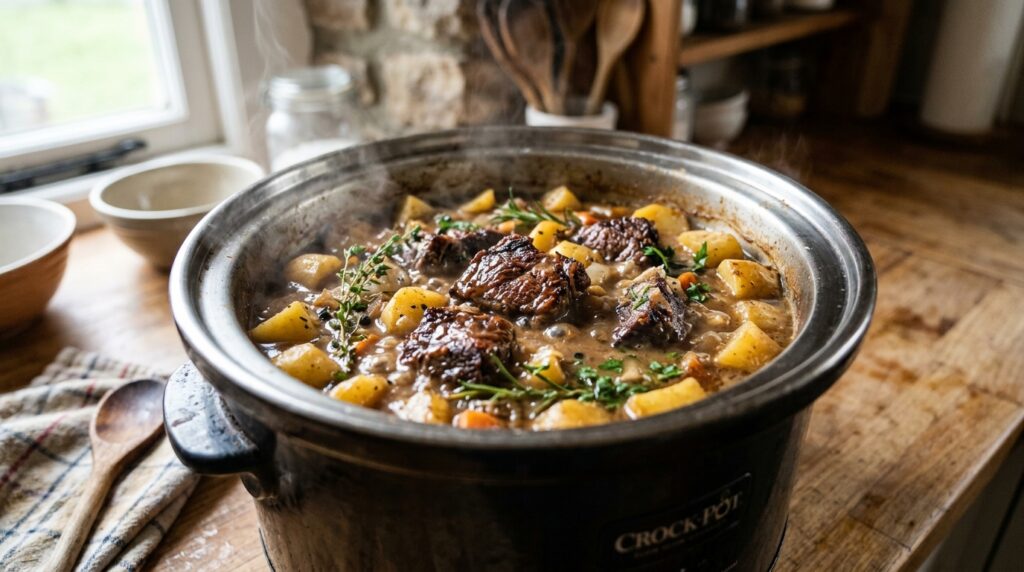
Use low heat for a longer, hands-off cook
A classic version cooks about 7 1/2 to 8 hours on low. A sauce thickened before cooking may need about 10 hours on low, while another common version takes 5 to 7 hours.
Choose high heat when you need dinner sooner
| Recipe style | Low setting | High setting |
|---|---|---|
| Classic stew | 7 1/2-8 hours | 3 1/2-4 hours |
| Sauce thickened before cooking | About 10 hours | About 6 hours |
| Shorter-cook version | 5-7 hours | 3-4 hours |
On high, the classic stew takes about 3 1/2 to 4 hours, but the shorter schedule still needs a tenderness check. Insert a fork into the beef and test a potato before serving.
Some recipes call for more low hours, while others need fewer hours high. The slow cooker’s heat output and the beef’s tenderness affect the exact time.
Twelve hours is usually longer than a typical beef stew needs. Check the stew earlier rather than assuming extra time will improve the meat or vegetables.
Use the recipe’s range as a guide, then stop when the beef and potatoes feel tender. A few common mistakes can still harm texture and flavor, even with a sound timing plan.
What Mistakes Can Make Beef Stew Less Tender?
Opening the lid again and again to check progress lets heat escape and slows cooking. Keep the lid closed, and avoid leaving the stew to cook far beyond tenderness.
A slow cooker needs time to bring its contents back to heat after the lid opens. I resist checking by sight and use the recipe’s timing as my first guide.
- Overcrowding the skillet: Too much beef at once releases moisture and steams the meat instead of browning it. Brown it in batches, with space between pieces.
- Cutting beef too small: Tiny pieces can break apart during a long cook. Keep the meat in hearty chunks so it stays tender without disappearing into the broth.
- Using a potato that breaks down: Russet potatoes may soften and crumble during a long cook. Yukon Gold or red potatoes tend to hold their shape better.
- Adding peas too early: Peas that cook for hours can lose their fresh texture and color. Stir them in near the end instead.
Salt and pepper help season the broth, but adding a lot too early can make it hard to adjust later. Taste the liquid near the end and season in small steps.
Meat can overcook in a slow cooker if it stays on heat well past the point of tenderness. The result may be dry or broken-up beef, with vegetables that have turned mushy.
A closed lid and sensible cook time protect the base recipe’s texture and flavor. You can also adjust its ingredients to match different eating preferences.
How Can You Adapt Beef Stew for Different Diets?
A few ingredient changes can fit some dietary preferences, but they do not make every version right for everyone. Check each broth, sauce, and thickener against your own needs.
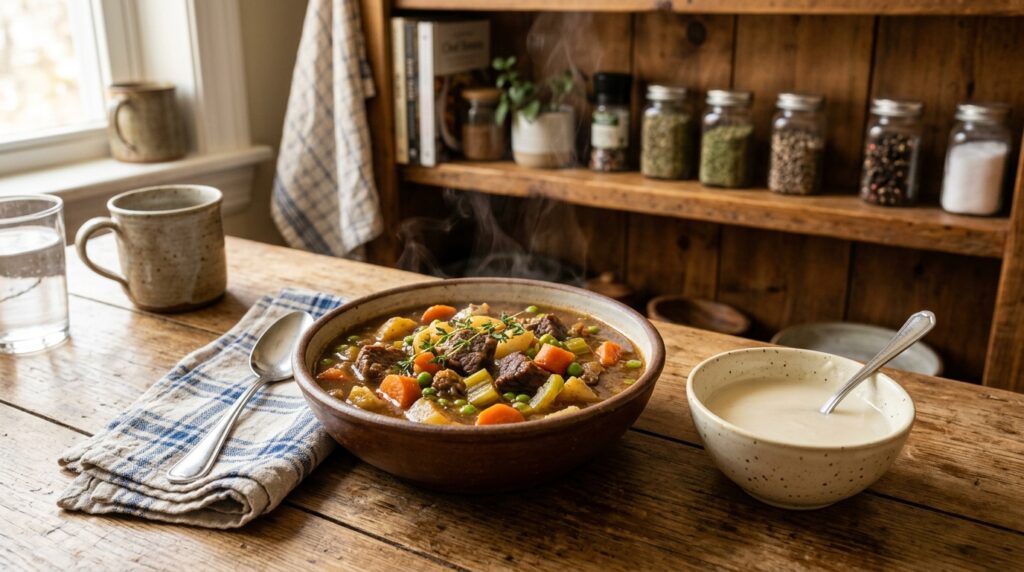
Make a gluten-free version
For gluten-free stew, replace the flour coating with cornstarch or arrowroot as needed. Check the label on beef broth and Worcestershire sauce, since ingredients can vary by brand.
Adjust the starch and vegetables
| Dietary approach | Ingredient to change | Practical substitute | Sauce or seasoning check |
|---|---|---|---|
| Gluten-free | Flour coating | Arrowroot or cornstarch slurry | Choose broth and Worcestershire sauce that fit |
| Lower-carb | Potatoes | Turnips or extra non-starchy vegetables | Check thickener and sauce labels |
| Paleo-style | Potatoes and flour | Turnips or pumpkin; arrowroot | Use broth and seasonings that fit your plan |
| Whole30-style | Potatoes, flour, and sauces | Turnips or pumpkin; compliant thickener | Check broth and Worcestershire sauce |
To thicken with cornstarch, mix it with cold water until smooth. Add the slurry near the end, then stir while it thickens.
Turnips or pumpkin can replace some or all of the potatoes, depending on the texture you want. Cut them into hearty pieces so they remain easy to scoop.
A slow cooker beef stew healthy enough for one person may not fit another person’s needs. Recipe suitability depends on the exact ingredients and your own dietary needs.
Use the table as a starting point, then check package labels and personal food rules. Once the ingredients fit, choose a simple side to complete the meal.
What Should You Serve With Beef Stew?
A warm bowl with crusty bread for dipping makes an easy, satisfying dinner. Choose a side that can catch the savory broth.
Crusty bread is a natural match, but cornbread and biscuits work well too. Their soft centers soak up the broth, while a crisp crust gives the bowl a little contrast.
Mashed potatoes make the meal extra hearty, especially when the stew has a thinner sauce. Rice or short pasta also gives the broth something to cling to.
For beef stew and dumplings, add biscuit-style dumplings near the end of cooking. Follow the dumpling recipe’s timing and keep the slow cooker lid closed while they steam.
Opening the lid can slow the cook and let steam escape before the dumplings set. Set out plates and sides before adding them, so the lid can stay in place.
A side can be as simple as bread or as filling as mashed potatoes. If you make a large batch, plan how to cool and save extra portions before dinner.
How Do You Store and Make Stew Ahead?
Make a batch for dinner, then set aside portions for lunches or another night. Refrigerate cooked stew for about 3 to 4 days, or freeze it for up to 3 months.
Refrigerate leftovers for about 3 to 4 days, or freeze portions for up to 3 months. Leave room in freezer containers for the stew to expand.
Refrigerate leftovers safely
Cool the stew and divide it into airtight containers. Put the portions in the refrigerator within two hours, rather than leaving a full pot out to cool for a long time.
Separate containers make it easy to take out only what you plan to eat. They also help the stew cool more evenly than one large, deep container.
Freeze portions for another meal
Freeze stew in airtight containers for up to 3 months, leaving room at the top for expansion. Thaw a portion in the refrigerator before reheating it.
Potatoes may turn softer or grainier after freezing. For a batch meant for the freezer, consider adding fresh potatoes while reheating instead.
You can also prep ingredients ahead and refrigerate them separately before cooking. Keep the cut vegetables and beef chilled, then add them to the slow cooker when you are ready to start.
These small steps make it easier to save a meal without losing track of its texture. For the next batch, choose a flavor direction that suits the night.
Conclusion
A slow-cooked dinner can change with the time you have and the flavors you enjoy. A dependable base lets you vary the vegetables or seasonings without making the meal feel like a whole new project.
I like starting with one small change, then tasting the broth as it cooks. Choose a flavor direction, gather the ingredients, and start the stew.


