
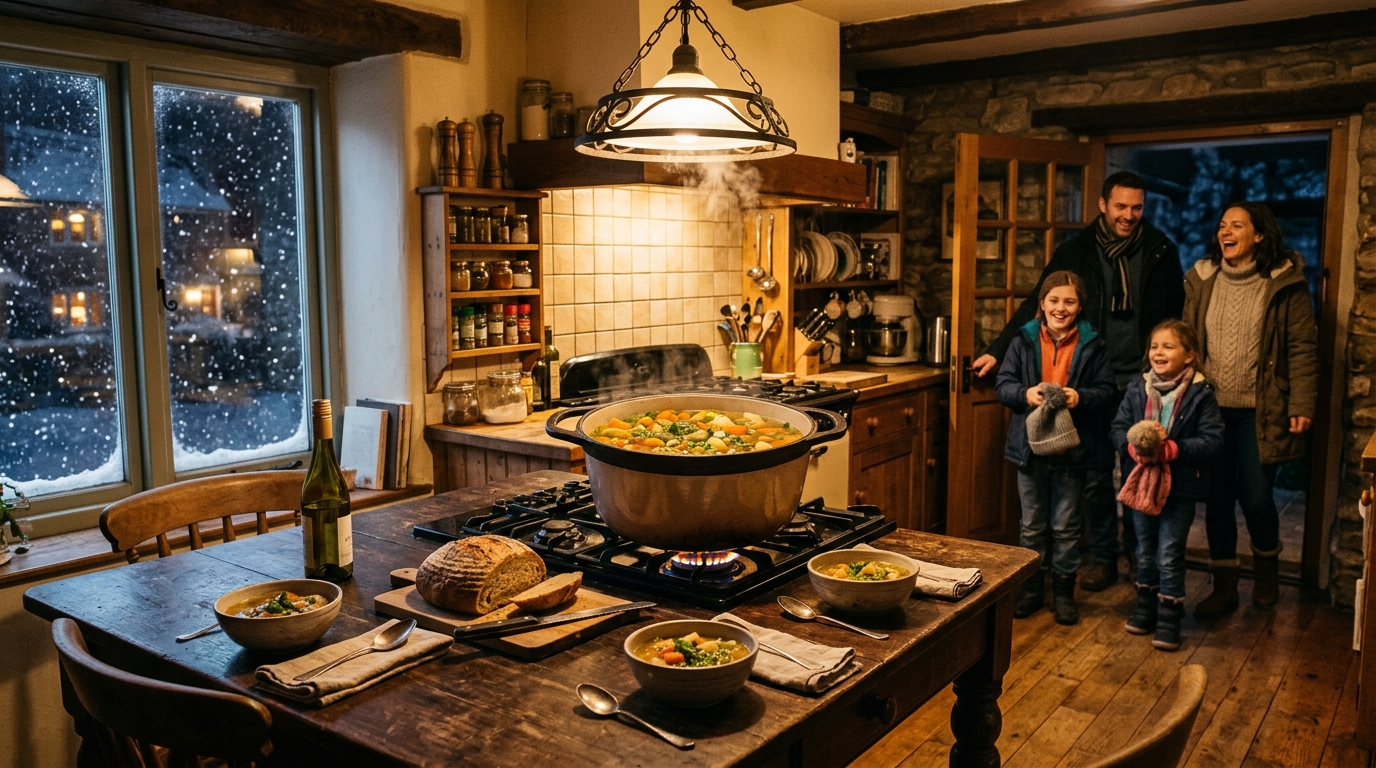
On a winter evening, I like the comfort of a soup pot simmering as family members come through the door. The warm, savory smell makes a cold day feel a little easier, and dinner is already underway.
I’ve gathered ideas for different appetites and schedules, from quick bowls to hearty meals that cook slowly. You can choose by how much time you have, what your family likes, or how filling dinner needs to be.
Aromatics are vegetables such as onion, garlic, and celery that are cooked early to build a soup’s savory base. Knowing a few simple differences can help you choose among the many options. I’ll give you a practical way to narrow them down and find a bowl that fits tonight.
Key Takeaways
- Match the soup’s texture and main ingredients to your family’s appetite.
- Quick soups often rely on short prep, a brief simmer, or flexible vegetables.
- Beans, lentils, rice, and noodles can make a bowl more substantial.
- Taste broth as you cook, then season gradually for a balanced flavor.
- Store extra portions promptly, and keep noodles separate when useful.
How Do I Choose Good Soup Recipes for Family Dinner?
The best choice depends on what your family wants from dinner, not on a universal ranking. I start with three questions: how hungry everyone is, how much time I have, and which ingredients the family will actually enjoy.
A light, brothy soup can suit a smaller appetite or a meal with bread on the side. A bowl with beans, potatoes, noodles, or rice tends to feel more substantial. Cooking time matters, too: a quick simmer fits a busy evening, while a longer recipe works when I can plan ahead.
Match the soup to the evening
Think about the meal as a whole. If the soup will carry dinner, choose one with a hearty element, such as chicken, vegetables, or beans. If you have a filling side ready, a simpler broth may be enough. A recipe is also easier to make when its ingredients are familiar and already on hand.
A collection of 100 soup recipes may sound useful, but a large list can be harder to navigate than a shorter one organized by dinner need. I find it faster to decide on texture and effort first, then scan for a flavor the family likes.
Pick a style the family will enjoy
Soup recipes can be grouped by the kind of bowl they make, rather than ranked from best to worst. This quick comparison helps me narrow the options before I read a full recipe.
| Soup style | Hearty element | Flavor profile | Best fit |
|---|---|---|---|
| Chicken noodle | Chicken and noodles | Savory, familiar | A classic family dinner |
| Creamy vegetable | Potatoes or blended vegetables | Smooth, mild | A comforting meat-free meal |
| Bean and lentil | Beans or lentils | Earthy, filling | A plant-forward dinner |
| Tomato and tortilla | Tomatoes and tortillas | Bright, often smoky | A bowl with bolder flavor |
Use the table as a starting point, then adjust for the people at your table. When familiar, savory flavors sound right, chicken soups are often the first place I look.
Which Chicken Soups Work Best for a Cozy Meal?
Chicken soup can be light and brothy or creamy and filling. Chicken noodle soup is a familiar choice made with chicken, noodles, vegetables such as carrots and celery, and broth.
Homestyle chicken noodle soup keeps a clear broth and lets the chicken and vegetables stand out. Creamy chicken noodle soup has a thicker texture, often with herbs for extra flavor. Both can make a satisfying dinner, though the creamy version feels richer in the bowl.
Other chicken soups suit different preferences. Chicken and dumplings replaces noodles with soft dumplings, while chicken and rice soup swaps in rice for a noodle-free alternative. The rice gives each spoonful a different texture and can make the bowl feel especially substantial.
- Homestyle chicken noodle: clear, familiar broth.
- Creamy chicken noodle: thicker texture and herbs.
- Chicken and dumplings: soft dumplings make it especially hearty.
- Chicken and rice: rice provides a noodle-free alternative.
Some cooks call a soothing chicken soup one of their healing soup recipes. That phrase describes the comfort of a warm bowl, not a medical effect. I choose the style based on whether my family wants a light broth, a creamy bowl, or a dinner with dumplings.
These choices make it easy to keep chicken on the menu without serving the same texture every time. For evenings with less time to spare, quick soups can offer a simpler route to dinner.
Which Easy Soups Can I Make on a Busy Night?
Quick soups are most useful when both prep and cooking steps stay simple. I look for a short ingredient list, a brief simmer, or a flexible vegetable base that does not require much advance planning.
Broccoli cheddar soup takes about 30 minutes to prepare, and zucchini soup can be ready in 30 minutes. Miso soup can come together in 20 minutes with seven basic ingredients. These options fit different tastes, so a quick meal need not always have the same flavor.
Ease often comes down to fewer steps, not just fewer ingredients. A recipe that uses vegetables already washed and chopped may be more practical than one that needs a long list of small tasks. I also value recipes that let me adjust the vegetables without changing the whole plan.
- Broccoli cheddar: about 30 minutes.
- Zucchini: about 30 minutes.
- Miso: about 20 minutes and seven basic ingredients.
- Flexible vegetable soup: a way to use suitable vegetables already on hand.
A flexible vegetable soup is useful when the fridge holds a few vegetables that need using. Cut them into similar sizes so they cook at a similar pace. The exact cooking time depends on the vegetables and their size, so I check tenderness rather than assume every batch is the same.
Keep the prep focused on what the recipe needs, and let the cooking stay straightforward. If you want a bowl that feels more substantial and cozy, creamy potato and cheese soups bring a richer texture to dinner.
What Makes a Creamy Potato or Cheese Soup Satisfying?
A spoonful of smooth potato soup feels soft and mellow, while a bite of broccoli with melted cheddar brings a sharper, savory taste. Potatoes add body, and cheddar adds richness, so each can make a bowl feel satisfying in a different way.
In creamy potato soup, blending some or all of the potatoes creates a smooth base. Leaving a few pieces unblended gives the recipe more texture. Cheddar can be stirred into the soup or added at the table, depending on how pronounced a cheese flavor the family prefers.
Broccoli cheddar soup combines vegetables with a cheese-forward flavor. Homemade croutons add a crisp topping that contrasts with the creamy base. Creamy potato soup can be topped with cheddar, sour cream, and chives, which add sharpness, tang, and a fresh note.
There are dairy-free ways to get a creamy feel, too. Blended vegetables or beans can make a soup smooth without cream or cheese. A vegan “cheesy” broccoli soup is a distinct direction from a traditional cheddar version, while still centering broccoli and a thick texture.
The choice depends on whether you want potatoes to carry the bowl or cheese to lead its flavor. These soups need not be heavy: a small finishing topping can add contrast without changing the base. For a different kind of comfort, tomato and onion-based classics move the flavor in a brighter or deeper direction.
How Do Tomato Soup and French Onion Differ?
Tomato soup brings tangy brightness, while French onion soup centers a deep, savory flavor from cooked onions. I choose between them by deciding whether dinner should taste fresh and tomato-forward or rich and onion-led.
Tomato soup can be smooth and simple, with a clean tomato flavor. It can also start with roasted fresh tomatoes and basil for a more pronounced, garden-like taste. Tomatoes provide the central flavor, while garlic can add depth without taking over the bowl.
French onion soup is built around the rich flavor of cooked onions. The broth carries their savory sweetness, making this soup quite different from the bright taste of tomato. Both are recognizable classics, but they bring distinct aromas and textures to dinner.
Tomato soup pairs naturally with grilled cheese, a familiar combination of a smooth bowl and a crisp, cheesy sandwich. French onion soup is served with a baguette topping finished with cheese. The bread sits on top of the broth, making the dish feel like a complete meal.
I would pick tomato when I want a simple, bright bowl, and French onion when I want a deeper savory taste. The toppings help define each one without making them interchangeable. For a meat-free dinner with a different source of substance, beans and vegetables offer plenty of options.
What Are the Best Vegetarian and White Bean Soups?
Beans and vegetables can make meat-free soup filling enough for dinner. White beans provide a soft, hearty base, and blended vegetables can add body without needing meat or dairy.
White beans make a hearty base
White bean chili combines beans with green chiles for a creamy bowl with tang and gentle heat. Tuscan white bean soup offers another direction, with vegetables and a herby, savory flavor. Depending on the recipe, it can stay brothy or become creamy.
Beans also make a vegetable-based soup more substantial without demanding a complicated plan. When I search for good soup recipes vegetarian, I look for a clear source of texture, such as beans, and a flavor direction that suits the family.
Vegetables create body and color
Vegetable soup can use a flexible mix of vegetables and remain brothy, fresh, and adaptable. Blended soups, such as carrot, cauliflower, or squash, create a smooth texture. Squash brings a sweet, warming quality, while the other vegetables offer their own color and taste.
The table shows how these bowls differ in base and texture. I use it to decide whether dinner should be brothy, smooth, or gently spicy.
| Soup idea | Main ingredients | Texture | Flavor direction |
|---|---|---|---|
| White bean chili | White beans and green chiles | Creamy | Tangy and gently spicy |
| Tuscan white bean soup | White beans and vegetables | Brothy or creamy | Herby and savory |
| Vegetable soup | Flexible mixed vegetables | Brothy | Adaptable and fresh |
| Blended squash soup | Squash and aromatics | Smooth | Sweet and warming |
These meat-free bowls show how beans and vegetables can carry dinner in different ways. Lentils are another naturally hearty option, with a texture that softens into the soup as it cooks.
How Can Lentils Make a Hearty Soup?
Lentils can make a pot feel substantial without needing a separate starch. They add body and plant-based protein, and red lentils soften readily to give soup a creamy texture.
A bright red lentil soup can lean on a lively, tangy flavor, while a smoky red lentil soup takes a deeper direction. Both let the lentils thicken the broth as they soften. Their texture makes them useful when I want a filling dinner in one bowl.
Coconut sweet potato lentil soup combines coconut, sweet potato, and lentils for a gently sweet, creamy bowl. Serving it with rice makes the meal more substantial, though the lentils already provide plenty of body. Butternut squash can also add a sweet, warming quality to lentil soup.
The flavor choice can shift the whole meal without changing the role of the lentils. Bright versions feel lively; smoky ones taste deeper; coconut and sweet potato bring a softer sweetness. I choose based on what sounds right with the vegetables and other ingredients on hand.
Lentils can break down enough to thicken soup, so the finished bowl may feel creamy without a dairy base. If you prefer a more slurpable, pasta-like dinner, noodle soups offer a different kind of hearty texture.
Which Noodle Soups Go Beyond Chicken Noodle?
Changing the noodle and broth can transform the same basic dinner idea: ramen with mushroom broth tastes different from tortellini in a savory soup. Noodle soup can take many forms beyond chicken noodle, with pasta, filled dough, or rice noodles shaping each bowl.
Ramen offers a range of broth styles, while tortellini soup brings cheesy filled pasta to the spoon. Minestrone combines noodles, beans, and vegetables in tomato broth. Pasta e fagioli puts pasta and beans together, making a particularly filling bowl.
Vegan pho is another choice, with aromatic broth and fresh herbs. The flavor and texture depend on the broth and noodle used, so a change in either can make the meal feel entirely different. These recipes help keep noodles interesting without returning to chicken soup variations.
- Vegan ramen: mushroom broth.
- Tortellini soup: cheesy filled pasta.
- Minestrone: noodles, beans, and vegetables in tomato broth.
- Pasta e fagioli: pasta and beans.
- Vegan pho: aromatic broth and fresh herbs.
Noodles may continue absorbing broth as they sit. I store them separately when I want them to keep their texture, then combine them with the soup when serving. This is especially useful when I expect leftovers instead of finishing the whole pot at dinner.
Choose a noodle based on the texture you want, from soft filled pasta to a lighter noodle in fragrant broth. Rice and other grains offer another substantial bowl, with a different texture from pasta-based soups.
What Rice and Grain Soups Make a Filling Dinner?
Rice and grains make soup more filling while changing its texture from noodle-based bowls. Chicken and rice soup uses rice in a familiar savory broth, while wild rice soup brings a chewier grain and a different feel.
Rice and grains absorb broth as they cook, giving each spoonful more substance. Their texture depends on the grain and the recipe, so a bowl can be soft and comforting or pleasantly chewy. Chicken and rice soup is an easy fit when a familiar flavor sounds appealing.
Wild rice soup can be creamy without using a dairy-based soup base. Blended white beans, cashews, and miso can provide a smooth texture and savory depth. This approach makes the soup distinct from versions that rely on cream for richness.
Wild rice and orzo chicken soup combines two different grains in one bowl. Wild rice adds a firmer bite, while orzo brings small pasta shapes that soften in the broth. Vegetables can round out the meal, and chicken gives it another hearty element.
Keep in mind that grains absorb broth, so the soup can thicken as it sits. I prefer a little extra broth when I want a looser texture later. For dinner with a bolder, spicier taste, chili and tortilla soups bring stronger seasoning to the table.
How Do Chili and Tortilla Soups Add Bold Flavor?
A family can enjoy the flavor of chile without making dinner too hot: I start with a mild amount, then add more heat to individual bowls. Chiles, smoked paprika, and garlic can build depth while letting each person decide how spicy the soup should be.
Chili and tortilla soup both suit a bold dinner, but they offer different textures and bases. Tortilla soup often uses tomato and chile broth, with tortillas adding body or crunch. Chili brings a thicker, more concentrated bowl, often with beans and a protein.
Season gradually, especially when cooking for a family with different spice preferences. The final flavor can change with toppings, too. Lime adds brightness, herbs bring freshness, and cheese can soften the bite of a strongly seasoned bowl.
This comparison can help me pick a recipe by its base and finishing touch. Each bowl has a distinct way to balance heat and substance.
| Bowl | Main base | Hearty addition | Finishing touch |
|---|---|---|---|
| Vegetarian tortilla soup | Tomato and chile broth | Blended corn tortilla | Lime or herbs |
| Chicken tortilla soup | Tomato and chicken broth | Chicken and beans | Tortilla strips and toppings |
| Beef chili | Tomato and seasoned broth | Beef and beans | Cheese or bread |
| White chicken chili | Creamy green-chile base | Chicken and white beans | Lime or bread |
These dinner choices make it possible to tune heat without losing flavor. If you want the soup to simmer while you handle other tasks, a slow cooker can offer a hands-off approach.
Which Soup Recipes Suit a Slow Cooker?
On a busy day, starting a soup pot before errands or other tasks can make dinner easier. A slow cooker suits soups that benefit from a longer simmer, giving ingredients time to cook while you focus elsewhere.
Follow the recipe’s order when ingredients cook at different rates. Some need a longer time to soften, while others can lose their texture if added too early. A recipe designed for a slow cooker gives a more reliable plan than guessing when each item belongs in the pot.
These options show how the cooking method can fit a range of family meals:
- Chicken and rice soup.
- Chicken tortilla soup.
- Buffalo chicken chili.
- Pork ramen.
Delicate greens, dairy, or noodles may be better added near the end when the recipe calls for it. This can help preserve their texture rather than letting them cook for the full time. The recipe’s timing matters because ingredients respond differently to a long simmer.
A slow cooker works well when you can plan ahead and want less attention during cooking. Faster pressure cooking or a one-pot stovetop method may fit better when dinner needs to come together sooner.
When Should I Use an Instant Pot or One-Pot Method?
The best method depends on the recipe’s ingredients and the cook’s available time. An Instant Pot can shorten cooking time for soups with longer-cooking ingredients, while one-pot stovetop recipes can reduce cleanup.
Pressure cooking is useful when a recipe includes ingredients that need more time to soften. It does not mean every soup cooks faster under pressure, since ingredients and recipe steps vary. I use the recipe’s method and timing rather than assuming a pressure cooker will always save time.
Instant Pot wild rice soup is one example of a pressure-cooker option. Spicy miso chicken katsu ramen is another, and it can also be adapted to the stovetop. That flexibility can help when the available equipment or schedule changes.
A one-pot stovetop recipe keeps most of the work in a single cooking vessel, which can mean fewer dishes. It also gives the cook a direct view of how the broth and vegetables are changing. For a fast recipe, this hands-on approach may feel simpler than switching appliances.
Choose pressure cooking when the recipe benefits from it and your schedule calls for that method. Choose one-pot cooking when a straightforward stovetop process and less cleanup matter more. Once the method is clear, the basic building blocks help make homemade soup taste balanced.
What Ingredients Build a Homemade Soup?
Starting with onion and garlic before adding broth and the rest of the ingredients gives homemade soup a savory foundation. Each ingredient has a role, from building flavor early to adding texture or freshness at the end.
Start with aromatics and broth
Aromatics are vegetables such as onion, garlic, and celery that are cooked early to build a soup’s savory base. Broth follows them, bringing liquid and a base flavor. Chicken, vegetable, or mushroom broth each gives the finished soup a different starting point.
Vegetables and vegetable broths can vary in salt, so I taste before adding more seasoning. Adding salt gradually gives me more control over the finished flavor. The same habit helps when other ingredients already bring salt to the pot.
Balance body, seasoning, and finish
Beans, potatoes, rice, or noodles can add substance and texture. They need different cooking times, so add them according to the recipe and their texture. Protein, such as chicken or beans, can help make a bowl filling enough for dinner.
Finishing ingredients can lift or round out the flavor. Acid, herbs, pepper, or a drizzle of olive oil can make the soup taste brighter or richer. I add delicate herbs near serving so their fresh character does not fade during cooking.
The table shows the basic roles and when each building block usually enters the pot.
| Building block | Examples | What it contributes | When to add |
|---|---|---|---|
| Aromatics | Onion, garlic, celery | Savory base | Early |
| Broth | Chicken, vegetable, or mushroom | Liquid and base flavor | After aromatics |
| Body | Beans, potatoes, rice, or noodles | Substance and texture | According to cooking time |
| Finish | Herbs, citrus, pepper, or olive oil | Freshness or richness | Near serving |
Once the balance tastes right, the soup is ready to become dinner. Simple sides can complement the bowl and round out the meal without adding much work.
What Should I Serve with Soup for Dinner?
A rich soup pairs well with crisp greens, while a brothy bowl invites bread for dipping. I choose a side that contrasts with the soup’s texture or adds something the bowl does not already provide.
Crusty bread or warm rolls are easy companions for brothy and creamy soups alike. Bread can soak up broth, while crisp greens give a richer dinner a fresher edge. A simple side can make the meal feel complete without creating much extra work.
- Crusty bread.
- Garlic bread.
- Warm rolls or beer bread.
- Simple green salad.
- Kale salad.
Grilled cheese is a familiar companion for tomato soup. For other bowls, I keep the side simple and let it offer contrast rather than compete with the main flavor. A small salad can bring crunch, while warm bread adds comfort and makes broth easy to enjoy.
You can also choose based on how filling the soup already is. A bowl with beans, grains, or potatoes may need only a little bread or greens. A lighter soup can pair with a more substantial side, depending on the family’s appetite.
Leftovers can make another dinner easier, so serve what you need and put extra portions away promptly. Storing soup safely helps preserve the rest for another meal.
How Should I Store and Reheat Leftover Soup?
Cool leftovers and put them away promptly rather than leaving them on the counter. Refrigerate cooked soup within two hours, using shallow containers to help it cool more quickly.
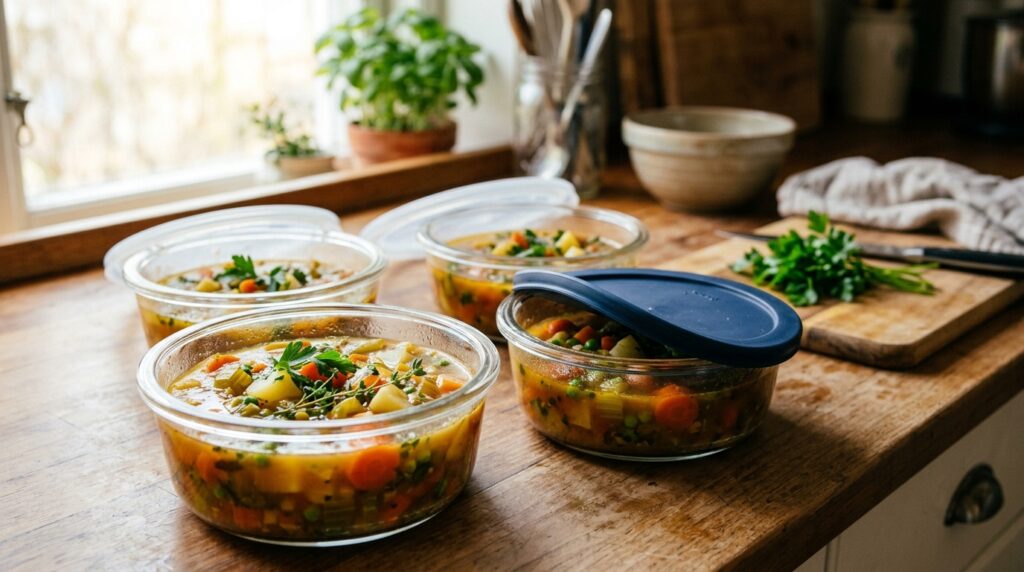
Refrigerated leftovers are generally best used within three to four days. For longer storage, freeze soup in meal-sized portions, which are easier to thaw and reheat than one large container. Frozen soup is best used within about two to three months for quality.
Some soups change texture after freezing. Cream-based soups may separate, and noodles or potatoes can soften or become less pleasant. I store noodles separately when possible, especially if I expect to keep several portions for another day.
Reheat soup until steaming hot throughout. Stir gently to warm it evenly, and add broth if the texture has thickened too much. If a cream-based soup separates, gentle stirring can help bring it back together, though its texture may still differ from the freshly cooked version.
Small portions can make reheating easier and reduce the amount of soup warmed at once. Use clean containers with secure lids, and label frozen portions with their contents if the soup is hard to recognize later. Those simple habits make it easier to enjoy the extra meal.
Choose one soup that suits tonight’s appetite and schedule, then make it while the idea is fresh. A little extra can become an easy dinner later, and the right bowl is the one that fits your table now.
Conclusion
The right bowl is the one that suits tonight’s table, whether dinner needs to be quick or especially filling. A good family meal does not have to be complicated; matching the soup to the evening’s time and appetite is a useful place to start.
Choose one recipe idea, make a batch, and enjoy any leftovers as a bonus. Check which ingredients you already have, pick the soup style that sounds right, and get the pot started.


