
I like a Thanksgiving table best when one dependable centerpiece leaves room for a few sides with different flavors and textures. This Thanksgiving turkey recipe centers on a bone-in turkey breast, a manageable roast for a smaller holiday feast. A compound butter is softened butter mixed with seasonings or herbs to spread under and over the skin.
I build the meal around that simple roast, then choose sides that bring color, crunch, comfort, or a bright note. The goal is a holiday table that feels generous without turning the kitchen into a crowded workspace. You can adjust the menu to suit your guests and the space in your oven.
A little planning lets the turkey roast while the rest of the meal comes together.
Key Takeaways
- Choose one main roast and a few sides with distinct flavors.
- Use a bone-in turkey breast for a smaller-format holiday meal.
- Pick sides that fit your oven space and prep time.
- Use a thermometer to check the turkey’s internal temperature.
- Prepare what you can ahead to make Thanksgiving day calmer.
How Do I Choose a Balanced Thanksgiving Menu?
A balanced menu pairs a rich centerpiece with a green side, a starch, and one bright or tangy dish. Different textures keep each bite interesting, so choose a few sides that do different jobs instead of several creamy dishes.
Choose sides with different textures and flavors, rather than filling the table with creamy dishes.
These Thanksgiving recipes offer clear flavor cues, from sharp cheese to tart fruit and warm spice. The menu role helps me see what each dish adds before I commit oven space and prep time.
| Side dish | Defining ingredients | Menu role |
|---|---|---|
| Cacio e Pepe Green Beans | Black pepper and Parmesan | Peppery, savory green vegetable |
| Honeyed Cranberries With Tahini | Cranberries, honey, lemon, cardamom and tahini | Bright, tangy contrast |
| Street Corn Pudding | Corn, jalapeños, crema, queso fresco and Tajín | Creamy, spicy side |
| Potato Leek Gratin | Potatoes, leeks, cream and thyme | Rich, filling side |
| Brussels Sprouts With Pancetta | Brussels sprouts, pancetta, balsamic vinegar and stock | Savory vegetable side |
Cacio e Pepe Green Beans is a three-ingredient, one-pan side with black pepper and Parmesan. It brings a crisp, savory note without adding much prep or cookware.
Honeyed Cranberries With Tahini uses six ingredients, including cranberries, honey, lemon juice, cardamom, salt, and tahini. Street Corn Pudding combines cornbread mix, canned creamed corn, jalapeños, crema, queso fresco, and Tajín.
Potato Leek Gratin gives the plate a creamy, filling element, while Brussels sprouts add a savory vegetable option. I usually choose one rich side and let the others bring sharper or fresher flavors.
If the menu already has a creamy casserole, choose a crisp or acidic side to keep the plate from feeling heavy.
Which Easy Vegetable Sides Work Best?
A green vegetable brings freshness to the holiday plate and can take less kitchen space than another baked casserole. For a busy day, a one-pan side keeps prep simple and leaves room for turkey roasting. A three-ingredient green bean dish can cook in one pan while the oven handles other food.
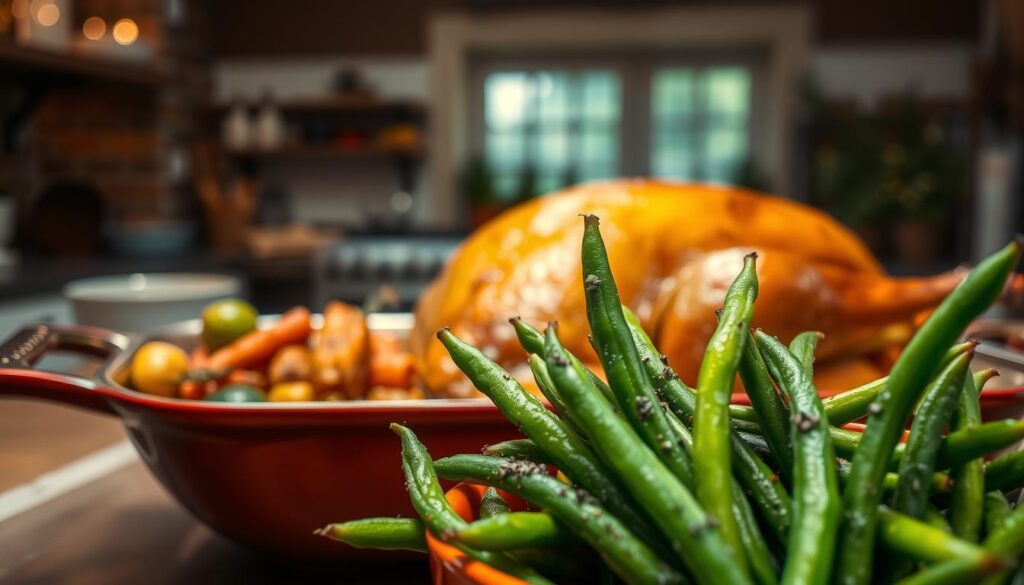
Green Beans for a Quick, Savory Side
Cacio e Pepe Green Beans uses green beans, black pepper, and Parmesan. Its short ingredient list makes it useful when prep counters are full or the oven is busy.
The side cooks in one pan, so you do not need to juggle another baking dish. Pepper and cheese give the beans a bold flavor without adding a complicated sauce.
That matters when butter, roasting pans, and serving dishes already fill the kitchen. A simple vegetable can bring a different texture without taking over the meal.
Brussels Sprouts and Green Bean Casserole
Brussels Sprouts With Pancetta is a savory option with a sharp finish. Balsamic vinegar and stock go into the sprouts during their final 10 minutes of cooking.
Green Bean Casserole offers a softer, familiar contrast. This version uses frozen-cut green beans and canned French-fried onions, with no mushrooms.
The two dishes suit different plates: the sprouts bring a meaty, tangy edge, while the casserole is mild and tender. I would serve one when I want a vegetable side to feel crisp, and the other when guests expect a classic casserole.
- Cacio e Pepe Green Beans for a quick, peppery side.
- Brussels Sprouts With Pancetta for a savory, tangy vegetable.
- Green Bean Casserole for a mushroom-free classic.
Add the balsamic vinegar and stock to the Brussels sprouts only during their final 10 minutes.
What Are the Best Potato and Vegetable Casseroles?
The best casserole fills a gap in the menu instead of repeating a flavor already on the table. Start with the style you enjoy, then check whether the dish needs oven time at the same time as the turkey. When oven space is tight, choose a side that can be assembled ahead or served at room temperature.
Creamy Potato and Greens Casseroles
Potato Leek Gratin layers thinly sliced potatoes with sautéed leeks, cream, garlic, thyme, and nutmeg. It is a rich choice when you want a creamy potato side with gentle herb flavor.
Collard Greens Au Gratin takes a different route, using 3 pounds of collard greens in creamy Parmesan sauce. Cajun seasoning, nutmeg, and smoked paprika give the greens a deeper, warm flavor.
The gratin makes potatoes the main feature; the collard dish puts a large amount of greens in the lead. I would choose between them based on whether the meal needs a hearty starch or a vegetable with a creamy finish.
Sweet Potato Sides, From Cozy to Spicy
Marshmallow Pecan Sweet Potato Casserole has a sweet, familiar topping of halved marshmallows and pecans. It suits a holiday table that welcomes a soft, sweet side.
Fiery Sweet Potatoes use Thai curry paste and coconut milk for a spicy, creamy flavor. Street Corn Pudding is another spicy, creamy option, with corn, jalapeños, crema, queso fresco, and Tajín.
These choices offer more than one way to bring warmth to the plate. Pick the sweet potato dish that best suits the rest of your flavors, rather than serving several rich sides together.
A Layered Gratin for a Showpiece Dish
Ombré Gratin layers regular potatoes, sweet potatoes, squash, and beets. Scrunched phyllo sheets cover the top, giving the dish a crisp finish and a striking range of colors.
Baked Macaroni and Cheese is a more familiar baked choice. Extra-sharp Cheddar and American cheese give it a bold, creamy flavor.
A second casserole can add work when the turkey already needs the oven. If baking space is limited, assemble a side ahead or serve something at room temperature instead.
Pick one rich baked side if the rest of the menu already includes several creamy dishes.
Which Stuffing and Rice Sides Make the Meal Heartier?
Stuffing and rice make a Thanksgiving meal more filling, but their seasonings should complement the main dish. Choose a savory side with a flavor of its own, and look for recipes that let you change the bread or leave out meat.
Stuffing With Herbs or Savory Add-Ins
Thanksgiving Stuffing uses sage, fennel seeds, and poultry seasoning to bring out a sausage-like flavor. The herbs give the dish a savory profile without relying on meat.
Stuffing With Mushrooms, Leeks and Bacon can use white bread or cornbread. You can also leave out the meat, which keeps the mushrooms and leeks at the center of the dish.
Stuffing-Stuffed Mushrooms take a smaller, party-friendly form. Cremini mushroom caps hold cheesy cornbread stuffing, making each portion easy to serve.
Rice, Mushrooms and Other Filling Sides
Hashweh is a rice dish made with Calrose, jasmine, or basmati rice. Beef or lamb and fried nuts add savory flavor and crunch.
It gives the meal a different texture from bread stuffing, with separate grains and crisp nuts. Choose the rice type you enjoy, then make sure its seasonings fit the other dishes.
These three options offer distinct ways to make the meal more substantial:
- Herb-seasoned Thanksgiving Stuffing with sage and fennel seeds.
- Meat-free Stuffing With Mushrooms and Leeks.
- Rice-based Hashweh with fried nuts.
Garlic, salt, and pepper can shape a stuffing’s flavor, but the listed options have different seasonings and textures. I would keep the side simple if the main dish already has a strong seasoning mix.
For a meat-free stuffing, leave out the bacon and keep the mushrooms and leeks.
How Can Cranberry Sides Brighten a Rich Menu?
A tart cranberry side cuts through a plate built around butter, cheese, or cream. Fruit brings a sharp contrast, and Honeyed Cranberries With Tahini uses six ingredients to balance tart berries with sweet, nutty notes.
The six ingredients are cranberries, honey, lemon juice, cardamom, salt, and tahini. Honey softens the fruit’s tart edge, while lemon adds another bright note.
Cardamom brings warm spice, and tahini adds a rich, nutty taste. That mix gives a cranberry side more depth than sweetness alone.
Cranberry sauce is a familiar alternative if you prefer a classic flavor on the holiday table. A small serving can add contrast without competing with richer dishes.
Serve a tangy cranberry dish in a small bowl so guests can add as much as they like.
How Can I Keep the Holiday Cooking Manageable?
A manageable Thanksgiving menu usually has a handful of well-chosen sides, not every dish that sounds appealing. About 4-6 sides is a useful rule of thumb, and a small gathering or guest contributions can call for fewer.
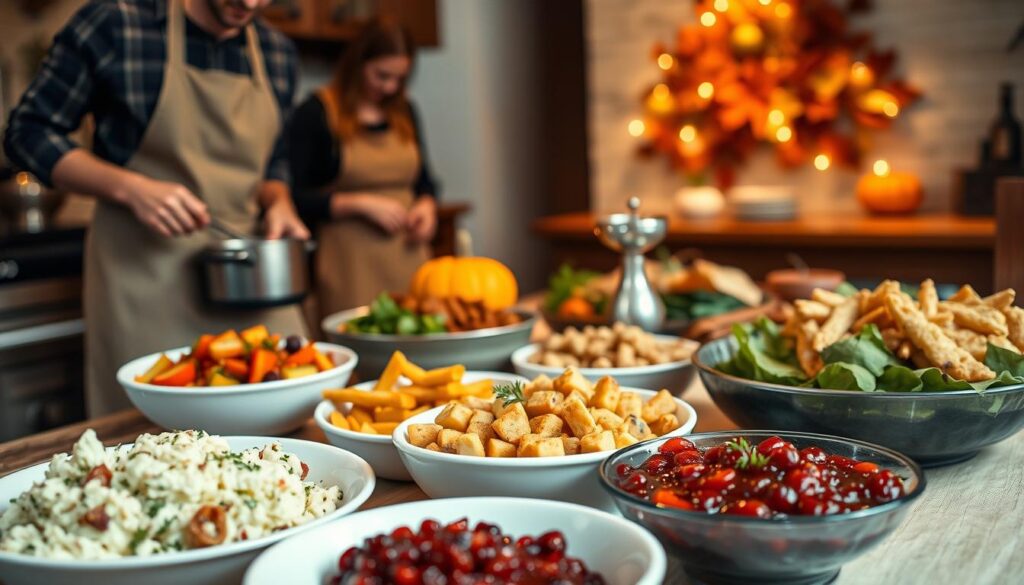
First choose the menu, then mark which recipes need the oven. Next, prep anything that can be assembled earlier and reserve oven space for the turkey.
The number of recipes is only part of the workload. Several oven-dependent dishes can compete for the same space, even when each recipe seems simple on its own.
Guest count, serving style, and whether guests bring food all affect how many sides make sense. A smaller menu can still feel generous when each dish has a clear place on the plate.
You might plan Cacio e Pepe Green Beans for a quick stovetop option, Potato Leek Gratin for a baked side, and Hashweh for a filling dish. These examples help you see how different cooking needs shape the day.
Write down the oven schedule before shopping or prep begins. That small check can reveal a crowded cooking window while there is still time to adjust.
Count oven-dependent dishes before finalizing the menu, because several casseroles can compete for the same space.
Should I Roast a Whole Turkey or a Bone-In Breast?
A whole turkey suits a crowd, while a bone-in breast works well when a smaller roast will do. For a smaller gathering, the breast offers a simpler format, and the 6-pound recipe is an alternative to roasting a whole bird.
Choose the Size That Fits Your Gathering
A common rule is about 1 pound of whole turkey per person, or 1 1/2 pounds per person when you want leftovers. A whole bird suits a larger gathering or a table that values a centerpiece.
Use the higher amount when you want extra meat after the meal. This 6-pound bone-in breast gives a smaller gathering a roast without the size of a whole turkey.
| Option | Best fit | Planning note |
|---|---|---|
| Whole turkey | Larger gathering or centerpiece | About 1 pound per person, or 1 1/2 pounds for leftovers |
| One 6-pound bone-in breast | Smaller-format roast | Follow the recipe and check doneness by thermometer |
| Two or three smaller breasts | Cooking multiple smaller pieces | Use a deep-enough pan to hold the juices |
When a Roast Turkey Breast Makes Sense
A bone-in breast makes sense when you want a straightforward roast or do not need a full bird. Two or three smaller breasts can roast together if the pan is deep enough to hold the juices.
Turkey recipes can also suit meals outside Thanksgiving. For a different weeknight option, I like these juicy turkey burger recipes with varied seasonings and cooking methods.
Choose the breast when a whole bird would leave more leftovers than you want.
How Do I Make a Thanksgiving Turkey Recipe?
This 6-pound bone-in turkey breast gets flavor from seasoned butter under the skin, sweet apple and onion, and broth in the roaster. The butter rub works especially well under the skin, while a light coating can go over the outside. Use the listed amounts for this recipe, and keep the apple and onion around the breast.
This approachable Thanksgiving turkey recipe also works for a non-holiday meal. A roaster is a shallow, covered cooking vessel that holds the breast and broth during roasting.
Ingredients for a Six-Pound Bone-In Turkey Breast
- 6-pound bone-in turkey breast
- 8 tablespoons salted butter, softened
- 2 teaspoons poultry seasoning
- 2 teaspoons celery salt
- 1 teaspoon black pepper
- 2 teaspoons onion powder
- 1 teaspoon garlic powder
- 2 teaspoons dried sage
- 1/2 teaspoon sweet paprika
- 1/2 teaspoon white pepper
- 1/2 tablespoon granulated sugar
- 1 cup turkey or chicken broth
- 1 medium sweet onion
- 1 large sweet red apple
Prepare the Breast and Seasoned Butter
Let the butter soften until it spreads easily, then mix it with the poultry seasoning, salts, peppers, powders, sage, paprika, and sugar. This seasoned butter brings the rub’s flavor close to the meat.
Gently loosen the skin over the breast with your fingers, taking care not to tear it. Spread most of the butter underneath, where it can season the meat as it cooks.
Rub a light coating over the outside if you like. Place the breast in the roaster, arrange the onion and apple in and around it, then pour in one cup of broth.
Use these steps to keep the recipe in order:
- Set out the measured ingredients and soften the butter.
- Mix the butter with all the listed seasonings.
- Loosen the skin and coat the breast underneath.
- Arrange the apple and onion, then add broth to the roaster.
- Cover the roaster and follow the roasting guidance below.
A turkey butter rub works best under the skin, where it seasons the breast directly. Keep the outside coating light so the skin is not weighed down.
Keep the apple and onion around the breast rather than packing the cavity tightly.
How Do I Roast Turkey So It Stays Moist?
For the 6-pound breast, roast covered at 350°F and begin checking around 1 hour 45 minutes, but use a thermometer rather than the clock. Time is only a guide, and 165°F is the safe internal-temperature target for turkey.
For a whole turkey, thaw it in the fridge, remove the giblets, dry it with paper towels, and season it. About one day of refrigerator thawing for every 4-5 pounds is a common estimate.
A fully thawed bird cooks more evenly than one with icy spots. For a whole-bird walkthrough, see my guide to roasting a turkey in five steps.
Thaw, Dry and Season the Bird
Keep the thawing bird in the fridge, where it can defrost at a steady, safe temperature. Remove the neck and giblets from the cavity once the bird is thawed.
Pat the skin dry with paper towels before seasoning. Dry skin gives the seasoning a better surface and helps it roast without excess moisture on the outside.
Use Time as a Guide and Temperature as the Check
The covered 6-pound breast roasts at 350°F for about 15 minutes per pound. Start checking at about 1 hour 45 minutes, then use the thermometer to judge doneness.
Whole-bird recipes use different oven settings and timing plans. These are separate approaches, not schedules to swap into the breast recipe.
| Roast approach | Oven method | Timing guidance | Rest |
|---|---|---|---|
| Covered 6-pound breast | 350°F | About 15 minutes per pound; check at 1 hour 45 minutes | 20 minutes covered |
| Gordon Ramsay’s whole bird | 220°C/Gas 7 for 10-15 minutes, then 180°C/Gas 4 | About 2 1/2 hours at lower setting; 30 minutes per kg | At least 45 minutes |
| 12-pound whole-bird method | 430°F for 20 minutes, then 350°F | About 2 hours 30 minutes at 350°F | At least 1 hour |
| Brined whole-bird method | 350°F, first 45 minutes uncovered, then covered | 12-16 minutes per pound | About 20 minutes |
| Steady-temperature whole bird | 325°F | About 14-15 minutes per pound | 30-60 minutes |
Protect the Skin and Rest Before Carving
Butter under the skin adds flavor, while a food thermometer checks the meat rather than its color. Check the thickest part without touching bone, and keep the safe internal-temperature target at 165°F.
If the skin darkens too quickly, lay foil loosely over it. This protects the surface while the thickest meat continues to cook.
Gordon Ramsay’s whole bird uses lemon, garlic, onion, bay leaves, and bacon, not the breast recipe’s apple and onion. His method also uses seasoned butter under the breast and leg skin.
Rest the breast covered for 20 minutes before slicing so the juices have time to settle.
Can I Make the Turkey and Sides Ahead?
Thanksgiving day feels calmer when you prep what can be assembled ahead and reheat cooked turkey with broth. Make-ahead work can free time for serving, and covered reheating with broth helps keep sliced turkey moist.
What to Prepare Before Thanksgiving Day
Measure ingredients and assemble sides ahead when their recipes allow. Keep dishes covered in the fridge when they need chilling before they bake.
One whole-turkey method allows the seasoned, prepared bird to rest in the fridge overnight before roasting. Follow that recipe’s own directions for its seasoning and timing.
Make sure your prep plan leaves enough space in the fridge for the turkey and side dishes. A short list of tasks can also help separate day-before work from oven-time jobs.
Store and Reheat Turkey Without Drying It Out
Refrigerate cooked, sliced turkey in a shallow baking dish with a couple cups of turkey broth. Cover the dish before it goes into the oven.
For the 350°F method, reheat the covered turkey for 10 more minutes after the oven reaches temperature. Another method reheats covered turkey with broth at 325°F until it reaches 165°F, about 45 minutes to 1 hour.
Sliced turkey can also warm gently in a slow cooker and stay warm for serving. Here are three distinct ways to handle cooked turkey:
- Refrigerate cooked turkey in a shallow baking dish.
- Add broth and cover before oven reheating.
- Warm sliced turkey gently in a slow cooker and hold it warm.
| Use | Method | Key detail |
|---|---|---|
| Refrigerated sliced turkey | Shallow baking dish with broth | Cover the dish |
| Oven reheating | 350°F | Heat 10 more minutes after the oven reaches temperature |
| Gentle warming | Slow cooker | Use for sliced turkey and hold warm |
Refrigerated leftovers keep for 3-5 days, and frozen turkey can keep for up to 3 months. Keep leftover turkey covered with broth while reheating so the meat does not dry out.
Conclusion
A festive Thanksgiving table does not need a crowded menu to feel generous. I like to choose sides with contrasting flavors and textures, then leave enough room for the centerpiece and the people gathered around it.
Start with the 6-pound breast recipe and pick a few sides that fit your oven and prep time. That gives you a clear plan without asking every dish to compete for the same space.
Keep the final meal true to your guests and your kitchen. Pick the sides that suit your gathering, set out the ingredients, and let the turkey rest before carving.


