
A warm loaf fresh from the oven is an easy way to bring cozy fall flavors into a home kitchen. I love how its scent can make an ordinary afternoon feel special. A quick bread is a loaf that rises with chemical leaveners such as baking soda or baking powder instead of yeast.
With this pumpkin bread recipe collection, I’m sharing seven options for different tastes and schedules. You’ll find easy steps for a classic butter loaf, an oil-based loaf, a streusel-topped version, and mix-in variations for chocolate, nuts, or fruit.
Each option starts with familiar pantry ingredients, so you can choose a project that suits your fall baking plans. The next section will help you choose between butter-based and oil-based loaves.
Key Takeaways
- Choose butter for a classic, rich flavor.
- Use neutral oil for a plush, moist crumb.
- A streusel topping adds a buttery, crumbly finish.
- Fold chocolate chips, nuts, or dried fruit into a base batter.
- Use pure pumpkin puree, not sweetened pumpkin pie filling.
- Let a loaf cool completely before wrapping it.
Should I Choose a Butter or Oil Loaf?
For a richer classic flavor, choose butter; for a plush crumb, choose oil. Both work well, and the best fit depends on the texture and flavor you enjoy.
Butter adds a rich taste and a tender crumb, while oil gives the loaf a moist, plush texture. Neither fat makes every pumpkin bread recipe better. A streusel topping adds a separate layer of buttery crunch.
Choose butter for a rich, classic flavor, or neutral oil for a plush, moist crumb.
Butter for a classic, tender crumb
Butter brings a familiar richness to a classic loaf. The old-fashioned recipe uses softened butter, sugar, eggs, and pumpkin, creating a tender crumb with a rounded flavor.
This style suits readers who want a traditional loaf without a topping. The butter’s flavor stands out, especially when warm spices join the batter.
Oil for a plush, moist texture
The oil-based recipe uses neutral oil, which lets pumpkin and spices lead. Its texture feels soft and moist, making it a good choice when a plush slice matters most.
Melted butter can also work in that recipe. It will bring a richer taste, while neutral oil keeps the flavor more restrained.
Streusel for a crumbly finish
A streusel loaf starts with neutral oil in the batter and adds a buttery crumb topping. That mix gives the soft loaf a sweet, crisp contrast on top.
The table shows the main differences at a glance.
| Style | Fat | Crumb | Topping |
|---|---|---|---|
| Classic | Butter | Tender | None |
| Oil-based | Neutral oil | Plush | None |
| Streusel | Neutral oil in the loaf | Soft | Buttery crumb topping |
Once you pick a style, the ingredients make its character clear. Next, I’ll cover the pantry choices that help each one work.
Which Ingredients Build the Batter?
Start with a can labeled 100% pure pumpkin, not pumpkin pie filling. Pure pumpkin puree is unsweetened and unspiced, so the recipe controls the sugar and flavor.
Pumpkin pie filling contains added sugar and spices, so it is not a direct substitute for pumpkin puree. Using it can make a loaf too sweet or throw off its spice balance.
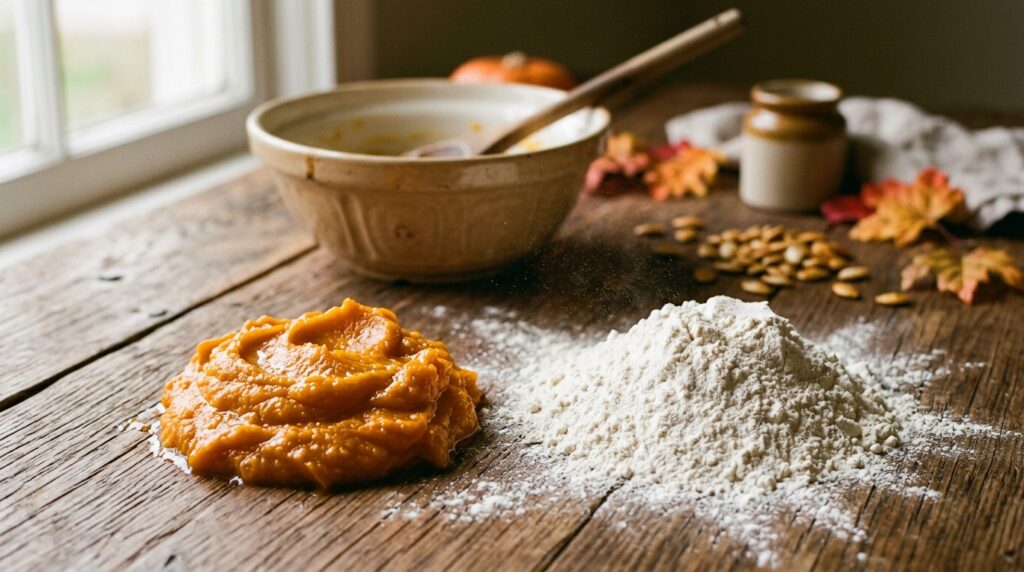
Pure pumpkin or pumpkin pie filling
Pumpkin puree adds moisture and a mild earthy flavor. Check the can label closely, since pumpkin pie filling is already sweetened and spiced.
That difference matters in a pumpkin bread recipe. The recipe’s brown sugar and spices are measured for plain puree, not a ready-made pie mixture.
Flour, leaveners, and warm spices
Measure all-purpose flour by spooning it into the measuring cup, then leveling the top. Scooping straight from the bag can pack in extra flour and make the loaf dense.
Whisk flour, baking soda, baking powder, salt, and spices together before adding wet ingredients. This spreads each dry ingredient evenly through the batter.
Baking soda helps the loaf rise, while baking powder adds lift. Salt sharpens the flavor. Cinnamon, ginger, nutmeg, and cloves give the loaf its warm spice notes.
After choosing the right ingredients, you can pick one of seven recipes built around them.
Which Pumpkin Bread Recipe Should I Bake This Fall?
A butter-based classic, a neutral-oil loaf, and a streusel-topped version give you three different starting points. Each base has its own appeal, from rich flavor to a soft center and crisp top.
The old-fashioned loaf makes two pans, while the oil-and-milk and streusel recipes each make one large loaf. You can also adapt a base with chips, nuts, fruit, or a spice blend.
Old-fashioned butter pumpkin bread
This old-fashioned pumpkin bread recipe makes two 8-by-4-inch loaves. Use 2 cups all-purpose flour, ½ teaspoon salt, 1 teaspoon baking soda, and ½ teaspoon baking powder.
Add 1 teaspoon each ground cloves, cinnamon, and nutmeg. The wet ingredients are ¾ cup softened unsalted butter, 2 cups sugar, 2 large eggs, and one 15-ounce can of pure pumpkin.
Mix the batter, divide it between the pans, and bake at 325°F for 65-75 minutes. The result is a rich, tender loaf with a familiar mix of warm spices.
Moist oil-and-milk pumpkin bread
For a moist pumpkin bread recipe with a plush crumb, use 2 cups all-purpose flour, 2 teaspoons baking powder, and 2 teaspoons cinnamon. Add ½ teaspoon each baking soda, ground ginger, and sea salt.
Use ¼ teaspoon each ground cloves and nutmeg, 1½ cups pumpkin puree, 2 large eggs, 1 cup cane sugar, ½ cup vegetable oil, ¼ cup milk, and 1 teaspoon vanilla.
Mix the wet ingredients as the recipe directs, then add the dry mix. Bake in an 8-by-4-inch or 9-by-5-inch pan at 350°F for 60-70 minutes. Expect a soft, lightly spiced loaf.
Streusel-topped pumpkin bread
For the batter, combine 2 cups all-purpose flour, one 15-ounce can pumpkin puree, ¾ cup vegetable oil, 1 cup light brown sugar, and ½ cup granulated sugar. Add 2 eggs, 1½ teaspoons baking powder, ¾ teaspoon baking soda, and ¾ teaspoon kosher salt.
Season it with 5 teaspoons cinnamon, ½ teaspoon freshly grated nutmeg, ¼ teaspoon ground ginger, and a pinch of ground cloves. For the topping, mix ½ cup flour, 6 tablespoons brown sugar, ½ teaspoon cinnamon, and ¼ teaspoon kosher salt with ¼ cup melted butter.
Spread the batter in a 9-by-5-inch pan and add the crumb topping. Bake at 350°F for 65-80 minutes. The soft center and buttery streusel topping make a sweet contrast.
Chocolate chip pumpkin bread
Start with the oil-and-milk loaf and fold ½ cup chocolate chips into the batter. The chips bring pockets of sweetness and a familiar chocolate flavor to each slice.
Use the same pan and baking temperature as that base recipe. This adaptation suits anyone who likes chocolate with pumpkin and spice.
Pecan or walnut pumpkin bread
Choose the butter or oil-and-milk base, then fold ½ cup chopped pecans or walnuts into the batter. Pecans add a mellow, buttery crunch, while walnuts bring a slightly earthy bite.
The nuts give the soft crumb more texture without changing the base recipe. Chop them small enough to spread through each slice.
Dried-fruit pumpkin bread
For a fruity loaf, fold ½ cup dried cranberries, tart cherries, raisins, or chopped dates into either base batter. Cranberries and cherries add a tart note, while raisins and dates taste sweeter.
This change makes each bite chewy as well as soft. Keep the amount to ½ cup so the fruit does not crowd the batter.
Pumpkin pie spice pumpkin bread
Use the oil-and-milk recipe and replace its individual spices with 1 tablespoon pumpkin pie spice. Keep the flour, pumpkin puree, sugar, eggs, oil, milk, and vanilla amounts the same.
This shortcut makes a pumpkin bread recipe with oil simple to season. It gives the loaf a blended spice flavor without measuring cinnamon, ginger, cloves, and nutmeg one by one.
Once you choose a formula, gentle mixing helps keep the loaf tender. The next tips prevent a tough or uneven batter.
How Do I Mix the Batter Without Making It Tough?
The simplest way to avoid a dense loaf is to stop mixing as soon as the flour disappears. Gentle mixing keeps the flour from building a tough texture.
Use separate bowls for the dry and wet ingredients, then combine them only until no dry streaks remain. A few small lumps are better than an overworked batter.
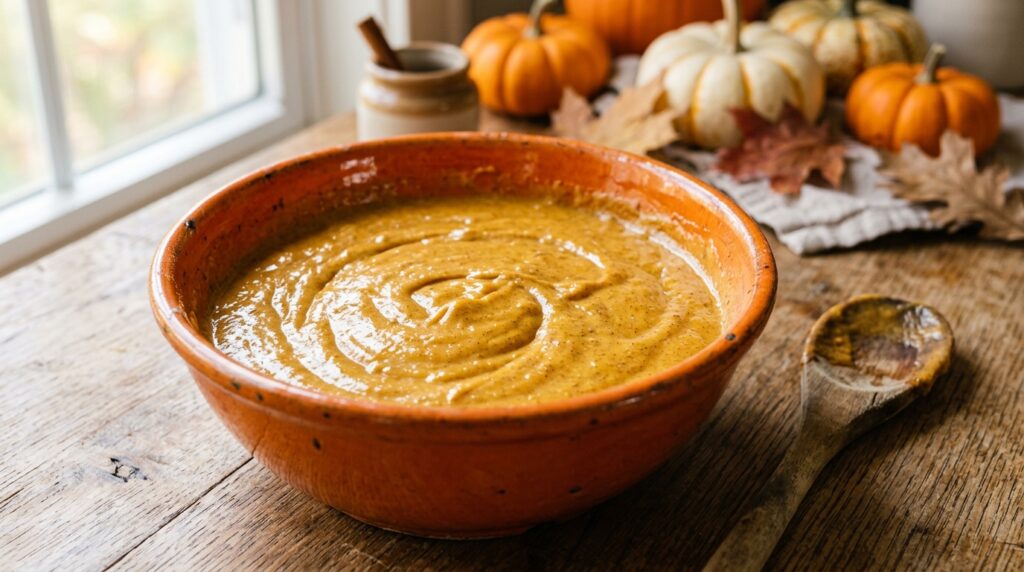
Whisk the dry ingredients together
Measure the flour and other dry ingredients into one bowl. Whisk together dry ingredients until the leaveners, salt, and spices look evenly spread through the flour.
In a second bowl, mix the eggs and the other wet ingredients as directed by your chosen recipe. Some recipes call for creamed butter and sugar, while others use oil.
Combine wet and dry ingredients gently
Add the dry mixture to the wet ingredients. Fold with a spatula or mix on low speed, stopping once the flour is no longer visible.
For an easy pumpkin bread recipe, this short mixing stage is the key to a soft crumb. The batter may look a little lumpy, and that is fine.
- Measure and prepare the ingredients and bowls.
- Whisk the flour, leaveners, salt, and spices.
- Combine the wet ingredients as the recipe directs.
- Add the dry mixture to the wet mixture.
- Stop mixing when no dry streaks remain.
A few small lumps are preferable to working the flour too long. These easy moist pumpkin bread recipe steps help keep the crumb tender.
Mixing matters, but pan choice and oven cues matter just as much.
If you enjoy one-bowl bakes, try this flourless cornbread recipe for a different kind of simple batter.
What Pan and Oven Cues Should I Use?
A pan that is too small can turn a high-rising batter into an overflow problem. Use the pan size named for your recipe whenever possible.
The generous streusel batter is designed for a 9-by-5-inch pan. In an 8-by-4-inch or smaller pan, fill it only two-thirds full and bake leftover batter as muffins.
Match the pan to the batter
Line the long sides of the streusel loaf pan with parchment to make a lifting sling. Once the loaf cools, the paper helps lift it without pressing into the topping.
A light-colored pan lowers the risk of overbrowning compared with a dark-colored pan. Bake times belong to each recipe, not to every pumpkin loaf.
The oil-and-milk loaf bakes at 350°F for 60-70 minutes. Check it after 45 minutes, and tent it loosely with foil if the top has already browned.
Check the center, not just the crust
Test the center with a cake tester or thin skewer near the end of the recipe’s bake time. A streusel loaf can be done when the tester comes out clean or with a few crumbs.
If the streusel top browns too quickly, cover it loosely with foil while the center finishes. Do not press foil onto the topping.
A center check can help you judge doneness without relying on crust color alone. This guide to bakeware and toothpick tests offers another example of checking a baked center.
With the right pan and oven cues, you can spot problems and adjust when a loaf comes out dry, dense, or gummy.
Why Did My Pumpkin Bread Turn Out Dry or Dense?
A dry loaf often starts with too much flour or too much mixing, not too little pumpkin flavor. Small measuring and mixing changes can make a clear difference next time.
Dry or dense pumpkin bread often comes from packed flour, overmixing, or baking the loaf too long. A gummy middle points to a center that needs more time in the oven.
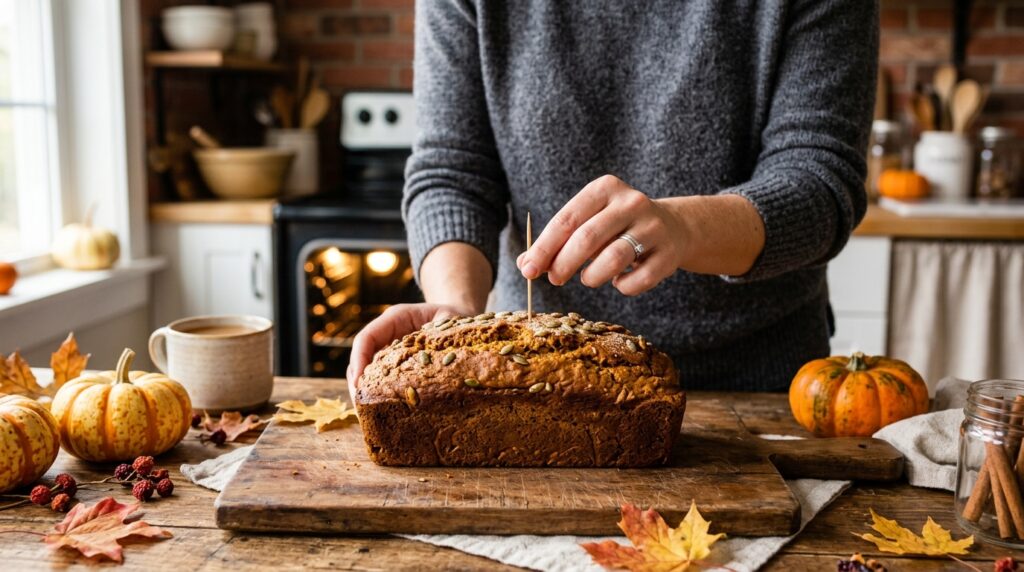
Dry or tough slices
Scooping flour from its bag can pack too much into a cup. Spoon flour into the measuring cup and level it to avoid a heavier batter.
Mixing too long can also make the crumb tough. Stop when the dry ingredients disappear, even if a few small lumps remain.
A gummy center or an overbrowned top
A gummy center usually means the middle has not finished baking. Give the loaf more time, and shield a dark top with loose foil while the center catches up.
A few moist crumbs on a tester do not mean the middle is raw. A wet smear of batter is a sign that it needs more oven time.
- Dry crumb: Check flour measurement and bake time.
- Tough crumb: Mix less after adding flour.
- Gummy center: Continue baking until the center sets.
- Top browning too fast: Cover it loosely with foil.
After you get a tender base loaf, small changes can suit your taste. You can also customize slices before covering leftovers.
How Can I Customize a Loaf or Make It Less Sweet?
A small change, such as a handful of nuts or a different spice blend, can make the same base loaf feel new. One change at a time makes it easier to judge the result.
To make a less-sweet loaf, reduce sugar or replace some all-purpose flour with whole-grain flour, then adjust one element at a time. Both changes affect the flavor and texture.
Add-ins that change the flavor and texture
Use these choices to add contrast without changing the whole recipe. A ½-cup portion works for the mix-ins in the base recipes.
- Chocolate chips add sweet bites throughout the loaf.
- Pecans or walnuts bring crunch and a nutty taste.
- Dried cranberries or other dried fruit add chewy, tart or sweet notes.
- Pumpkin pie spice can replace separate spices in the oil-and-milk recipe.
A less-sweet or whole-grain direction
A healthy pumpkin bread recipe can reflect your taste, but that label does not promise a set nutrition result. Less sugar makes the loaf taste less sweet and can change its texture.
Replacing some all-purpose flour with whole-grain flour also changes the crumb. Try one change first, then decide whether you like the loaf before changing another.
Serve a slice plain, with butter, or with honey butter. The simple topping lets you choose how rich or sweet each serving tastes.
When you have extra slices, keeping them covered or freezing them helps save them for later.
How Should I Store and Freeze Pumpkin Bread?
Let the loaf cool completely before covering it or wrapping it for the freezer. Storage guidance varies by recipe, so use the time that fits your loaf.
Wrap fully cooled loaves or slices in foil, freezer wrap, or a freezer bag before freezing. Warm bread can trap steam inside its wrap.
Cool the bread fully before wrapping it, and follow the storage time for its recipe style.
Keep the loaf covered between servings
Cover the classic butter loaf loosely with foil or keep it in a cake keeper at room temperature for up to 3 days. The oil-and-milk loaf can stay in an airtight container at room temperature for up to 3 days.
Keep the streusel loaf tightly covered at room temperature for 1-2 days. Refrigerate it if you plan to store it longer than 2 days.
Wrap slices well for the freezer
The classic butter loaf and the oil-and-milk loaf freeze for up to 3 months. The streusel loaf freezes for up to 1 month.
Thaw the classic loaf overnight in the refrigerator. Frozen slices of the oil-and-milk loaf can thaw at room temperature or defrost in a microwave for about 30 seconds.
The table keeps the different times and methods together.
| Recipe style | Room-temperature guidance | Freezer guidance | Wrapping or thawing |
|---|---|---|---|
| Classic butter loaf | Up to 3 days, loosely covered or in a cake keeper | Up to 3 months | Foil; thaw overnight in the refrigerator |
| Streusel loaf | 1-2 days, tightly covered; refrigerate beyond 2 days | Up to 1 month | Foil, freezer wrap, or freezer bag |
| Oil-and-milk loaf | Up to 3 days in an airtight container | Up to 3 months | Foil, freezer wrap, or freezer bag; thaw at room temperature or microwave about 30 seconds |
Keep a small amount covered for near-term eating, or freeze slices for a later day.
Conclusion
The best loaf for your kitchen is the one that fits the flavor and texture you want. Choose butter for a classic taste, neutral oil for a plush crumb, or streusel for a crumbly finish.
Fall baking does not need to be complicated. Pick one recipe that sounds good, preheat the oven, and bake a loaf for a fall afternoon.


