
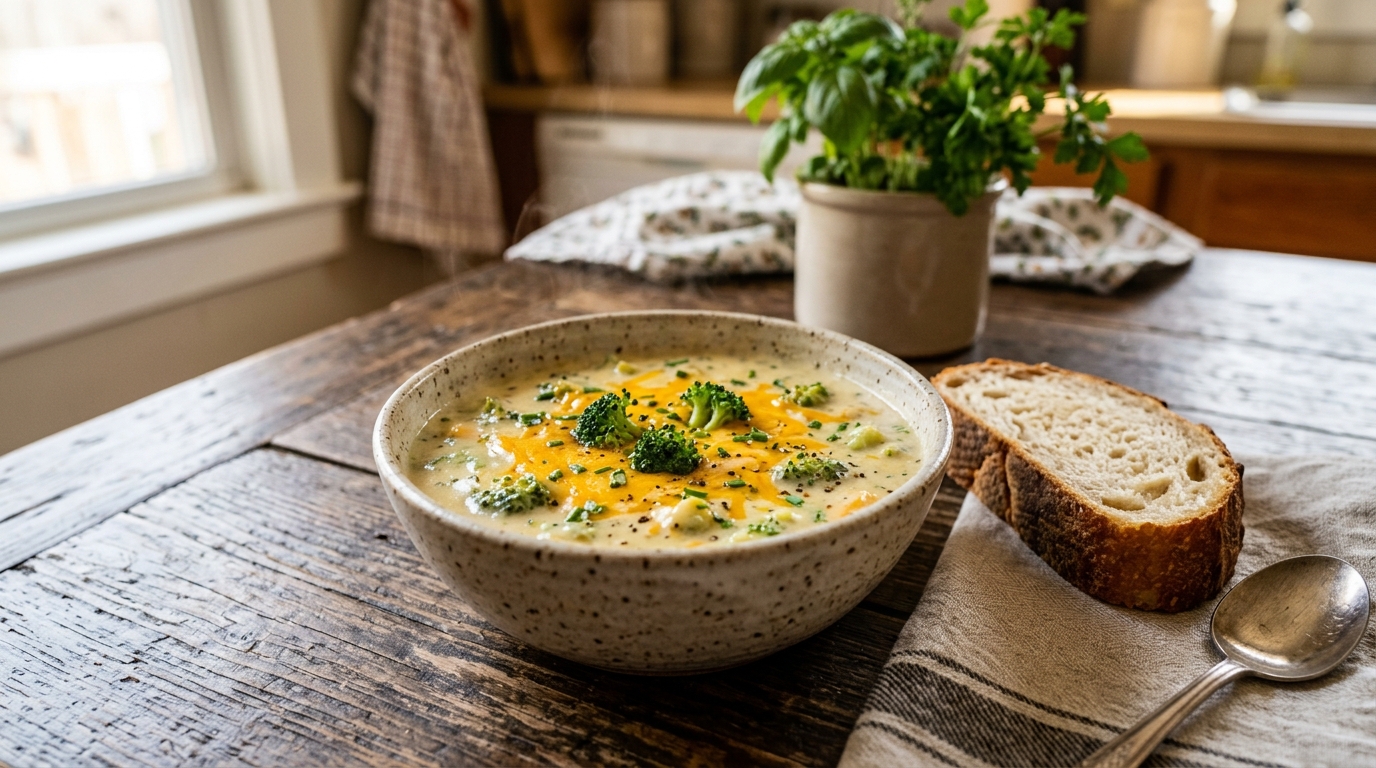
A homemade bowl can make an ordinary weeknight feel comforting, especially when dinner needs to be warm, filling, and manageable. This broccoli cheddar soup recipe brings tender vegetables and a creamy base together in one pot, without requiring complicated techniques or special equipment.
I keep the method practical, with clear steps that help you make a satisfying meal even when the evening feels busy. The vegetables add substance, while cheddar gives each spoonful a rich, savory finish. A little care with the heat helps the soup stay smooth.
Key Takeaways
- Makes four servings in 35 minutes.
- Uses one large pot or Dutch oven.
- Freshly grated cheddar melts most smoothly.
- Add the cheddar gradually over low heat.
- Refrigerate leftovers in an airtight container for up to three days.
I’ll walk you through a clear, approachable stovetop method, then start with the recipe’s yield and timing.
Broccoli Cheddar Soup Recipe
This recipe makes four servings in 35 minutes, with 10 minutes of prep and 25 minutes of cook time. I use one pot to cook the vegetables and build a creamy cheddar base, so the process stays straightforward from start to finish.
The result is a substantial meal, not a thin cheese broth with a few vegetables floating in it. Tender broccoli florets and carrot pieces give each bowl texture, while the smooth base brings the cheddar flavor through every spoonful.
Why This Recipe Works
A one-pot method keeps the steps easy to follow and limits extra dishes. The onion softens in butter, and flour helps the liquid thicken before the vegetables simmer. Milk and vegetable broth create a creamy base with enough savory flavor to support the cheddar.
The vegetables cook directly in that base, so they contribute flavor as they become tender. I add the cheddar near the end, when the heat is low. That timing helps the cheese blend into the soup instead of becoming stringy or grainy.
This balance makes the recipe useful on a weeknight: the prep is simple, the ingredient list is familiar, and the finished bowl feels filling. You can keep the broccoli in small pieces for a spoonable texture, or partly blend the soup if you prefer it smoother.
Yield and Timing
The recipe serves four, with 10 minutes to prepare and 25 minutes to cook. From chopping the vegetables to finishing the soup, plan for 35 minutes total. A large pot gives the vegetables room to cook and makes it easier to whisk the base without splashing.
Those times assume the vegetables are ready before the pot goes on the stove. Cutting the broccoli florets and carrot into small pieces helps them soften during the simmer. If your pieces are larger, they may need more time before they are tender.
Before you begin, check that you have the vegetables, dairy, broth, flour, and cheddar. The ingredient choices below explain what each one contributes, so you can gather what you need and know how it fits the bowl.
What Ingredients Do You Need?
A spoonful should bring together broccoli, carrot, and cheddar, with a creamy broth tying those pieces into one bite. The ingredient list is built around that combination, using familiar pantry basics to create a flavorful soup with enough body for a main meal.
Measure everything before you cook, particularly the flour and liquids. Once the pot is on the heat, having the ingredients ready makes the transition from the roux to the vegetable simmer much easier.
Aromatics and the Roux
Use 4 tablespoons unsalted butter, 1 medium yellow onion, 1/2 teaspoon sea salt, freshly ground black pepper to taste, 3 garlic cloves, and 1/4 cup all-purpose flour. The onion adds a mellow savory base, and garlic brings a deeper, more aromatic note.
A roux is a mixture of fat and flour cooked together to thicken a liquid. Here, butter coats the flour and helps it blend into the milk and broth, building a fuller texture. Cooking the flour briefly also takes away its raw taste.
Unsalted butter gives you more control over the final salt level, since the broth and cheddar can also add saltiness. Black pepper adds gentle warmth. Start with the listed salt, then taste the finished soup before adding more.
Vegetables, Dairy, and Seasoning
For the liquid, gather 2 cups whole milk or unsweetened almond milk and 2 cups vegetable broth. Whole milk gives the soup a richer feel. Unsweetened almond milk can replace it, though the soup will be a little less thick.
Add 3 cups chopped broccoli florets and 1 large carrot, julienned or finely chopped. Broccoli brings a fresh, earthy flavor and the main vegetable texture. Carrot adds color and a mild sweetness, with small pieces that soften in the cooking liquid.
Measure 1/2 teaspoon Dijon mustard and 8 ounces cheddar, about 2 heaping cups. Dijon adds a quiet tang that balances the rich cheese. Cheddar supplies the soup’s savory, sharp flavor and helps create its creamy finish when melted gently.
Choose cheddar you enjoy eating on its own, since its flavor carries through the pot. Freshly grated cheese is a practical choice for a smooth melt. With the shopping and measuring settled, a few small prep choices can make cooking feel more orderly.
What Should You Prepare Before Cooking?
Set a large pot or Dutch oven on the stove, then prepare the vegetables before turning on the heat. Cut the broccoli florets into small, bite-sized pieces so they fit comfortably on a spoon and cook at a similar pace.
Chop the onion and garlic, and grate or finely chop the carrot. Keep the measured ingredients close to the pot. This setup matters because the cooking sequence moves from onion to garlic to flour without much pause.
Starting to cook before cutting the vegetables can interrupt the sequence once the roux is underway. The flour needs attention as it cooks, so stopping to chop or search for a measuring cup can make the timing less even.
Use this short checklist before you start:
- Cut broccoli into small pieces.
- Chop onion and garlic.
- Prepare the carrot.
- Measure the flour, milk, broth, mustard, and seasonings.
Keep the salt, pepper, and Dijon within reach too. Once the onion is soft, the next steps follow one another quickly, and the pot is easier to manage when nothing is still waiting on the cutting board.
With the vegetables cut and every measured ingredient nearby, you can focus on the heat and the texture of the base. The cooking sequence begins with the butter in the prepared pot.
How Do You Make It on the Stovetop?
Melt the butter in the prepared pot over medium heat, then follow the four steps below. Keep the heat steady as the flour cooks, and lower it before the cheddar goes in.
- Soften the onion. Add the chopped onion to the melted butter with the salt and pepper. Cook for 5 minutes, stirring now and then, until the onion softens. If the onion starts browning quickly, lower the heat slightly so it can soften without taking on a toasted flavor.
- Add garlic and flour. Stir in the garlic and cook for 1 minute, just until fragrant. Sprinkle in the flour and whisk it into the butter and vegetables. Cook for 1 to 2 minutes, whisking, until the mixture looks smooth and no dry flour remains around the pot.
- Whisk in the liquids and vegetables. Slowly pour in the milk while whisking to break up lumps, then add the vegetable broth. Stir in the broccoli, carrot, and Dijon mustard. Scrape the bottom of the pot as you stir so the thickening mixture does not cling to one spot.
- Simmer, then add cheddar. Bring the mixture to a gentle simmer and cook for 15 to 20 minutes, until the broccoli is tender. Stir from time to time. Lower the heat so the soup is no longer boiling, then add the cheddar gradually, stirring between additions until it melts.
Keep the simmer gentle rather than letting the broth bubble hard. The vegetables need time to soften, but a rolling boil can make the liquid reduce too quickly and leave the bottom of the pot more likely to catch.
When the broccoli is tender and the cheddar has melted in, taste the soup. Add more salt or pepper if needed, a little at a time. The broth and cheese both affect the final seasoning, so tasting at the end gives you a better guide.
If the soup seems too thick, wait until you have checked its consistency before loosening it. Small adjustments are easier to control than a large pour. The right heat and stirring also help prevent texture problems as the cheese melts.
How Do I Keep the Soup Creamy?
High heat can turn a smooth cheese soup grainy by making the cheese separate from the liquid. I keep the heat low when I add cheese, then stir as each handful melts into the soup.
Freshly grated cheddar usually melts more smoothly than pre-shredded cheese. Packaged shredded cheese may contain anti-caking agents that help keep the shreds separate in the bag, but can make the finished texture less even.
Avoid Grainy or Separated Cheese
Add cheese gradually over low heat, and do not let the soup boil once the cheese is in the pot. A handful at a time gives it a chance to melt before you add more. If the liquid bubbles hard, take the pot off the heat briefly and let it settle.
Cheddar can become stringy or oily when the soup gets too hot. Gentle heat helps the cheese blend into the broth rather than separating into solids and fat. Stir steadily, but avoid beating the soup so hard that tender vegetables break apart.
Adjust Thickness Without Losing Texture
The soup can stay chunky, or you can partly blend it for a smoother base. An immersion blender gives you control: blend a small portion, then stir it back through the pot. You can also transfer a cup or two to a blender, blend carefully, and return it.
If the finished soup is too thick, stir in a small amount of broth and check the consistency again. Add more only if needed. A little broth loosens the base without changing its creamy character as much as a large pour would.
Keep the Broccoli Tender and Green
Cook the broccoli until it is just tender, not until it collapses. Small florets cook more evenly, while oversized pieces can stay firm in the center as the outside softens. Check a piece with a spoon near the end of the simmer.
Overcooked broccoli can become dull in color and soft enough to lose its shape. The final bowl should have a tender bite, not a mushy texture. Use this quick check before and during cooking:
- Do not add cheese over high heat.
- Do not dump all the cheddar in at once.
- Do not overcook the broccoli.
- Do not thin the soup before checking its consistency.
These small choices protect the texture without requiring special equipment. Once you know how to control the heat and adjust the thickness, you can consider ingredient swaps and other ways to adapt the bowl.
What Variations Can You Make?
For a vegetarian bowl, use vegetable broth; for a heartier version, add potato or cooked chicken. Those choices change the flavor and fullness of the soup, so adjust the seasoning after the additions have warmed through.
The base recipe uses vegetable broth, which keeps the soup vegetarian. Chicken broth gives it a more savory, poultry-forward flavor. Unsweetened almond milk can replace whole milk, but the soup will be a little less thick. Sharp cheddar tastes stronger than mild cheddar.
Change the Broth, Dairy, or Cheddar
Choose the broth based on the meal you want. Vegetable broth is a vegetarian alternative to chicken broth, while chicken broth makes the cheese base taste more deeply savory. Check the broth’s salt level before seasoning, since brands can vary.
Whole milk gives a richer, thicker base than unsweetened almond milk. Almond milk works as a swap, though it does not give the soup the same thickness. Sharp cheddar brings a stronger flavor than mild cheddar, so it can stand out more against the vegetables.
Add Potatoes or Chicken
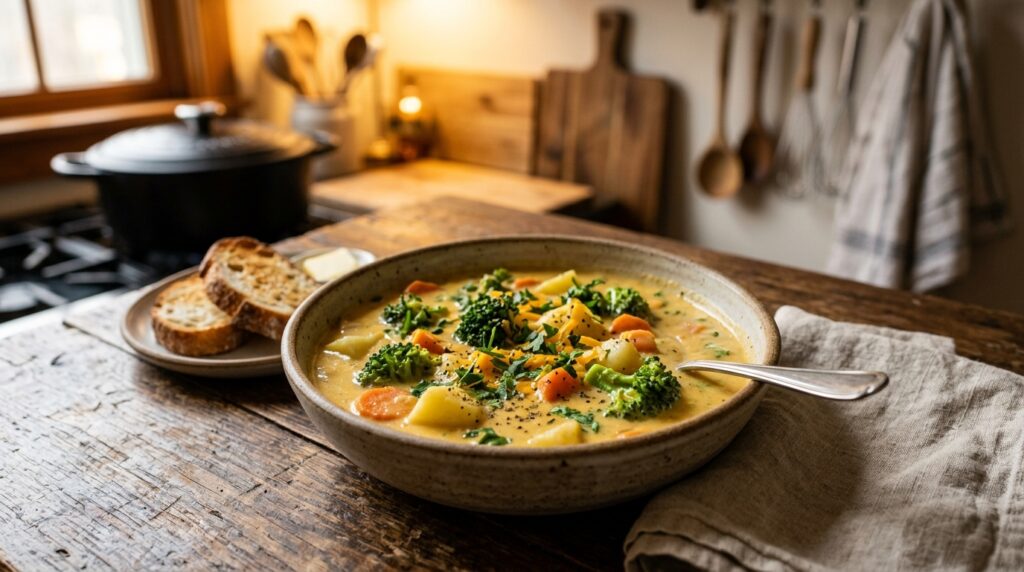
For broccoli cheddar soup with carrots and potatoes, add potato to make a heartier, thicker variation. Potato is an extra ingredient, not part of the listed base recipe. Cut it into small pieces so it can soften during cooking.
Chicken and broccoli cheddar soup can include cooked chicken and chicken broth. Add the cooked chicken near the end, giving it time to warm through without cooking it for a long stretch in the pot. Vegetable broth keeps the soup vegetarian when you skip the chicken.
Crockpot broccoli cheddar soup takes a slower approach to cooking the vegetables. Let the vegetables cook in the broth mixture until tender, then add the cheddar at the end. Do not leave the cheese in the crockpot for hours, since prolonged heat can hurt its texture.
| Variation | What to change | Practical effect |
|---|---|---|
| Vegetarian broth | Use vegetable broth | Keeps the soup vegetarian |
| Potato addition | Add small potato pieces | Makes the soup heartier and thicker |
| Chicken addition | Add cooked chicken and chicken broth | Creates a more filling chicken soup |
Serve any variation in a warm bowl with a simple side that suits its flavor. Bread, a crisp salad, or a green vegetable can round out the meal without competing with the cheddar.
What Should You Serve with It?
Set warm crusty bread beside the soup for a filling weeknight meal. The bread is useful for soaking up the creamy base, while crisp toppings such as croutons add contrast to the soft vegetables.
A simple green salad makes a fresh side, especially when the soup is the main part of dinner. You can also serve a vegetable side, such as sautéed green beans, for a plate with more color and a lighter contrast.
Choose one pairing based on the time you have and the kind of meal you want:
- Soup with crusty bread.
- Soup with homemade croutons.
- Soup with a simple green salad.
- Soup with roasted potatoes or sautéed green beans.
Homemade croutons are a good use for bread that is no longer very soft. Their crisp texture gives each spoonful a firmer bite. A green salad offers a cool, fresh side, while roasted potatoes make the meal more substantial.
Keep the side simple if the soup already has a lot of cheese or added chicken. Bread works with either the vegetarian bowl or a heartier variation, and vegetables bring a different texture to the plate.
A complete meal can be as simple as a bowl of soup, warm bread, and a small green salad. If you make more than you need, store the extra portions carefully so the cheese stays pleasant when reheated.
How Should You Store and Reheat Leftovers?
Put leftover soup in an airtight container and refrigerate it for up to 3 days. Reheat it gently on the stovetop over medium-low heat, stirring occasionally so the cheese warms evenly through the pot.
Rushing the heat can cause the cheese to separate, leaving an oily or grainy texture. If the soup has thickened in the refrigerator, check it first, then loosen it with a small splash of broth or milk as it warms.
| Approach | How to handle it | What to watch for |
|---|---|---|
| Stovetop reheating | Warm over medium-low heat and stir | Avoid rapid boiling |
| Microwave reheating | Heat in short intervals, stirring between | Check for hot spots |
| Make ahead before adding cheese | Reheat the base, then stir in cheddar | Keep the cheese from overheating |
Making the base ahead and adding the cheese during reheating helps avoid overheating the cheese. Warm only the amount you plan to eat, and stir as it heats. The same gentle approach works for a single bowl in the microwave.
Those steps finish the practical details for storing and serving another portion. A few careful choices with heat make this recipe approachable for both dinner tonight and a later meal.
Conclusion
A homemade broccoli cheddar soup recipe can fit a weeknight without complicated steps. Gentle heat and gradual cheese additions help the soup turn out creamy, while small vegetable pieces make each bowl easy to eat.
Gather the ingredients and make a batch when you want a warm, filling meal with familiar flavors. Start by preparing the vegetables and setting out the pot.


