
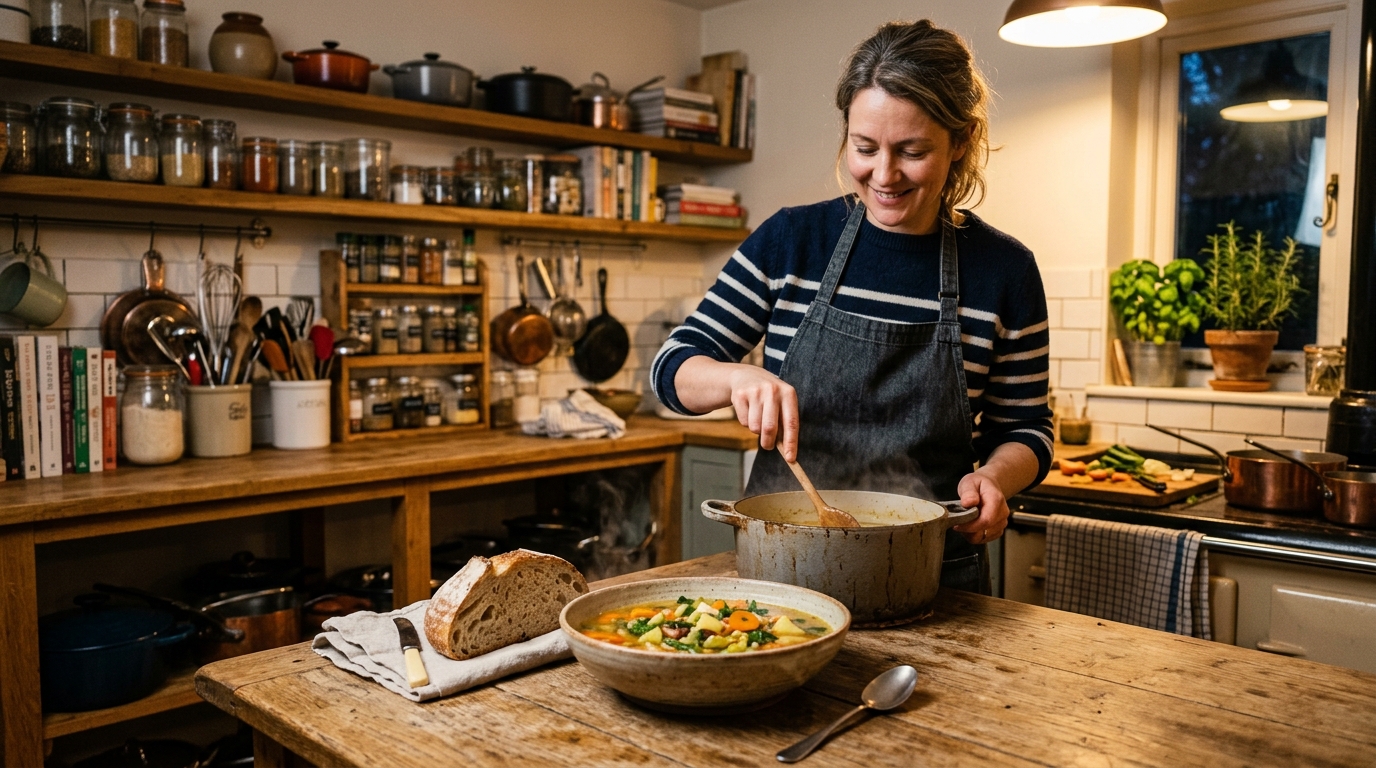
I get home hungry after a busy day, and dinner still needs to happen. On winter evenings, a warm bowl can bring comfort without turning the kitchen into another job. I’ve gathered practical ideas for easy soups that suit different appetites and schedules, from fast stovetop meals to hands-off cooking. Aromatics are vegetables and herbs, commonly onion, celery, garlic, and carrots, that are cooked at the start to build a soup’s base flavor.
“Easy” can mean a quick simmer, a hands-off cooker, or a short ingredient list. I’ll help you choose a dinner that fits the time and attention you have, whether you want a light vegetable bowl or something hearty. Pick by time and craving, then use the quick guide to match a soup style to the evening.
Key Takeaways
- Choose a soup by available time and hands-on attention.
- Beans, grains, noodles, and chicken can make a bowl more filling.
- Cook noodles separately when you want better leftovers.
- Keep broth and a few useful pantry ingredients on hand.
- A simple side can turn a bowl into a complete dinner.
Which Easy Soups Fit a Busy Weeknight?
First decide how much time and hands-on attention dinner can take. A quick stovetop recipe suits a short evening, while a one-pot meal can reduce cleanup; a hands-off option works when cooking can start earlier.
A list of soups with pictures can help a cook scan choices quickly. I also understand the appeal of 100 soup recipes that are easy to browse for inspiration, but a short, grouped list is often more useful on a busy night. These four soup recipes cover distinct times, methods, and cravings.
| Recipe | Stated time | Method or shortcut | Defining ingredients |
|---|---|---|---|
| White Bean Lemon Pesto Orzo Soup | 20 minutes | Quick stovetop option | White beans, lemon pesto, orzo |
| Thai Peanut Chicken Ramen | 30 minutes | One pot | Chicken, vegetables, ramen noodles, peanut broth |
| Zucchini Soup | 30 minutes | Quick stovetop option | Zucchini |
| Coconut Sweet Potato Lentil Soup with Rice | Less than an hour | One pot or Instant Pot | Sweet potato, lentils, rice |
The 20-minute white bean recipe is a clear pick when time is tight and a filling bowl sounds good. Thai Peanut Chicken Ramen gives me a one-pot dinner in 30 minutes, with vegetables and noodles in peanut broth.
Zucchini Soup is another 30-minute stovetop choice. Coconut Sweet Potato Lentil Soup with Rice takes less than an hour, and it can be made in one pot or an Instant Pot.
Time estimates are useful starting points, not a promise that every kitchen moves at the same pace. When I want a familiar, substantial dinner, chicken soups are an easy place to start.
What Chicken Soups Make a Comforting Fast Dinner?
A familiar chicken noodle bowl brings soft noodles and savory broth, while a chicken and rice bowl offers a gentler, grain-based alternative. Both can make dinner feel comforting without requiring elaborate preparation.
Classic chicken noodle and rice bowls
Homestyle Chicken Noodle Soup combines chicken, noodles, vegetables, and herbs. It has the familiar mix many people want when they picture chicken noodle soup, and the vegetables make the bowl feel like a complete meal.
Healing Chicken and Rice Soup takes a different route. It uses shredded chicken thighs, jasmine rice, garlic-ginger broth, lime, fresh herbs, and peanuts. The rice makes it satisfying, while lime and herbs give the broth a fresh finish.
For a quick choice at the table, I think about texture as much as flavor. Noodles give a classic chicken noodle soup its soft, familiar bite; rice makes a bowl easy to spoon up without slurping.
Chicken soups for low-effort or sick-day meals
Crockpot Creamy Chicken and Dumplings is a slow-cooker option for a meal that can cook with less attention at the stove. Its dumplings make the dish hearty, and its creamy broth suits a comfort-food craving.
Easy soup recipes for when you’re sick can be mild, warm, and easy to eat. Soup can feel soothing when appetite is low, but I don’t treat it as a cure for illness.
- Chicken noodle for a familiar, herby bowl.
- Chicken and rice for a spoonable, filling meal.
- Chicken and dumplings for a hearty, creamy dinner.
- Creamy chicken noodle for a richer take on a classic.
One practical mistake is cooking noodles in a large batch too far ahead. They continue to soften as they sit, so a bowl made for later can lose its texture. From chicken comfort, I turn to chili and bean bowls, with meatless and meat-based choices.
Which Chili and Bean Soups Are Hearty Without Extra Fuss?
A thick, bold chili suits a substantial dinner, while a creamy white bean bowl offers a softer texture and a different kind of comfort. Both can stand on their own as a meal.
Beef and turkey chili for a substantial bowl
Easy Chipotle Cheddar Beef Chili brings beef and chipotle cheddar together for a hearty, spicy bowl. It fits a dinner when I want bold flavors and a thicker texture, rather than a light soup with a lot of broth.
30 Minute Spicy Ancho Turkey Chili includes turkey, black beans, tomatoes, and farro. Its smoky, spicy profile and stated 30-minute timing make it a useful pick when a chili dinner needs to come together faster.
| Recipe | Main ingredients | Flavor or texture | Best fit |
|---|---|---|---|
| Easy Chipotle Cheddar Beef Chili | Beef and chipotle cheddar | Hearty and spicy | Meat-based chili dinner |
| 30 Minute Spicy Ancho Turkey Chili | Turkey, black beans, tomatoes, farro | Smoky and spicy | A faster chili |
| Creamy White Chicken Chili | Chicken and white beans | Creamy and spicy | Chicken-and-bean comfort |
| Vegetarian Chili | Walnuts, mushrooms, carrots, green chiles | Hearty and meatless | Plant-based dinner |
White bean chili and other meatless choices
Creamy White Chicken Chili pairs chicken with white beans for a creamy, spicy take on a bean-based bowl. Vegetarian Chili uses walnuts, mushrooms, carrots, green chiles, and spices to make a hearty meatless meal.
Chili can be served as dinner on its own, with toppings adjusted at the table. Diners can add what they enjoy without changing the whole pot. A brothier bean soup is a useful exception when the meal needs to feel lighter than thick chili.
Beans and tomatoes help make these recipes substantial, while the different proteins shape the meal. I carry that hearty appeal into noodle-based soups when a dinner calls for a slurpable bowl.
How Can Ramen and Noodle Soups Become Weeknight Meals?
When I want a slurpable bowl without making a separate main dish, I build dinner around noodles, broth, and a satisfying addition. Chicken, vegetables, or a rich-tasting broth can make ramen feel like a full meal.
Quick ramen with chicken or tofu
30 Minute Thai Peanut Chicken Ramen is a one-pot meal with chicken and vegetables. Ramen noodles cook in peanut broth, making this a useful choice when I want dinner to come together in one cooking vessel.
30 Minute Spicy Miso Chicken Katsu Ramen can be made in an Instant Pot or on the stove. The choice lets a cook match the method to the evening, without changing the basic appeal of a hot, noodle-rich bowl.
Vegan Ramen offers a meatless option built around mushroom broth. The savory broth gives the noodles a flavorful base, so chicken is not the only way to make a satisfying ramen dinner.
Noodles, tortellini, and pasta in soup
Tortellini Soup includes tortellini and kale pesto for a pasta-style dinner. Filled pasta makes the bowl substantial, while pesto adds a bright, herby accent to the broth.
Noodles and pasta absorb liquid as they sit. When I expect leftovers, I cook the noodles separately and add them to each bowl. That small choice helps preserve their texture and keeps the broth from disappearing into the pasta.
Ramen and tortellini both turn a simple broth into a meal, but the best fit depends on the texture I want. When a creamy bowl sounds better than a slurpable one, I shift to potato and vegetable soups.
Which Creamy Potato and Vegetable Soups Satisfy Quickly?
A potato soup is an easy pick when someone wants a substantial, creamy bowl. Potatoes create a hearty base, and optional toppings can make the soup feel like a loaded baked potato.
Potato soups with classic toppings
Easy Spicy Baked Potato Soup takes its cues from baked potato toppings. Creamy Potato Soup can be finished with cheddar cheese, sour cream, and chives, but none of those toppings is required for a satisfying bowl.
I set toppings out separately when diners want different finishes. Cheese adds a savory touch, sour cream gives a tangy contrast, and chives bring a fresh note. A plain bowl still works when the soup itself is the focus.
Creamy vegetable soups without a heavy base
Vegan Cheesy Broccoli Soup is dairy-free, giving a broccoli-based option for a creamy-sounding dinner without dairy. A blended vegetable can also create a smooth texture without relying on cream.
Blending cooked vegetables helps thicken a soup and gives it a silky feel. The result can be creamy in texture, even when cream is not doing the work. That makes blended vegetables useful for cooks who want a smooth bowl with a vegetable-forward base.
A specific mistake can spoil that smooth finish: adding dairy over high heat. The soup may split or turn grainy, so I lower the heat before stirring dairy into a pot. For a different kind of blended comfort, I look to tomato and squash soups.
What Tomato and Squash Soups Work for a Cozy Bowl?
Tomato soup has a familiar tang, while squash soup brings mellow sweetness and an aromatic flavor. I choose between them by the pairing I want and whether pantry staples or seasonal produce are the priority.
Tomato soups for grilled-cheese nights
Classic Tomato Soup uses basic pantry ingredients, making it useful when I want a straightforward dinner built from staples. It pairs naturally with grilled cheese, a combination that turns a simple bowl into a familiar comfort-food meal.
Tomato Basil Soup uses roasted fresh tomatoes for a savory, bright flavor. Crusty bread is an easy match, especially when I want something to dip without making a separate main dish.
Squash soups with autumn flavor
Butternut Squash Soup uses ginger, rosemary, and sage for a cozy, aromatic profile. Its sweetness suits fall winter meals, and a simple salad gives the bowl a fresh contrast.
Pumpkin Soup brings warm curry notes from turmeric, ginger, cumin, and cardamom. Bread makes a straightforward pairing that can soak up the soup without competing with its spices.
| Soup | Main flavor notes | Key ingredients or method | A natural pairing |
|---|---|---|---|
| Tomato Basil Soup | Savory and bright | Roasted fresh tomatoes | Crusty bread |
| Classic Tomato Soup | Familiar and savory | Pantry ingredients | Grilled cheese |
| Butternut Squash Soup | Cozy and aromatic | Ginger, rosemary, sage | A simple salad |
| Pumpkin Soup | Warm curry notes | Turmeric, ginger, cumin, cardamom | Bread |
Tomato soup is practical when pantry ingredients come first, while squash soups suit a sweeter, aromatic profile. For diners who want dinner without meat, plant-based bowls with beans and lentils offer another filling direction.
Which Vegetarian Soups Make a Filling Dinner?
Finding beans or lentils in the pantry gives me a ready center for dinner. Beans and lentils add substance, while rice or orzo can make the bowl feel more like a full meal.
Beans and lentils for a hearty base
Creamy White Bean Lemon Pesto Orzo Soup combines white beans, lemon pesto, and orzo. The beans make it hearty, orzo adds a pasta-like bite, and lemon pesto gives the broth a bright finish.
Smoky Red Lentil Soup with Spinach uses red lentils, spinach, coconut milk, and spices. Lentils provide the main body, and spinach adds leafy greens to the bowl.
Sweet potato and vegetable combinations
Coconut Sweet Potato Lentil Soup with Rice includes vegetables and can be made in one pot or an Instant Pot. Sweet potato brings a soft, hearty texture, while lentils and rice help make the soup satisfying.
These recipes show how a bean-based white bean bowl differs from a coconut sweet potato and lentil soup. One pairs pesto with orzo; the other combines a sweet potato, rice, and coconut flavors.
- Beans add a hearty base.
- Lentils bring substance to a meatless bowl.
- Rice or orzo makes soup more filling.
- Leafy greens add a fresh vegetable element.
Pasta or rice can make leftovers thicker as they absorb broth. I keep extra broth available for reheating, then add enough to loosen the bowl. From hearty plant-based dinners, I move to lighter brothy vegetable soups.
What Brothy Vegetable Soups Stay Light but Satisfying?
A few carrots, half an onion, and a handful of greens that need using can become a flexible vegetable soup. I add what is on hand, then let the broth and vegetables set the bowl’s character.
Flexible soups for vegetables on hand
Vegetable Soup can use vegetables already in the fridge, so it suits a produce cleanout. A modest amount of beans or noodles can make the bowl more sustaining without turning it into a heavy meal.
Cabbage Soup uses an entire head of cabbage, making it a clear choice when cabbage is the ingredient to use. The cabbage gives the pot plenty of vegetable texture while broth keeps the meal light.
Miso, cabbage, and herb-scented bowls
Miso Soup takes 20 minutes and uses seven basic ingredients. Its quick timing makes it useful when dinner needs to be simple, and a warm broth-based bowl can be rounded out with vegetables or a small addition of noodles.
Broth, vegetables, and a modest portion of beans or noodles can make a light soup feel like dinner. Delicate greens need less time than sturdy vegetables. Adding them too early is a common mistake because they can turn limp before the meal is served.
Flexible ingredients help, but the cooking method can make the work feel either hands-on or hands-off. I choose the method by how much attention dinner can get.
When Should I Use a Slow Cooker or Instant Pot for Soup?
The best method depends on whether I value control, hands-off time, or speed. Stovetop cooking makes it easy to watch a simmer, a slow cooker needs less stove-side attention, and an Instant Pot uses pressure-cooked cooking.
Stovetop simmering for control
The stovetop suits a cook who wants to monitor the simmer and adjust seasoning as the soup cooks. 30 Minute Spicy Miso Chicken Katsu Ramen can be made on the stove, so the method remains an option when close control is useful.
Slow cooker and Instant Pot for less hands-on cooking
A slow cooker is helpful when dinner can cook hands-off. Crockpot Creamy Chicken and Dumplings is a slow-cooker recipe that lets the cook spend less time watching the stove.
The Instant Pot can suit a set-and-cook plan. Instant Pot Wild Rice Soup is ready in an hour, making it an example of a pressure-cooked soup with a stated total time. Appliance timings vary with the recipe, and a pressure cooker is not automatically the best choice for every soup.
| Method | Hands-on attention | Useful situation | Example |
|---|---|---|---|
| Stovetop | Monitor the simmer and adjust seasoning | When the cook wants control | Spicy Miso Chicken Katsu Ramen |
| Slow cooker | Less need to babysit the stove | When dinner can cook hands-off | Creamy Chicken and Dumplings |
| Instant Pot | Pressure-cooked cooking, with cited wild rice soup ready in an hour | When a set-and-cook option is useful | Instant Pot Wild Rice Soup |
Each method can make dinner easier in a different way. Once I know how I want to cook, I can simplify the ingredient count and lean on pantry shortcuts.
How Do I Make Soup with Five Ingredients or Pantry Staples?
Broth, a vegetable, a bean, and a starch can make the start of a simple pot. I might combine broth with carrots, canned beans, and a quick-cooking grain, then finish with an ingredient that brightens the flavor.
A short shopping list for a simple pot
Easy soup recipes with few ingredients can begin with broth, aromatics, one main vegetable or bean, a starch, and a finishing ingredient. That flexible pattern helps me shop with a short list while leaving room for different combinations.
Easy 5-ingredient soup recipes are best understood as an approach, not an exact claim about every named recipe. Carrot Ginger Soup uses seven ingredients, and Miso Soup uses seven basic ingredients. White Bean Lemon Pesto Orzo Soup takes 20 minutes, though a short cook time does not mean the ingredient count is five.
Pantry shortcuts that still taste balanced
Canned beans, frozen vegetables, and cooked or rotisserie chicken can cut prep time. They are practical shortcuts when the day is busy, and they make it easier to assemble dinner without starting every ingredient from scratch.
Broth does much of the flavor work, so I taste it before adding salt. Some broth can already be salty, and adding salt before tasting may push the finished soup too far.
With the ingredients in place, the next choice is when each one goes into the pot. A dependable order helps vegetables, beans, and starches finish at the right time.
What Are the Basic Steps for Making Soup?
Most stovetop soup follows a dependable sequence, even though ingredient timing changes. I prepare the ingredients first, build flavor at the start, and add quick-cooking items near the end.
What Are the 7 Steps to Making Soup?
These seven steps give me a flexible framework for making soup:
- Prepare and cut the ingredients.
- Soften the aromatics in the pot.
- Bloom spices, if using them, in the aromatics.
- Add broth and sturdy ingredients.
- Simmer until the sturdy ingredients are tender.
- Add quick-cooking ingredients such as greens or cooked noodles.
- Taste, season, and finish the soup.
This order is a helpful starting point, not a rule every recipe must follow. Some soups use a different sequence, and a recipe’s ingredients can change when each one belongs in the pot.
Timing ingredients so they finish together
Potatoes need time to soften, while dried beans often need a longer cook than canned beans. Dried beans may also need soaking, so I account for that extra preparation when planning dinner.
Pasta can turn soft if it cooks too long, and leafy greens can wilt quickly. I add them late enough to keep their texture, while allowing sturdy ingredients enough time to become tender.
Ingredient timing affects texture as much as the broth does. Once the order is set, tasting and seasoning help bring the different flavors together.
Which Herbs and Spices Build Better Soup Flavor?
A pot that tastes flat can improve with a pinch of salt and a little acid. I taste before adding more, then adjust one element at a time so the soup’s flavor stays balanced.
Pairing herbs and spices with soup styles
Rosemary works well with potato or white beans, while ginger pairs with carrot or squash. Smoked paprika brings a deep, smoky note to beans or chili, and chipotles in adobo or fresh and dried chiles can add bold heat.
I start with less heat than I think the pot needs, then taste and add more if the flavors can take it. Strong spices can compete when too many arrive at once, though no universal list of spices must never be combined.
Adjusting salt, heat, and finishing flavor
Salt and fresh black pepper are simple ways to season soup to taste. A drizzle of olive oil can add richness, while lemon can bring a fresh edge to a broth that tastes dull.
- Salt: add a little, then taste again.
- Black pepper: adjust for a gentle, sharp warmth.
- Acid: try lemon when the broth tastes flat.
- Heat: build with chile or chipotle in small steps.
Small adjustments are easier to control than a large dose of spice. Once the flavor feels right, I can make other changes to suit different nutrition preferences.
How Can I Make Easy Soups Healthier?
Adding produce and a filling ingredient is a practical first adjustment. Vegetables, beans, or whole grains can make a bowl more substantial, though no single ingredient makes every soup healthy for every person.
Add vegetables, beans, and whole grains
Extra vegetables can add color and texture to a bowl. Chicken soup can include more vegetables, while beans or whole grains can make a serving feel more filling.
Sweet potato and lentil combinations offer a meatless option with vegetables and a hearty base. I choose additions based on the meal I want, rather than assuming one recipe suits everyone’s needs.
Adjust cream, cheese, and sodium mindfully
Using less cream or cheese can be a simple adjustment when I want a lighter finish. I also taste before salting, since broth and other ingredients may already bring salt to the pot.
Easy healthy soups depend on individual needs and the full meal, not a single label. A bowl’s ingredients, portion, and sides all shape how it fits into someone’s day.
These adjustments can keep dinner flexible without losing comfort. When a pot makes extra portions, safe handling and good texture help those servings work for another meal.
How Should I Store, Freeze, and Reuse Leftover Soup?
After a Sunday batch-cooking session, I portion the extra soup for later meals instead of leaving the whole pot for another day. Soup often tastes better the next day, and many soup recipes freeze well for up to a few months.
I refrigerate soup promptly in shallow containers so it cools more evenly. Refrigerated leftovers should be used within 3-4 days, and I reheat them until steaming hot.
Many broth-based soups freeze well for up to a few months. Cream, potatoes, and noodles may change texture after freezing, so I consider those ingredients before setting aside a portion.
- Cool and portion promptly in shallow containers.
- Label each container with the date.
- Freeze noodles separately when practical.
- Loosen thick leftovers with broth when reheating.
Beans and grains may thicken a soup as they sit, so extra broth helps bring back a spoonable texture. Noodles held separately can also keep a saved bowl from becoming overly soft.
A saved portion can be dinner on its own, or a simple side can make it feel more complete. Warm bread, salad, and grilled cheese are easy partners for a fresh pot or a reheated bowl.
What Should I Serve with Soup for a Complete Dinner?
Tomato soup with grilled cheese is a familiar pairing that turns a simple bowl into a complete dinner. Warm rolls, crusty bread, or beer bread also work well with hearty soups.
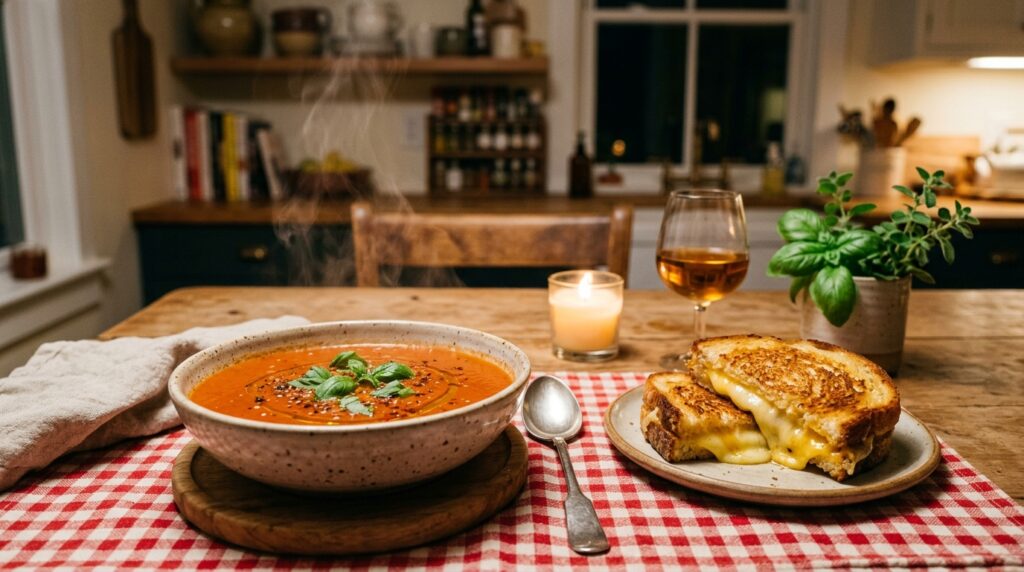
A simple green salad brings freshness beside a rich bowl, while a winter salad can add crisp texture to a cozy meal. I choose one side that contrasts with the soup rather than making a separate spread.
Toppings can help a bowl feel finished without extra cooking. Cheese, herbs, or crunchy tortilla strips add texture and flavor, but not every soup needs a side or a topping.
For a busy evening, I keep the pairing practical: warm bread with a hearty bowl, or grilled cheese with tomato soup. Choose one soup and one easy side for the next dinner that needs to come together.
Conclusion
A comforting weeknight dinner can match the time and attention I have that day. One useful takeaway is to choose a quick simmer when I’m available to cook, or a more hands-off option when the evening is full.
The other is to keep broth, a vegetable, and a satisfying add-in on hand. Before dinner, choose a soup category and check the pantry for what can fill the pot. Pick one soup to make this week.


