
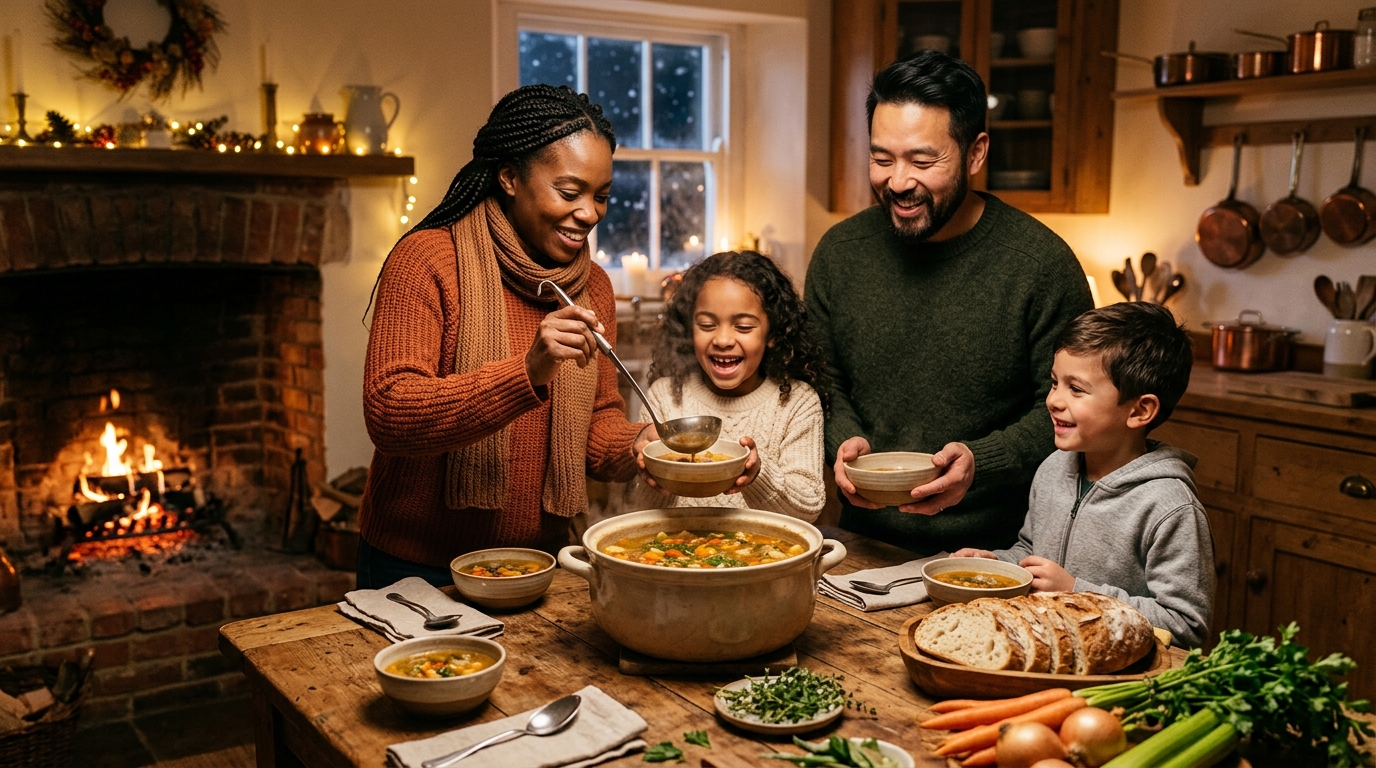
A winter soup can save a cold evening when one child is hungry now and someone else will arrive late. I like a dinner that can be quick, filling, or mostly hands-off, depending on the weather and the family’s schedule.
Sweating vegetables means cooking chopped vegetables gently in a little fat until they soften and release flavor without browning. A crusty-weather evening calls for a flexible meal, not an elaborate project, and a pot can wait while everyone gets home.
I look for recipes that fit the time I have, the ingredients in my kitchen, and the appetites at my table. Some nights need a fast bowl; other nights call for a richer dinner that can simmer while I handle everything else.
Key Takeaways
- Choose dinner by the time available and the kind of bowl your family wants.
- Pantry ingredients and cooked leftovers can make a simple pot more filling.
- Beans, grains, and vegetables offer hearty meatless choices.
- A slow cooker can help when dinner needs to cook unattended.
- Plan storage and reheating before making a batch for another night.
The recipes ahead offer a range of ways to make a cozy meal, so I start by matching the pot to the evening.
Winter Soup Recipes for Every Kind of Cozy Dinner
I choose a winter soup by the time I have and the kind of bowl my family wants. A light, brothy dinner, a creamy comfort food favorite, and a filling bean-based meal each suit a different night.
How I choose a soup for the night
Five quick checks help me settle on a recipe without overthinking dinner. I consider what is already in the fridge, how much attention the pot needs, and whether the final texture sounds right for everyone at the table.
- Available time: choose a short cook or a longer, mostly hands-off pot.
- Desired texture: decide between clear broth, creamy soup, or chunky ingredients.
- Protein or beans: pick chicken, beef, beans, lentils, or another main ingredient.
- Pantry ingredients: check for stock, noodles, rice, canned beans, and vegetables.
- Unattended cooking: decide whether I can stay nearby or need a slow cooker.
12 favorite winter soup recipes
These 12 favorite winter soup recipes cover familiar flavors and more adventurous bowls. Homestyle Chicken Noodle Soup is a classic; 30 Minute Thai Peanut Chicken Ramen brings a spicy, creamy twist; Creamy Wild Rice Chicken Soup with Roasted Mushrooms is earthy and hearty.
Crockpot Creamy Chicken and Dumplings offers a soft, substantial texture. Creamy White Bean Lemon Pesto Orzo Soup pairs beans with pasta and bright herbs. Coconut Sweet Potato Lentil Soup with Rice makes a filling plant-based choice, while Creamy French Onion and Mushroom Soup leans savory and rich.
Easy Spicy Baked Potato Soup echoes a loaded baked potato. One-Pot Creamy Italian Lasagna Soup borrows familiar pasta flavors, and Creamy Vegetable Dumpling Soup centers on tender vegetables and dumplings. Easy Chipotle Cheddar Beef Chili is bold and beefy; Tuscan White Bean Lemon Soup keeps beans bright with citrus.
“Best” depends on appetite, time, and dietary needs; no single recipe suits every family. I check labels when a meal needs to meet a specific diet, then choose the flavor and texture that fit that evening. For the fastest options, I compare the short-cook choices next.
Easy Winter Soup Recipes With Few Ingredients
A short ingredient list can still make a filling bowl when broth and one main ingredient do most of the work. Stock, noodles, rice, and a few pantry basics can turn into easy winter soup recipes with few ingredients, without a long prep session.
For a simple weeknight recipe, I look first at total time and serving size. A quick pot for four may solve tonight’s dinner, while a slightly longer cook can make enough for a larger table.
Quick soups from pantry staples
Egg Drop Soup and Shrimp Ramen both take 15 minutes and serve four. Egg drop soup turns hot broth and beaten egg into a light, silky bowl. Shrimp ramen brings noodles and shrimp together for a quick meal with more chew.
Stock and noodles or rice reduce prep, while frozen vegetables can go straight into the pot. Canned beans add substance with little work, and leftover cooked chicken can make a broth more filling. Dried beans and some grains need longer cooking, so they are less suited to a very quick dinner.
A little more simmering for a fuller bowl
Creamy Chicken Noodle Soup takes 25 minutes and serves 12, making it a useful larger-batch choice. Its total time stays short for a soup that feeds a crowd, while the two smaller recipes fit a quick meal for four.
| Recipe | Total time | Servings |
|---|---|---|
| Egg Drop Soup | 15 minutes | 4 |
| Shrimp Ramen | 15 minutes | 4 |
| Creamy Chicken Noodle Soup | 25 minutes | 12 |
That larger pot makes sense when several people need dinner or I want portions for later. Readers looking for the familiar chicken-and-noodle combination can compare more styles in section 4.
What Makes Chicken Noodle Soup a Comforting Dinner?
Clear-broth chicken noodle soup tastes lighter, while a creamy version feels richer and more filling. Both can be comfort food, and the better fit depends on whether the family wants a delicate broth or a heartier, herb-filled bowl.
Classic chicken noodle soup with vegetables
Chicken supplies the main protein, noodles make the broth more substantial, and vegetables add color and tender texture. Herbs season the broth without crowding the familiar flavors. Homestyle Chicken Noodle Soup brings chicken, noodles, herbs, and vegetables together in a flexible dinner.
I reach for this style when a clear broth sounds good and everyone wants a familiar meal. It is one of the most recognizable comforting winter soups, but it does not need to taste identical every time. The choice of herbs and vegetables can shift the flavor while keeping the same basic character.
Creamy chicken noodle soup for a richer bowl
Creamy Homestyle Chicken Noodle Soup is described as hearty and herb-filled, with a thicker feel than a clear-broth bowl. That richer texture may suit bigger appetites, while a classic broth keeps the meal lighter.
Crockpot Chicken Noodle Soup is a hands-off choice with a total time of 5 hours 50 minutes. Its longer schedule suits a day when dinner can cook gradually rather than a night when everyone needs a quick meal. For an even heartier texture, I look next to rice and dumplings.
Chunky Chicken, Rice, and Dumpling Soups
On a cold night after a long day, a broth-only bowl may not feel filling enough. Rice, vegetables, and dumplings add substance, turning chicken soup into a more complete meal without relying on a thick, blended base.
Chunky winter soups with grains and vegetables
Chicken-and-rice soup builds body from tender grains, chicken, and vegetables in broth. Cozy Wild Rice and Orzo Chicken Soup combines wild rice, orzo, and chicken, so each spoonful has more than one kind of grain. Crockpot Hearty Chicken and Rice Soup is described as warming and hearty.
Chunky winter soup recipes keep visible pieces of vegetables, grains, or dumplings in the bowl, unlike smooth blended soups. I choose this texture when the family wants to see and taste the main ingredients rather than drink a uniform puree.
Dumplings for a one-pot family meal
Dumplings make a pot of chicken soup more substantial because they add a soft, filling element alongside the broth and meat. Crockpot Creamy Chicken and Dumplings is a slow-cooker version of a classic, with dumplings at the center of the meal rather than noodles or rice.
When I want to make any bowl feel more filling, I use one of these simple changes:
- Choose rice or another grain as part of the soup.
- Add beans or extra vegetables for more substance.
- Serve the bowl with a hearty bread.
Each option changes the meal in a different way, so I pick one based on the soup’s existing texture. From grains and dumplings, I move to ramen for its distinct chew and bold seasoning.
Noodle Soup and Ramen for a Cold Evening
A steaming bowl of spicy ramen makes a cold-weather dinner feel bold and filling. Ramen is a flexible noodle soup: chicken, vegetables, broth, and different seasonings can create familiar, creamy, or deeply savory flavors.
30 Minute Thai Peanut Chicken Ramen combines chicken, ramen noodles, vegetables, and a creamy, spicy peanut flavor. It brings together protein and noodles in one dish, with a sauce-like broth that tastes very different from a clear chicken bowl.
Weeknight Thai Chicken Meatball Khao Soi is a northern Thai-inspired noodle soup. Its meatballs and seasoned broth offer another route for anyone who wants a noodle dinner with a distinct regional influence.
Spicy Miso Chicken Katsu Ramen can be made on the stove or in an Instant Pot. Miso gives the broth a savory depth, while the spicy seasoning adds heat. A spicy broth is easy to adjust with less chile or milder garnishes, especially when the family has different heat preferences.
Noodles may continue softening if they sit in broth, so I serve them soon after cooking when texture matters. That small timing choice helps keep the chew of the noodles distinct. From boldly seasoned noodle bowls, I turn to the slower, savory sweetness of onion soup.
French Onion Soup for a Savory, Cheesy Bowl
Onions slowly browning in a pot fill the kitchen with a deep, savory aroma. French onion soup gets its signature flavor from patient cooking: the onions soften and brown, then simmer in broth before the bowl is finished with bread and melted cheese.
That classic onion soup is a good fit when I want a savory dinner with a rich topping. The bread absorbs some broth, while melted cheese adds a soft, browned layer. A good result depends on letting the onions develop color rather than rushing them.
Creamy French Onion and Mushroom Soup offers a variation with mushrooms. It has a richer, creamier feel than classic French onion soup, which relies on browned onions and broth for its main character. I choose the mushroom version when a more indulgent texture sounds right.
Properly browned onions take patience, and rushing them can leave the soup less deeply flavored. I let them cook gently and stir as needed, giving their natural sweetness time to emerge. For a filling bowl built around plant-based ingredients instead, beans and lentils offer another direction.
Bean and Lentil Soups for a Hearty Vegetarian Dinner
Beans and lentils make a soup filling by contributing both substance and texture. With a thick broth, they can anchor a meatless dinner that feels substantial without depending on meat.
Hearty winter soups for vegetarian dinners
Hearty winter soups vegetarian cooks can serve often pair beans or lentils with a rich broth and a few vegetables. A thick base helps ingredients cling together in each spoonful, while beans contribute a creamy bite and lentils soften as they cook.
Marcella Hazan’s White Bean Soup with Garlic and Parsley is served over grilled bread. That serving detail makes the beans the focus and gives the bowl a satisfying base. The table below also shows a bean soup with greens and a navy bean version made with ham.
Beans with grains, greens, and bright flavors
Grains and greens add variety to a bean-based soup. Pasta & Bean Soup With Kale, Revisited uses pinto beans and six cups of kale, combining beans, pasta, and greens in one bowl. Herbs or lemon can brighten a rich broth just before serving.
| Soup | Main ingredients | Serving detail |
|---|---|---|
| Marcella Hazan’s White Bean Soup with Garlic and Parsley | White beans, garlic, parsley | Serve over grilled bread |
| Pasta & Bean Soup With Kale, Revisited | Pinto beans, pasta, six cups of kale | Combines beans, pasta, and greens |
| Navy Bean Soup | Navy beans, ham | Bean-and-meat version, not vegetarian |
Navy Bean Soup includes ham, so it is not a vegetarian choice. To make a bean soup vegetarian, use vegetable broth and omit meat. I also check prepared broth and other packaged ingredients, since those can include ingredients that do not fit a meatless meal. Next, I turn from legumes to soups built around vegetables.
Vegetarian Winter Soups Built Around Vegetables
A chunky vegetable bowl suits diners who want pieces to chew, while a smooth blended soup gives a softer texture. Vegetable-forward choices can be filling and full of flavor, even when beans or meat are not the main ingredient.
Hearty vegetable soups with beans or pasta
Vegetarian winter soups can include pasta, beans, or seasonal vegetables to make a substantial meal. I look for a mix of textures: tender vegetables, a thick broth, and pasta or another ingredient that gives each bite some weight.
A vegetable-based recipe is not automatically low in sodium or suitable for every dietary need. Stock, prepared sauces, and other packaged ingredients can change what is in the bowl, so I check labels when a specific diet matters.
Smooth soups from squash, tomato, and mushrooms
Blended soups can bring out the sweetness of tomato or squash, or the earthy taste of mushrooms. Tomato Soup With a Whole Head of Garlic combines cherry tomatoes, chile, herbs, coconut milk, and stock. Creamy Artichoke & Green Chile Soup uses potato and cashew cream for a vegan creamy texture.
The 3-Ingredient Potato Leek Soup keeps its base especially simple. These examples show how different ingredients create a smooth bowl without requiring the same flavor or texture in every recipe. The phrase winter soups healthy can describe a meal built around vegetables, but the recipe still needs to match individual nutrition needs.
| Soup | Vegetable base | Distinctive element |
|---|---|---|
| 3-Ingredient Potato Leek Soup | Potato and leek | Three ingredients |
| Tomato Soup With a Whole Head of Garlic | Cherry tomatoes | Chile, herbs, coconut milk, and stock |
| Creamy Artichoke & Green Chile Soup | Artichoke and potato | Cashew cream gives it a creamy texture without dairy |
For a naturally thick, cozy bowl, I narrow the next choices to potatoes and winter squash.
Potato and Winter Squash Soups for Creamy Bowls
A spoonful of thick potato soup makes a filling winter bowl, with enough body to feel like dinner. Potatoes and winter squash can thicken a soup when blended, while toppings or grains change how the finished meal feels.
Easy Spicy Baked Potato Soup takes its flavor from a baked potato. Its familiar taste can make it an easy choice for diners who like a classic potato dish, with a soup texture that leaves room for individual toppings.
Best Butternut Squash Soup is cream-free and gets flavor from Parmesan, walnuts, roasted squash, and boiled squash. Preparing squash two ways gives the soup more depth without making cream the source of its richness.
Coconut Sweet Potato Lentil Soup with Rice combines sweet potato, lentils, and rice for a denser, more filling bowl. I keep toppings separate until serving when family members want different finishes. One person can add herbs or cheese, while another keeps the soup plain.
Blended potato and squash create a smooth base, but toppings can bring back contrast. Grains make a bowl more substantial, while crunchy toppings add texture without changing the pot. From vegetable-thickened bowls, I move to chowders and soups made rich in other ways.
Chowders and Creamy Soups With Satisfying Texture
A smooth spoonful of mushroom soup feels different from a chunky chowder, even when both taste rich. Cream, blended vegetables, and cheese each create their own texture, so I choose based on whether the family wants silky, substantial, or stretchy and savory.
Cream of Mushroom Soup is a blended example, with a smooth texture that carries the earthy flavor of mushrooms. Mushroom Chowder With Crispy Mushroom Bacon offers a chunkier feel, with pieces that make each spoonful more varied.

Crispy Cheesy Broccoli Soup takes a cheese-forward approach. Cheese adds richness and a distinct flavor, while the broccoli gives the bowl a more textured base than a fully smooth puree. These dishes are different even though each can feel hearty and comforting.
A creamy appearance does not always mean dairy is essential. The potato-and-cashew approach used in the artichoke soup shows how blended vegetables and nuts can create a creamy texture without dairy.
When I use dairy in a soup, I add it near the end of cooking and avoid a hard boil afterward. That helps reduce the chance of separation and protects the smooth texture. For a more substantial meat-and-bean dinner, I turn to chili and stew.
Chili and Stew for a More Substantial Winter Dinner
Chili or stew suits nights when a bowl needs to carry the meal. Both can bring a mix of meat, vegetables, and a thick broth or sauce, making them more substantial than a lighter soup.
Beef and bean chili for a make-ahead meal
Beef chili makes a useful make-ahead dinner because the pot can be prepared before serving time. Easy Chipotle Cheddar Beef Chili serves eight, while Crockpot Spicy Queso Beef Chili serves six. Their beef-and-cheese or beef-and-queso flavors make them hearty choices for a family table.
I adjust the heat to suit the people eating and leave toppings separate. That lets each person add what they like without changing the whole pot. A mild serving can stay simple, while someone who wants more flavor can finish their own bowl with a topping.
Chicken and vegetable stews with a warming broth
Instant Pot Vegetable Beef Soup sits between soup and stew. It combines beef and vegetables, serves four, and takes 40 minutes. The broth keeps it spoonable, while the meat and vegetables make it substantial enough to stand on its own.
| Dish | Main ingredients | Servings or timing |
|---|---|---|
| Easy Chipotle Cheddar Beef Chili | Beef and cheddar | 8 servings |
| Crockpot Spicy Queso Beef Chili | Beef and queso | 6 servings |
| Instant Pot Vegetable Beef Soup | Beef and vegetables | Serves 4 in 40 minutes |
These dishes work when a lighter bowl would leave people looking for more food. Readers who want dinner to cook while they are away from the kitchen can consider slow-cooker options.
Slow Cooker Soup for Busy Family Schedules
I might start dinner before a busy afternoon, then want a warm meal ready after errands or work. A slow cooker can make that schedule easier with soup recipes designed for long, gentle cooking.
Chicken soups for hands-off cooking
Slow-Cooker Chicken Soup With Ginger & Fennel has a 10-minute prep time, making the start simple. Ginger and fennel bring a distinct flavor to the chicken broth. Crockpot Chicken Noodle Soup takes 5 hours 50 minutes in total, fitting a longer stretch of unattended cooking.
Choosing a slow-cooker recipe that holds its texture
Noodles, dairy, and delicate vegetables may need to go in closer to serving so they do not become too soft. A recipe may handle those ingredients differently, so I check its instructions before changing the order.
Before starting, I check three details:
- Confirm that the recipe is designed for a slow cooker.
- Use the stated amount of liquid.
- Check the appliance manual and recipe instructions rather than improvising long cook times.
Those checks help me avoid treating a slow cooker like a pot that can be left on any setting for any length of time. For another way to reduce cooking time or cleanup, I consider pressure cooking or a one-pot stovetop recipe.
One-Pot and Pressure-Cooker Soup Options
One-pot cooking cuts down on dishes, while a pressure cooker can shorten the cook time for recipes designed for it. I choose between them based on whether cleanup or a faster cook matters more that night.
Instant Pot Pesto Zuppa Toscana, Pressure-Cooker Italian Wedding Soup, and Instant Pot Vegetable Beef Soup are examples prepared with a pressure cooker. Each recipe needs its own directions for liquid, cooking, and pressure release, so I follow the recipe rather than adapting pressure settings by guesswork.
Some soups can also be made on the stovetop. A one-pot recipe keeps the steps and cleanup contained in one vessel, while pressure cooking handles ingredients under pressure in a shorter cooking process.
Pasta and dairy can be better added after pressure cooking when the recipe directs. Pasta may lose its texture during pressure cooking, and dairy can change when exposed to high heat. Adding them at the directed stage helps protect the finished dish.
The right method depends on the recipe’s design, not just the appliance on the counter. Once I choose how to cook, I build a complete dinner around the bowl.
What to Serve With Soup for a Complete Dinner
A bowl of chili with bread makes a filling dinner, while a rich soup with crisp salad gives the meal a fresher contrast. I treat sides as optional, since some soups already make a complete meal on their own.
These pairings help me decide whether the table needs another texture or flavor:
- Warm rolls or crusty bread with broth-based soups.
- Beer bread alongside chili.
- A simple winter salad with creamy or rich soups.
- Herbs, shredded cheese, or crunchy vegetables as toppings when they suit the recipe.
Bread can make a lighter soup more filling, especially when the broth and vegetables are not especially dense. A fresh salad can balance a rich bowl with crisp leaves and a different texture. Neither pairing is required, and I do not add a side just for the sake of filling the table.
Toppings work best when they fit the flavor already in the pot. Herbs can brighten a mild broth, shredded cheese can suit chili, and crunchy vegetables can add contrast to a smooth soup.
With dinner sorted, I can plan a second meal from a larger batch rather than starting from scratch another day.
How to Plan, Store, and Reheat Soup for Another Night
Making a larger pot on Sunday can simplify a later dinner, especially when I portion some soup before the week gets busy. I size the batch for the meals ahead, then freeze portions that will not be eaten soon.
Make a batch that fits the week
I cool portions promptly and divide the batch into amounts that suit my family. Smaller containers make it easier to thaw or reheat only what is needed. Noodles, rice, and dairy may change texture after storage, so adding them fresh can help when the recipe allows.
Cool and reheat leftovers safely
Refrigerate perishable leftovers within 2 hours, or within 1 hour when the temperature is above 90°F. Refrigerated leftovers are generally best used within 3-4 days. Reheat leftovers to 165°F before serving.
These four steps make the routine easy to follow:
- Portion soup into shallow containers.
- Refrigerate the containers promptly.
- Label each container with the date.
- Reheat only the amount needed until hot throughout, and check that it reaches 165°F.
Freezing the soup base separately can help if the recipe contains noodles or cream. When I reheat a portion, I add fresh noodles or dairy if the recipe allows, then heat the serving through before dinner.
I choose a recipe that fits the coming week, then decide how much to keep chilled and how much to freeze.
Conclusion
A satisfying bowl can be quick, hearty, or hands-off, depending on the evening. I match the soup to the time available and the kind of meal my family wants, rather than expecting one recipe to work every night.
I also keep one flexible recipe or batch plan ready for a cold, busy evening. My next step is simple: choose one recipe from the shortlist and check the pantry before starting. That small check can turn a chilly dinner into a manageable plan.
Pick a recipe that fits the next cold evening, then set out the ingredients you already have.


