
On a chilly night, I want dinner to feel warm before I even sit down. A homemade butternut squash soup recipe brings that comfort with little fuss, and its sweet, mellow flavor suits fall especially well.
I like having choices: a simple classic for busy evenings, a roasted version with deeper flavor, or a creamy bowl with bold seasoning. You can start on the stovetop or roast the squash first, depending on your time and the kind of meal you want.
Key Takeaways
- Start with a dependable pot of squash, onion, and broth.
- Roasting brings out browned, concentrated squash flavor.
- Blended squash can taste creamy without dairy.
- Season after blending, then adjust the taste as needed.
- Choose from seven combinations, from maple to curry.
I’d begin with the practical base recipe, then choose a flavor variation that fits tonight’s dinner.
How do I make a butternut squash soup recipe?
A reliable base starts with tender squash, aromatic vegetables, and enough broth to blend smoothly. Start simple: this easy butternut squash soup recipe serves six and gives you room to adjust the final taste.
Use 3 to 4 cups of vegetable broth for one 3-pound squash. I add broth gradually, since the squash may need less liquid than expected for a thick soup.
Ingredients for the base pot
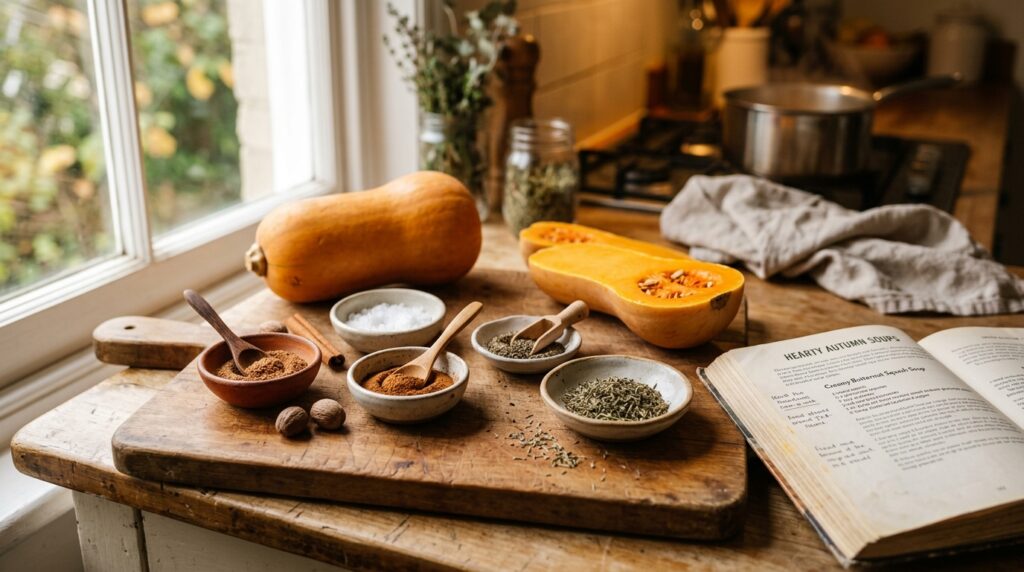
Gather one 3-pound butternut squash, peeled and cut into cubes, plus one chopped medium onion and 3 to 4 cups vegetable broth. You’ll also need 2 minced garlic cloves, 1 tablespoon olive oil, ½ teaspoon dried sage, ¼ teaspoon dried rosemary, and ½ teaspoon ground ginger.
Keep salt and black pepper nearby for seasoning. The herbs and ginger add warmth without covering the squash. If you want a smooth soup, cut the squash into similar-sized pieces so they cook at about the same rate.
Stovetop method and timing
Follow these steps for an even cook and a soft, easy-to-blend texture:
- Warm the olive oil in a large pot over medium heat. Add the onion and cook for 5 to 8 minutes, stirring now and then.
- Add the squash and cook for 8 to 10 minutes, stirring so the pieces pick up flavor from the pot.
- Stir in the garlic, sage, rosemary, and ginger. Cook for 30 seconds to 1 minute, just until fragrant.
- Pour in 3 cups broth, bring to a gentle simmer, and cover. Cook for 20 to 30 minutes, until a fork slides easily through the thickest piece.
- Blend until smooth, then add more broth if needed. Taste and adjust salt and pepper.
An immersion blender is a handheld blender that purées ingredients directly in the cooking pot. I keep its blade below the surface to reduce splashes and blend slowly around the pot.
Simmer until a fork slides easily through the thickest squash piece, then blend and add broth as needed.
This pot is a solid starting point, whether you simmer the squash in broth or roast it first for a different flavor.
Is roasting or simmering better for squash soup?
A tray of browned squash can give mild, sweet soup a deeper, richer flavor. Roasting builds those browned edges, while simmering squash in broth saves oven time and keeps the work in one pot.
Roast squash halves at 425°F for about 40 to 50 minutes. The flesh should turn tender enough to scoop or pierce easily, though the exact time depends on the size of the halves.

For roasted butternut squash soup, rub the cut sides with olive oil and place them cut-side down on a baking sheet. Scoop out the soft flesh, then add it to sautéed aromatics and broth before blending.
Cubed squash cooks faster in the oven, usually in 30 to 40 minutes at 400°F. It needs peeling and cutting first, but smaller pieces expose more surface to the heat and brown on several sides.
Oven timing changes with the size of the pieces and how crowded the tray is. Leave space between cubes so they roast instead of steam. Halves take longer, but they need less knife work before cooking.
Simmering offers a simpler route when you want to make squash soup without waiting for the oven to heat. The broth and aromatics cook beside the squash, so fewer dishes need washing.
I choose roasting when I want browned, concentrated squash flavor. For a quicker one-pot meal, I simmer the pieces until tender and let the seasonings do their work.
Once the squash is cooked, the next choice is a creamy finish that fits your diet and the texture you like.
How can I make the soup creamy without dairy?
Blended squash can make a creamy soup with broth alone; added fat or cream is a choice, not a need. The squash does the work, so you can stop blending when the texture feels smooth and thick enough.
Hold back some broth until after blending. Adding too much liquid at the start can leave the soup thinner than you intended, while a small amount of fat can add a fuller feel.
A little butter or olive oil adds richness without making the soup heavy. For a richer finish, stir in heavy cream or crème fraîche after blending, then warm the pot gently.
Olive oil and coconut milk can keep the soup dairy-free. Coconut milk brings its own flavor, so I add a small amount, taste, and add more only if the squash still shines through.
If you’re choosing a creamy butternut squash soup recipe, consider the flavor and texture you want, not just the cream in the ingredient list. The squash itself can provide plenty of body.
For more ideas, I keep a collection of dairy-free soups handy when I want a plant-based bowl with a rich texture.
A spoonful of cream can soften the flavor, while oil or coconut milk keeps the finish dairy-free. Next, season the soup so its sweetness stays balanced.
Which spices bring out butternut squash's flavor?
Squash tastes sweeter when its savory seasonings are too restrained. A little balance from salt, pepper, herbs, or warm spices helps the squash taste full without hiding its natural flavor.
Adjust salt and freshly ground black pepper after blending. Blending can change how the seasonings taste, so I start lightly and make small changes near the end.
| Seasoning | Flavor it adds | Useful pairing |
|---|---|---|
| Sage and rosemary | Woodsy warmth | Onion and garlic |
| Ginger | Bright, warm note | Coconut milk |
| Smoked paprika | Savory depth | Carrot and garlic |
| Nutmeg or cinnamon | Gentle sweetness | Roasted squash |
Use dried herbs sparingly at first, since their flavor can grow as the soup simmers. Fresh herbs can go in near the end, where their taste stays clearer.
If the soup tastes overly sweet, add a small splash of lemon or lime. Stir, taste, and add another little splash only if the citrus helps balance the bowl.
Ground spices work best when they have time to warm in the pot, but taste before adding more. A pinch can shift the whole pot, especially with cinnamon or nutmeg.
These pairings are starting points, not rules. The combinations below turn seasoning choices into complete recipe directions you can follow.
What are seven cozy butternut squash soup recipes?
A few ingredient swaps can take the same basic method in sweet, smoky, spicy, or savory directions. Keep the method familiar, then let one or two new ingredients steer the flavor.
Each variation builds on the base pot, so you can change the taste without learning a new technique. Use vegetable broth for a vegetarian bowl, or chicken broth if you do not need the soup to be vegetarian.
Three-ingredient butternut squash soup
For a 3-ingredient butternut squash soup, use squash, onion, and broth as the three core ingredients. Start with one peeled, cubed squash, one chopped onion, and enough broth to cover most of the pieces.
Cook the onion in a little oil if you have it, then add squash and broth. Simmer until the squash is tender, then blend until smooth. Oil, salt, and pepper are optional pantry additions, not part of the three core ingredients.
This simple version makes the squash’s own taste easy to notice. If the flavor seems flat, season it at the end with salt and pepper. You can also add a splash of broth after blending to loosen a thick texture.
Roasted maple and nutmeg soup
Roast squash until tender and browned, then pair it with sautéed shallot, garlic, maple syrup, and a small pinch of nutmeg. The squash brings a deep, sweet base, while the shallot and garlic keep the soup from tasting like dessert.
Blend the roasted squash with broth and cooked aromatics. Add maple syrup a little at a time, then taste before adding more. Nutmeg can take over quickly, so I start with a light dusting and stir it through well.
This version works with a splash of cream, but it does not need one. A drizzle of olive oil gives it a smooth finish without dairy, and toasted pepitas add a crisp contrast at the table.
Sage, rosemary, and ginger soup
This variation uses the base recipe’s sage, rosemary, and ginger for a warm, woodsy flavor. Keep the herbs in balance: rosemary has a strong pine-like note, while sage feels earthy and ginger adds a brighter edge.
Cook the aromatics with onion before adding broth and squash. Simmer until tender, then blend. Taste after blending, since the ginger may seem sharper before the soup turns smooth.
For a fuller bowl, add a little butter or olive oil at the end. This combination suits a chilly evening when you want familiar herbs, but still want a little lift from the ginger.
Curry and coconut milk soup
Add curry paste to the cooked onion and stir it briefly before adding squash and broth. A small amount gives the soup a gentle spice; more paste makes the heat and seasoning stronger, so taste as you go.
Blend the tender squash, then stir in coconut milk for a smooth, dairy-free finish. This butternut squash soup recipe with coconut milk works well with vegetable broth and keeps the soup fully plant-based.
Serve it with lime if the flavor needs a bright edge. Chicken broth is another option for cooks who do not need a vegetarian soup, though vegetable broth keeps the curry’s flavor clean.
Smoky paprika and carrot soup
Combine squash with carrots, garlic, and smoked paprika for a savory soup with a deeper roasted note. Carrots add sweetness and body, while smoked paprika brings a warm, smoky taste without adding chili heat.
Sauté the carrots and garlic with the onion, then add squash and broth. Simmer until all the vegetables are tender. If you roast the squash first, you can still simmer the carrots in the pot and add the cooked squash later.
Blend until smooth, then season with salt and black pepper. Add smoked paprika in small amounts, because its flavor can grow stronger as the soup sits in the pot.
Apple, garlic, and thyme soup
Choose a firm apple and cook it with squash, garlic, and thyme. You can roast the apple beside squash cubes or simmer peeled apple pieces in the pot; either way, the fruit adds a mild tart sweetness.
Use a small amount of thyme at first, since its herbal taste can compete with the apple. Blend the cooked ingredients with broth, then taste. If the soup leans too sweet, a little salt or citrus can bring it back into balance.
This version is gentle enough for lunch and pairs well with crusty bread. I like to finish each bowl with black pepper, which gives the sweet apple and squash a savory edge.
Miso, maple, and cheddar soup
Stir miso into the blended soup for a deep, savory taste, then add a little maple syrup to soften its saltiness. Start with small amounts of both, because miso strength varies and the soup should still taste like squash.
Turn off the heat before stirring in shredded cheddar. Gentle heat helps the cheese melt into the soup without becoming stringy. Add a little more broth if the cheese makes the texture thicker than you like.
This combination is richer than the other recipes, with a sweet-salty finish. A few extra shreds of cheddar work as a topping, but a small amount lets the miso and maple stay in balance.
Once you choose a variation, blend it with care and adjust the texture or taste before serving.
How do I blend the soup and fix common problems?
An immersion blender purées soup in the pot, while a countertop blender requires transferring it before blending. The main tradeoff is convenience versus moving hot liquid safely.
Leave room for steam to escape when blending hot soup. Follow your appliance’s instructions, and work in batches if the countertop blender cannot hold the full pot.
Choose a blender that suits your method
| Method | Where blending happens | Useful advantage | Main caution |
|---|---|---|---|
| Immersion blender | Cooking pot | No transfer needed | Keep blade submerged |
| Countertop blender | Blender jar | Even, smooth purée | Use batches; vent steam |
| Countertop blender with a soup-heating setting | Blender jar | Blends and heats soup | Follow appliance instructions |
Correct bland, thin, thick, or gritty soup
Common butternut squash soup problems include uneven texture, weak seasoning, and unsafe handling of hot liquid. Blend gritty soup longer, thin thick soup with broth, and simmer thin soup so more liquid can cook off.
Why is my butternut squash soup tasteless? Adjust salt first, then add pepper, herbs, or a small acidic splash to taste. I add each change gradually and taste again before adding more.
If a countertop blender needs batches, fill it only as the appliance instructions allow. Hot liquid can build steam and pressure, so leave space for steam to escape and keep the lid secure as directed.
For hot soup, leave room for steam to escape and follow the blender maker’s instructions.
After blending, a final taste can reveal whether the soup needs salt, pepper, broth, or more time at a simmer. Once it is right, cool and store any leftovers safely.
How long does butternut squash soup keep?
Butternut squash soup works well as a make-ahead meal when cooled and stored promptly. Pack it with care: refrigerate leftovers in an airtight container for up to 4 days, or freeze them for up to 3 months.
Freeze small portions rather than one large container. Smaller amounts thaw more easily, and you can warm only what you plan to eat.
Use this short checklist to keep the soup ready for another meal:
- Cool the soup before packing it away.
- Store it in an airtight container.
- Label frozen portions with the date.
- Thaw frozen soup in the refrigerator.
- Reheat gently while stirring.
If you are making soup ahead, add dairy or coconut cream when serving. That keeps the base simple to reheat and lets you finish each portion as needed.
Reheat only the amount you plan to serve, and stir as it warms so the soup heats evenly. If it seems thick after chilling, add a little broth as you stir.
Discard soup with mold, an off odor, or other signs of spoilage. Do not taste food that appears spoiled to check whether it is safe.
Now that extra portions have a place, pair a warm bowl with a side or topping that makes it a full meal.
What goes well with a bowl of squash soup?
Crusty bread beside a smooth bowl gives you a satisfying contrast in texture. Crunch matters, too: pepitas or toasted seeds add a crisp bite without changing the soup itself.
Pair a modest bowl with a filling side for an easy dinner. A larger serving can work as lunch, while a small bowl makes a good start to a meal.

Here are a few serving combinations I reach for:
- Crusty bread with pepitas for crunch.
- Focaccia with a green salad for a light meal.
- Avocado toast with a simple vegetable side.
- Corn muffins with roasted vegetables.
- Grilled cheese with a modest bowl of soup.
- Toasted seeds with chopped parsley for a dairy-free topping.
For a dairy-free finish, toasted pepitas, sunflower seeds, or parsley bring texture and color without cheese or cream. Add seeds just before serving so they stay crisp.
If you want a more filling plate, grilled cheese gives the soup a savory side. A green salad or roasted vegetables make a lighter match, and both let the soup stay at the center.
A crisp topping or a slice of toasted bread can make a smooth bowl feel like a complete meal.
Pick one recipe and one topping that sound good to you. There is no need to make dinner complicated to make it your own.
Conclusion
A cozy soup does not need a complicated ingredient list. A few choices, including roasting, seasoning, and a well-chosen finish, can shape the bowl in ways that feel personal.
Choose the variation that suits tonight’s dinner. You can keep the process simple, then adjust the taste and texture as you go.
Gather the ingredients for one version and start cooking. A warm pot is a good place to begin.


