
You get home after a long day, and dinner is already tender, warm, and ready to serve. A slow cooker pot roast makes that kind of evening possible with a little prep and hours of hands-off cooking.
I’ll share seven flavor directions, from a classic herb dinner to pantry-friendly options for busy days. Marbling means streaks of fat within the meat that melt during cooking and help keep a chuck roast juicy. Browning is optional, but it builds flavor.
Key Takeaways
- Chuck roast and sturdy vegetables make a hearty meal.
- Browning adds flavor, but you can skip it.
- Choose broth, wine, balsamic, herbs, or pantry seasonings.
- Cook until the beef pulls apart easily with a fork.
- Save the cooking juices for a simple gravy.
The classic recipe comes first, starting with the ingredients you’ll need.
What Goes Into a Classic Slow Cooker Pot Roast?
A classic pot roast starts with chuck roast, sturdy root vegetables, aromatics, and savory broth. Thick carrots keep their shape better than thin ones during a long cook.
For six servings, use a 3-pound chuck roast and season it well. Searing adds browned flavor, but it does not seal in moisture. The roast will become tender through slow cooking, not through a sealed crust.
Sear the beef for deeper flavor, not to lock moisture inside.
Gather these ingredients before you start. The optional gravy items let you finish the cooking liquid later.
- Beef and seasoning: 3-pound chuck roast, salt, pepper, and 2 tablespoons oil.
- Aromatics: 1 yellow onion, chopped, and 3 garlic cloves, minced.
- Broth and Worcestershire: 1 cup beef broth and 1 tablespoon Worcestershire sauce.
- Potatoes and carrots: 1½ pounds Yukon gold potatoes and 4 thick carrots, cut into chunks.
- Optional gravy ingredients: 2½ tablespoons cornstarch and 3 tablespoons cold broth.
Pat the meat dry, then season all sides with salt and pepper. Heat oil in a skillet over medium-high heat, and brown the roast on each side. Move it to a plate.
Add the onion and garlic to the skillet. Cook until fragrant, then pour in the broth and Worcestershire sauce. Scrape up the browned bits, then add the mixture to the slow cooker.
Layer potatoes and carrots on the bottom, then set the roast on top. Pour the skillet liquid around the beef. Cover and cook until a fork slides in easily and the meat pulls apart with little effort.
The finished beef should feel soft, not springy or firm. The vegetables should hold their shape while yielding easily to a fork. For a different flavor, start with the red-wine version.
Can Red Wine Add Depth to a Pot Roast?
Use red wine when you want a more layered, tangy cooking liquid. A dry red such as Merlot or Pinot Noir adds acidity and a richer flavor, while broth keeps the liquid savory.
Choose wine for depth, not to cover the roast. A 3-pound chuck roast needs only 1 cup red wine and 1 cup beef broth for this variation. The meat and vegetables do not need to sit fully underwater.
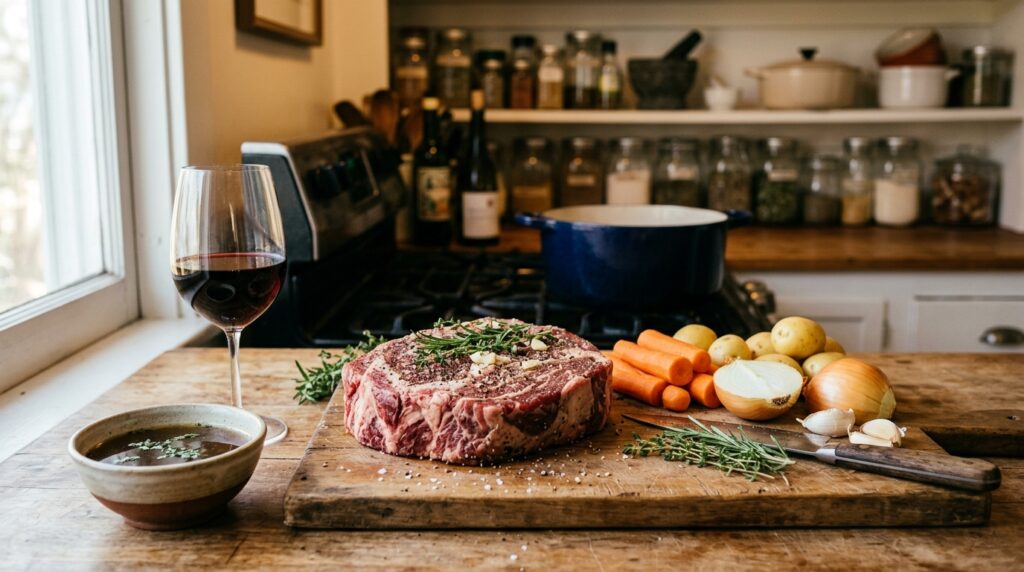
For this recipe, gather a 3-pound chuck roast, 1 cup red wine, 1 cup beef broth, 1 tablespoon Dijon mustard, 2 carrots, 2 celery stalks, and about 1½ pounds Yukon gold potatoes. Add 1 teaspoon each of rosemary and thyme, plus salt, pepper, and 1 tablespoon oil.
Pat the roast dry and season it with salt and pepper. Brown it in oil on all sides, if you have time. This step adds a browned taste to the meat and the pan juices.
Set the potatoes, carrots, and celery in the slow cooker. Stir the wine, broth, and Dijon together, then pour the mixture into the pot. Scrape browned bits from the skillet into the liquid, if you seared the beef.
Place the chuck roast over the vegetables, then sprinkle rosemary and thyme on top. Cover and cook using the shared timing guidance. Check tenderness with a fork rather than judging by appearance alone.
As the roast cooks, the wine’s sharp edge softens and blends with the beef. Broth keeps the liquid from tasting too wine-forward. If you prefer not to cook with wine, replace it with more broth and use the broth-only variation.
That broth-based version gives cooks a savory option without wine.
Can I Make Pot Roast Without Wine?
Wine is not required for a flavorful roast; beef broth, browned onion, and garlic build plenty of savory taste. Careful seasoning matters because broth saltiness varies by brand.
Taste the cooking liquid before adding extra salt. This slow cooker pot roast no wine option uses familiar ingredients and keeps the beef flavor front and center.
Use a 2½- to 3-pound chuck roast, 2 cups low-sodium beef broth, 1½ pounds potatoes, 3 carrots, 1 yellow onion, and 3 garlic cloves. You’ll also need 1 teaspoon dried thyme, salt, pepper, and 1 tablespoon oil.
Dry the roast with paper towels and season it with pepper and a light amount of salt. Brown the meat in oil in a hot skillet, turning to color each side. Set it aside while you cook the aromatics.
Add chopped onion and garlic to the skillet. Stir for a few minutes, until the onion begins to soften and the garlic smells fragrant. Pour in a splash of broth and scrape up the browned bits from the pan.
Put the potatoes and carrots in the slow cooker, then add the onion mixture. Set the roast on top. Pour in the rest of the broth and sprinkle thyme over the meat and vegetables.
Cover and cook until the beef pulls apart easily with a fork. Taste the cooking liquid before serving, then adjust salt and pepper as needed. A low-sodium broth gives you more control over the final seasoning.
Fresh onion and garlic bring depth without wine or a long list of spices. For an even easier pantry option, onion soup mix can season the broth as everything cooks.
How Can Onion Soup Mix Season Pot Roast?
A packet of onion soup mix is handy when measuring several dried spices feels like one task too many. It seasons the liquid as well as the beef and vegetables.
Check the packet before adding salt. Seasoning blends can already contain plenty, so taste the finished cooking liquid before making any final adjustment.
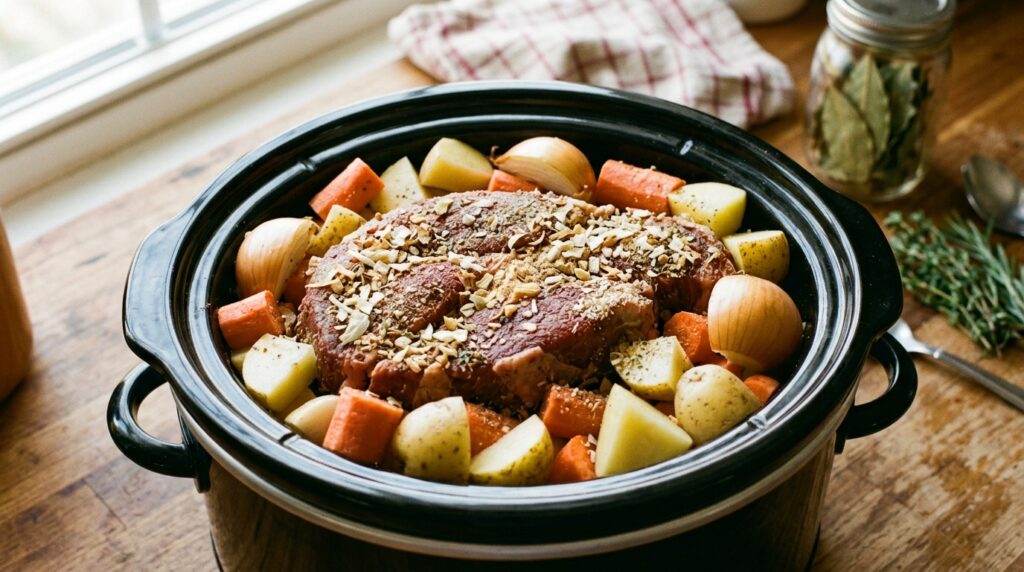
For this recipe, gather a 3-pound chuck roast, 1 packet onion soup mix, 1 cup beef broth, 1 yellow onion, 3 garlic cloves, 1½ pounds potatoes, 3 carrots, and 1 tablespoon oil. Keep salt and pepper nearby, but add them only after tasting.
Pat the roast dry and season lightly with pepper. Brown it in oil on all sides, if desired. This gives the beef a richer surface flavor, though you can put it straight into the slow cooker.
Cut the potatoes and carrots into chunks, then place them in the pot with the chopped onion and garlic. Set the roast on top. Whisk the soup mix into the beef broth until the powder dissolves.
Pour the seasoned broth around the meat and vegetables. Avoid pouring it all over the top of the roast, where some seasoning may cling instead of mixing into the liquid. Cover and cook using the timing guidance.
As the food cooks, onion soup mix flavors the broth, meat, and vegetables together. The packet also gives the liquid a fuller onion taste, so it can be a good fit when you want a simple, savory meal.
For a brighter change, use Dijon mustard and a small splash of balsamic vinegar.
What Does Balsamic Add to a Pot Roast?
A little balsamic vinegar adds a tangy note for balance, while red wine gives the cooking liquid a deeper, wine-forward taste. A small splash brightens beef without turning the dish into a wine-based roast.
Use 1 to 2 tablespoons balsamic vinegar. Dijon mustard adds another layer of savory flavor, and beef broth keeps the liquid grounded.
For this variation, use a 3-pound chuck roast, 1½ cups beef broth, 1 to 2 tablespoons balsamic vinegar, and 1 tablespoon Dijon mustard. Add 1 onion, 3 garlic cloves, 3 carrots, 1½ pounds potatoes, 1 teaspoon thyme, and 1 teaspoon rosemary. Season with salt and pepper.
Pat the beef dry and season it lightly. Brown it in a hot skillet with oil, if you like. Add the chopped onion and garlic to the skillet, and cook until the onion softens.
Stir the broth, balsamic, and Dijon together. Pour the mixture into the skillet, then scrape up any browned bits. Put the potatoes and carrots in the slow cooker, add the onion mixture, and set the roast on top.
Sprinkle the thyme and rosemary over the beef. Cover and cook until the roast is fork-tender. If you like a stronger tang, taste the juices near the end before adding more vinegar.
The vinegar’s acidity cuts through the rich beef and adds a mild sweet-sour edge. A little goes a long way, so begin with the lower amount if you want a subtle note.
For a more aromatic dinner, use fresh garlic with thyme and rosemary.
How Do Garlic and Fresh Herbs Shape a Pot Roast?
Fresh rosemary and thyme bring a woodsy, garden-like aroma to a slow-cooked dinner. Fresh garlic adds a fuller savory taste than garlic powder.
Use about one-third as much dried herb as fresh herb. Dried herbs work well when fresh sprigs are not on hand, though their flavor can taste more concentrated.
Gather a 3-pound chuck roast, 1½ pounds potatoes, 3 carrots, 1 onion, 4 garlic cloves, 1½ cups beef broth, 2 tablespoons chopped fresh rosemary, and 2 tablespoons fresh thyme leaves. Add salt, pepper, and oil for browning.
Pat the chuck dry and season it with salt and pepper. Brown it in oil if you want a deeper flavor. Add chopped onion and garlic to the skillet for a few minutes, then pour in the broth and scrape the pan.
Set the potatoes and carrots in the slow cooker. Add the onion, garlic, and broth, then place the beef on top. Sprinkle the fresh herbs over the roast so their scent can spread through the cooking liquid.
Cover and cook until the meat pulls apart easily. If using dried herbs, replace each tablespoon of fresh herbs with about 1 teaspoon dried herbs. Crush dried leaves lightly between your fingers before adding them.
Garlic powder can season the cooking liquid, but it does not give the same soft, sweet pieces as fresh garlic. Fresh herbs bring a lively scent, while dried herbs are an easy pantry stand-in.
If there is no carton of broth in the kitchen, bouillon can help make a savory cooking liquid.
Can Bouillon Make a Pantry-Friendly Pot Roast?
Bouillon can stand in for boxed broth when your pantry has water and a few seasoning cubes. Read the package for the right amount of water and bouillon.
Taste the prepared liquid before adding extra salt. Bouillon brands vary in salt level, so the same recipe can need different seasoning.
For a slow cooker pot roast with bouillon cubes, use a 3-pound chuck roast, bouillon dissolved in water according to package directions, 1 onion, 3 garlic cloves, 1½ pounds potatoes, and 3 carrots. Add pepper and oil if browning the beef.
Prepare the bouillon liquid in a measuring cup and taste a small spoonful. If it tastes strongly salty, do not add salt to the meat yet. Pepper can add warmth without increasing the salt.
Cut the potatoes and carrots into chunks, then put them in the slow cooker with the chopped onion and garlic. Set the roast on top. Pour the prepared liquid around the meat, rather than trying to cover it.
Cover and cook until the beef is tender enough to pull apart with a fork. If beef broth is available, use it in place of the prepared bouillon liquid. The rest of the recipe stays the same.
Bouillon is useful when you want a warm, savory pot without a grocery run. It also lets you make only the amount of cooking liquid you need, which can help avoid opening a full carton.
Once the roast is done, its juices can become gravy for the meat and vegetables.
Which Cooking Liquid Gives Pot Roast the Flavor You Want?
Beef broth is a reliable base, with wine or balsamic available for different flavor directions. Choose by taste: broth stays savory, wine adds depth, and balsamic brings a brighter tang.
The roast does not need to be submerged in liquid. A small amount helps flavor the meat and vegetables while they cook, and the beef releases more juices along the way.
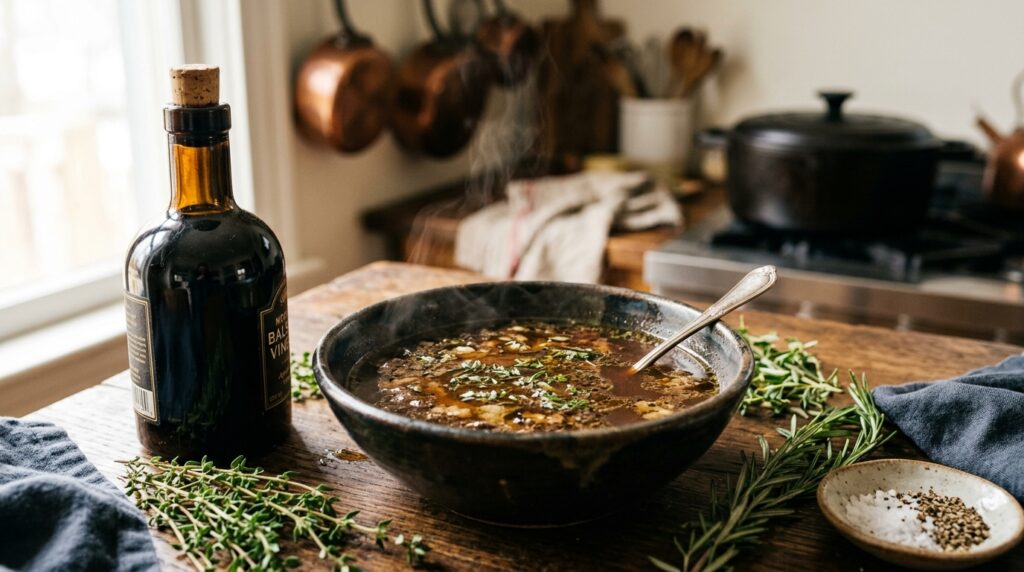
Broth, wine, or balsamic
Use the cooking liquid that matches the meal you want. Plain broth gives a familiar beef taste. Wine makes the juices richer and more layered, while a little balsamic adds a light, tangy edge.
| Liquid choice | Flavor contribution | Best fit |
|---|---|---|
| Beef broth | Savory, familiar beef flavor | Classic roast dinners |
| Broth with red wine | Richer, more layered taste | Wine-forward cooking juices |
| Broth with a little balsamic | Brighter, tangy flavor | A gentle acidic lift |
Turn the cooking juices into gravy
Slow cooker pot roast with gravy uses the strained cooking liquid as its base. Strain the juices into a saucepan, then skim off excess fat if you want a lighter result.
Whisk 2½ tablespoons cornstarch with 3 tablespoons beef broth until smooth. Bring the strained liquid to a simmer, then whisk in the slurry. Simmer for 30 to 60 seconds, until thickened.
A slow cooker pot roast with demi-glace can use demi-glace to deepen the gravy’s savory flavor. Stir in a small amount, then taste before adding salt. For another easy beef-and-gravy dinner, try this four-ingredient slow cooker beef and gravy.
Adjust the texture or taste with one of these simple fixes:
- Thin thick gravy with a splash of broth.
- Simmer longer if the gravy seems too loose.
- Whisk in a little more slurry if it needs more body.
- Season after thickening, once the flavor is clear.
Liquid choice shapes the meal, but tenderness depends on time and heat. Use the cook-time guidance to help prevent a tough roast.
How Long Should Pot Roast Cook, and What Can Go Wrong?
Chuck roast needs several hours, and the best doneness check is fork-tenderness. Start with the recipe’s range, then keep cooking if the beef still feels firm.
A 3-pound classic roast usually cooks on low for about 8 to 9 hours. Chuck roast recipes often favor low heat because the steady cooking helps the meat turn tender.
Choose a cook setting and check tenderness
Use the times below as a starting point. Size, shape, the slow cooker, and the recipe all affect how quickly the roast cooks. A thick, compact piece may need longer than a flatter one.
| Recipe size or style | Setting | Typical time |
|---|---|---|
| 3-pound classic roast | Low | About 8 to 9 hours |
| 2.5- to 3-pound roast | Low or high | About 8 to 10 hours low, or 6 to 7 high |
| 3-pound red-wine version | High | About 4 to 5 hours |
Check the center with a fork. Tender beef should give way and pull apart without much force. The clock is a guide, not the final test, so keep cooking if the roast stays firm.
Troubleshoot a roast that is still tough
A firm roast is often undercooked, not ruined. Connective tissue needs time to soften, and chuck roast is a good choice for this long cook. Use these checks before changing the recipe:
- Give the meat enough time to become fork-tender.
- Choose chuck roast rather than a lean cut.
- Avoid lifting the lid often, since heat escapes.
- Check that the cooker is on low or high, not warm.
- If the beef is still firm, keep cooking and check again later.
Warm is for holding cooked food, not cooking raw meat. If you discover the cooker was on warm, do not treat that setting as a safe substitute for low or high.
What are the downsides of using a slow cooker? It needs advance planning, takes hours, and does not brown ingredients by itself. A separate skillet handles browning when you want that extra flavor.
After the beef turns tender, serving and safe storage help the meal carry into another day.
What Should I Serve With Pot Roast, and How Do I Store Leftovers?
The roast and its potatoes and carrots can make dinner on their own. Add a side when you want fresh crunch or a lighter contrast to the rich gravy.
Refrigerate cooked leftovers in a covered airtight container for 4 to 5 days. For longer storage, freeze the beef and gravy without the vegetables for up to 3 months.
Store beef and gravy apart from the vegetables when freezing, since potatoes can turn mushy or grainy.
Serve it as a full dinner or add a side
Serve the beef with the vegetables from the slow cooker, then spoon gravy over the top. A side can bring a fresher taste or a different texture to the plate.
- Side salad adds crisp greens and a fresh bite.
- Asparagus brings a tender, lightly grassy taste.
- Green beans add a firmer texture beside the roast.
- Bread helps catch the savory gravy.
Steamed vegetables also work well when you want more color without another rich dish. Keep the rest of the meal simple so the beef and gravy remain the focus.
Refrigerate, freeze, and reheat leftovers
Cool and portion extra food promptly, then place it in covered airtight containers. Potatoes may become mushy or grainy after freezing, so separate them from the beef and gravy when possible.
| Method | What to store | Time or handling |
|---|---|---|
| Refrigerator | Cooked beef, vegetables, and gravy | Covered airtight container, 4 to 5 days |
| Freezer | Cooked beef and gravy | Without vegetables, up to 3 months |
| Reheating | Thawed or chilled leftovers | Thaw overnight in refrigerator; use stovetop or microwave |
Thaw frozen leftovers in the refrigerator overnight. Reheat them on the stovetop or in the microwave, stirring or turning portions so they warm evenly.
Portion leftovers promptly, then choose the next dinner variation that fits your schedule.
Conclusion
A comforting dinner can follow the flavor your household likes best, from classic herbs to a brighter, tangy broth. Chuck roast, steady slow cooking, and a flavor direction you enjoy make a dependable place to start.
Choose one recipe and set out its ingredients before the day begins. That small bit of prep makes it easier to start cooking before work, errands, or a busy afternoon take over.
Keep the first try simple, then adjust the seasoning to suit your table. Pick the version you’re most excited to cook.


